Executive Coaching
Executive Coaching by Leadership IQ | The Blind Spot Breakthrough
Executive Coaching by Leadership IQ

The Blind Spot
Breakthrough

A 90-day diagnostic coaching engagement that shows senior leaders what everyone around them already sees—but no one will say.

The higher you rise, the less truth you hear. Our research on thousands of employees found that the average boss has 3–4 blind spots their team sees clearly. And even when told directly, 84% fail to change.

84%
of bosses showed no change even after being told about their blind spot
Leadership IQ Research, 2026
54%
of blind spots persist because the leader believes they’re already effective
Leadership IQ Research, 2026
77%
of C-suite leaders are less likely to change than leaders at other levels
Leadership IQ Research, 2026

Traditional executive coaching starts with a question: “What would you like to work on?” But when more than half of leaders already believe their leadership is effective, that question produces safe answers about safe topics. The real issues—the ones eroding trust, stalling execution, and driving talent out the door—never make it into the conversation. Coaching provides increased self-awareness, leadership development, and measurable organizational results by supporting behavior change and fostering reflection aligned with strategic goals.

Standard 360-degree assessments aren’t much better. They produce tidy charts and Likert-scale scores that confident leaders can easily rationalize. A 3.8 out of 5 feels pretty good. The specific stories, patterns, and emotional consequences that would actually break through—those get lost in the aggregation.

The Blind Spot Breakthrough takes a fundamentally different approach. Increased self-awareness is a key benefit of this approach, helping leaders identify strengths, weaknesses, and blind spots. The benefits of executive coaching also include improved strategic thinking, stronger emotional intelligence, faster decision-making, and increased confidence.

This Is Not Traditional Executive Coaching

Standard Coaching
Starts with the leader’s self-assessment
Relies on sanitized survey instruments
Coach offers observations based on sessions
No external benchmarking data
Focuses on the individual in isolation
6–12 month open-ended timeline
Blind Spot Breakthrough
Starts with anonymous stakeholder interviews
Captures specific stories, patterns, and impact
Evidence comes from the leader’s own people
Benchmarked against thousands of leaders
Connects blind spots to team performance
Establishes clear objectives tailored to the executive’s growth and organizational needs
90 days: intensive, focused, measurable

How It Works

Three phases. Ninety days. A complete diagnostic, strategy, and implementation cycle designed to produce change that’s visible to others—not just felt internally. Executive coaching is a confidential partnership between the coach and executive, built on trust, privacy, and honest dialogue to foster leadership growth and help navigate complex challenges.

1
Weeks 1–4

During this initial phase of the coaching engagement, the process typically involves a series of one-on-one sessions between the coach and the executive. This confidential partnership allows for a thorough intake and diagnostic process, ensuring that strategies are tailored to the executive’s unique needs and organizational goals.

The Deep Diagnostic

We begin with a confidential intake session to understand how you see your own leadership, creating a confidential space where you can share openly and address sensitive issues. Coaching sessions are designed to provide a safe and confidential space for leaders to reflect and evolve. Then we interview 15–20 people in your orbit—direct reports, peers, board members, and key stakeholders—in anonymous, in-depth conversations designed to surface what standard feedback mechanisms miss. Our diagnostic process is guided by a deep understanding of leadership development, organizational culture, and behavioral insights to ensure meaningful and lasting impact.

  • Semi-structured interviews using protocols built from our research on the nine most common leadership blind spots
  • Your self-assessment compared against what your stakeholders actually experience
  • A team effectiveness diagnosis using the Team Players framework
  • Everything synthesized into a comprehensive Blind Spot Breakthrough Report
2
Weeks 5–8

Confrontation & Strategy

The Reveal Session walks you through the findings—your blind spot map, your benchmarking comparison against thousands of leaders, the anonymized words of your own people. Then we move into strategy: selecting priority areas, designing specific behavioral changes, and building systems that keep honest feedback flowing. At this stage, we highlight the essential roles that coaches play in guiding leaders to foster teamwork, improve organizational performance, and plan their professional development.

  • An in-depth Reveal Session presenting the full diagnostic findings
  • Benchmarking against our proprietary database of thousands of bosses
  • Priority selection: 2–3 blind spots with the highest organizational impact
  • Strategy coaching sessions to design concrete behavioral changes
3
Weeks 9–12

Implementation & Proof

Insight without action is entertainment. This phase is about execution: practicing new behaviors with coaching support, then measuring whether change is visible to the people who gave the original feedback. You finish with proof, not promises.

  • Action-focused coaching sessions with real-time support
  • A closing stakeholder assessment to measure observable change
  • A Progress Scorecard you can share with your board or stakeholders
  • A forward-looking development plan for sustained growth

The Blind Spot Breakthrough Report

At the center of this engagement is a comprehensive diagnostic document—a detailed, evidence-based portrait of your leadership impact that no standard coaching process produces.

Blind Spot Map
Which blind spots were identified by your stakeholders, with severity ratings based on frequency and organizational impact.
Leader Type Profile
Your classification against research-identified leadership profiles, revealing the specific patterns most likely to limit your effectiveness.
Research Benchmarking
How your blind spot profile compares to the thousands of bosses in our proprietary research database.
Team Impact Analysis
How your blind spots are affecting your team’s composition and performance through the Team Players framework.
In Their Own Words
Anonymized direct quotes from your stakeholders, organized by theme—the most powerful section of the report.
Changeability Assessment
An honest, research-based assessment of which issues will respond to coaching and which may require structural solutions.

The leaders who most need to change are the least likely to do so. When 84% of bosses don’t improve after direct feedback, we need different strategies—ones that make blind spots undeniable, consequences unavoidable, and change the rational choice.

— FROM THE LEADERSHIP IQ BLIND SPOTS RESEARCH STUDY, 2026

Who This Is For

The Blind Spot Breakthrough is designed for the organization’s leaders—those operating at the senior-most levels, such as C-suite executives and senior VPs—who suspect they’re not hearing the full truth and are ready to find out. Executive coaching is specifically tailored to these individuals, addressing the unique challenges faced by top leadership in today’s rapidly changing environment. While this program is focused on senior leaders, leadership coaching can also be tailored to emerging leaders to help them develop foundational skills and prepare for higher roles within the organization.

CEOs & Presidents
You’ve been in the role long enough to develop entrenched patterns, and the higher you’ve risen, the less candor you receive. Board pressure, missed targets, or unexpected departures have created a nagging sense that something is off.
Newly Appointed C-Suite
You’re in the first six months of a senior role and want to get the truth now—before people stop telling you. The best time to understand your impact is before your team learns to manage around you.
Board-Referred Leaders
The board has identified performance or culture concerns and wants an intervention that goes beyond traditional coaching. Standard approaches fail 84% of C-suite leaders. This is the alternative.
PE Portfolio Company Leaders
The private equity firm wants to de-risk leadership. In 90 days, you get a clear-eyed diagnostic of the CEO’s blind spots, a strategy for change, and measurable evidence of progress.

Why Leadership IQ

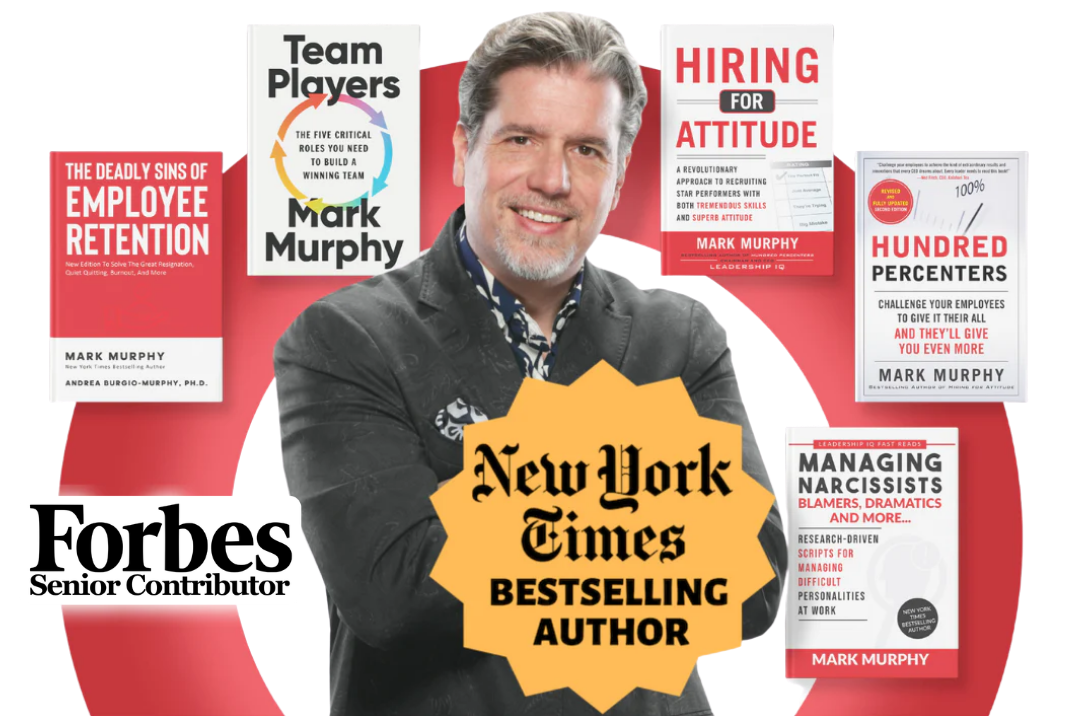
This isn’t coaching based on intuition. It’s coaching built on one of the largest leadership blind spots research studies ever conducted, delivered by Mark Murphy—a New York Times bestselling author, Forbes contributor, and founder of Leadership IQ, whose research has been the foundation for leadership development programs at organizations worldwide. Our coaching team consists of business coaches with extensive experience and deep business acumen, ensuring that every executive coaching engagement is aligned with organizational objectives and real-world business challenges.

Most coaches can offer wisdom. What we offer is a proprietary diagnostic process backed by original research data that no other coach has—combined with practical frameworks (including the Team Players system) for translating insight into team-level performance improvement.

  • New York Times bestselling author
  • Forbes leadership contributor
  • Creator of the Team Players framework
  • Proprietary research on thousands of leaders
  • Decades of executive advisory experience
  • Trusted by organizations worldwide

Common Questions

How is the stakeholder interview process kept confidential?
Every interview is completely anonymous. The final report presents themes, patterns, and anonymized quotes—never attributed to specific individuals. Interviewees are informed of this upfront, which is precisely what allows them to be fully honest in ways that typical feedback mechanisms do not.
Why 90 days instead of 6–12 months?
Our research shows that the primary barrier to change isn’t a lack of time—it’s a lack of undeniable evidence. The 90-day structure front-loads the diagnostic work that creates breakthrough awareness, then moves quickly into strategy and measurable implementation while momentum is high.
What if the findings are difficult to hear?
They usually are. The Reveal Session is carefully facilitated to depersonalize the data using research benchmarks (“48% of leaders share this pattern”) and to frame everything in terms of organizational impact rather than personal shortcomings. The goal is awareness and strategy, not judgment.
Can this be done for my entire leadership team?
Yes. After the CEO engagement, we offer a Team Cascade—a streamlined version for each member of the senior leadership team. Many leaders find that the process is most powerful when the entire team goes through it, creating shared language and accountability for growth.
What happens after the 90 days?
The engagement concludes with a Progress Scorecard and a forward-looking development plan. For leaders who want ongoing support, we offer a monthly advisory retainer that includes continued coaching and quarterly stakeholder pulse checks to ensure blind spots don’t return.

Ready to See What
You’ve Been Missing?

Request a Conversation

The Blind Spot Breakthrough begins with a complimentary 30-minute conversation where we’ll walk you through the research, help you identify which blind spot patterns may apply, and determine whether this engagement is the right fit.

Engagements are limited. We work with a small number of leaders at a time to ensure depth and quality.

Executive Coaching: A Research-Based Guide for Senior Leaders

What the research actually says about executive coaching—what works, what doesn’t, and why most coaching engagements fail to produce the leadership development outcomes that organizations need.

What Executive Coaching Actually Is (and Isn’t)

Executive coaching is a one-on-one professional development engagement between a senior leader and an experienced coach, designed to improve leadership effectiveness, sharpen leadership skills, and produce measurable outcomes at the organizational level. Executive coaching supports leaders at the highest levels, such as C-suite executives and senior managers, by enhancing their capabilities, decision-making, and strategic influence. It is a confidential partnership that focuses on enhancing a leader’s capabilities in real-world environments. Unlike business coaching broadly defined, executive coaching services are specifically calibrated for the unique pressures, isolation, and cognitive demands that C-suite executives and senior leaders face.

The distinction matters. A CEO managing a board, navigating activist investors, and setting strategy for 5,000 employees faces fundamentally different leadership challenges than a mid-level manager learning to delegate. The executive coaching process for senior executives must account for the fact that these leaders operate in environments where honest feedback has largely disappeared—where everyone around them has learned to manage up rather than speak up. Finding the right coach—one who aligns with the leader’s needs, personality, and industry context—is essential for effective leadership development and organizational impact.

This is what our research at Leadership IQ has consistently found: the higher a leader rises, the wider their blind spots grow. Not because senior leaders are less capable, but because the organizational dynamics that surround them systematically filter out the candid information they need most. The impact of executive coaching extends far beyond individual growth—it drives organizational transformation by fostering a culture of continuous growth and strategic change at a systemic level. Effective executive coaching must begin by solving that information problem before anything else can change.

Why Most Executive Coaching Engagements Underperform

The executive coaching industry has grown into a multi-billion-dollar market, and yet the evidence for its effectiveness is surprisingly mixed. The reason isn’t that coaching itself is flawed—it’s that the dominant model of executive coaching relies on a broken assumption: that leaders already know what they need to work on.

In a typical coaching engagement, the executive coach begins by asking the client to identify their goals. The problem, as our research on more than 6,800 employees reveals, is that 54% of leaders with significant blind spots believe they’re already effective in the very areas where their teams see the biggest problems. When a coaching engagement starts with the leader’s self-assessment, it often ends up optimizing strengths the leader already recognizes while the real issues—the ones driving talent out the door and undermining team performance—go entirely unaddressed.

This is the central paradox of leadership coaching: the leaders who most need to change are the least likely to know what needs changing. Standard executive coaching sessions can be intellectually stimulating, emotionally supportive, and completely beside the point if the diagnostic foundation is wrong. An experienced coach offering brilliant advice on the wrong problem is still solving the wrong problem.

The 360-Degree Assessment Trap

Many executive coaching services attempt to solve this diagnostic gap by incorporating 360-degree assessments. On paper, this seems reasonable—gather feedback from the leader’s direct reports, peers, and supervisors, then use that data to inform the coaching process. In practice, 360s often fail to produce the breakthrough awareness that leaders need.

The problem is structural. Likert-scale surveys compress rich, nuanced human experience into tidy numerical averages. A leader who scores 3.6 out of 5 on “listens to others” learns almost nothing actionable. Does that score mean they interrupt in meetings? That they dismiss ideas from certain team members? That they listen carefully but never act on what they hear? The number cannot tell them. And because it cannot tell them, confident leaders can easily rationalize a 3.6 as “pretty good—room for improvement, sure, but not a real problem.”

What actually breaks through the defenses of a senior executive is specificity: patterns of behavior described in the words of people they respect, benchmarked against what’s normal and what’s not. This is why we built the Blind Spot Breakthrough around in-depth anonymous interviews rather than surveys—because the coaching experience for the leader must begin with evidence that is impossible to dismiss.

What Effective Executive Coaching Looks Like

The best executive coaching shares several characteristics regardless of methodology, and any leader evaluating executive coaching services should look for these elements. Leadership excellence is a key outcome of effective executive coaching, as it cultivates exceptional leadership qualities and drives high standards of leadership performance.

It starts with evidence, not assumptions. An effective executive coaching process begins with rigorous data collection about how the leader actually shows up—not how they believe they show up. This diagnostic phase is the foundation everything else is built on. Without it, coaching is guesswork. The most effective approaches gather qualitative data (what people actually say about the leader’s impact) alongside quantitative benchmarking (how this leader compares to thousands of others). At Leadership IQ, we’ve built a proprietary research database that allows us to tell a leader not just what their people experience, but how common or unusual those patterns are across the broader population of senior leaders.

It focuses on observable behavior, not personality. Great leaders don’t become great by changing who they are. They become great by changing what they do. Professional coaching that produces measurable outcomes focuses on specific, observable behaviors—how the leader runs meetings, responds to dissent, communicates priorities, holds people accountable—rather than abstract personality traits. This matters because behavior is what teams experience, and it’s what teams can verify has changed. Research has found that those who have had executive coaching are significantly more effective leaders, with increased resilience, emotional intelligence, and self-awareness.

It connects individual leadership to team performance. Executive leadership doesn’t happen in a vacuum. A leader’s blind spots don’t just affect their personal effectiveness—they shape the composition, dynamics, and output of the entire team. The best executive coaching engagements explicitly connect the leader’s patterns to their team’s functioning. In our work, we use the Team Players framework to diagnose how a leader’s blind spots distort their team’s balance across five critical roles, translating individual coaching into organizational impact. Through executive coaching, leaders learn by developing essential leadership skills, increasing self-awareness, and planning for future roles, which enhances both their own and their organization’s success.

It produces evidence of change, not just feelings of progress. One of the most common failure modes in leadership coaching is the “insight trap”—where the leader gains genuine self-awareness in executive coaching sessions, feels meaningfully changed, but produces no observable difference in how they lead. Effective coaching requires a closing assessment that goes back to the original sources of feedback and asks: has anything actually shifted? Without this accountability loop, it’s too easy for both coach and client to declare victory based on subjective experience alone. Executive coaching sharpens crucial leadership qualities, enabling leaders to exhibit greater empathy, strategic acumen, and decisiveness.

The Leadership Skills That Executive Coaching Develops

While every coaching engagement should be tailored to the individual leader’s diagnostic findings, our research has identified several clusters of leadership skills where C-suite executives and senior leaders most commonly have blind spots—and where targeted coaching produces the greatest return. Executive coaching develops both the leader’s strategic and interpersonal capabilities, ensuring they can navigate complexity and drive transformation. Additionally, business acumen is a critical quality developed through executive coaching, enabling leaders to align their actions with organizational objectives. Executive coaching also helps leaders feel they have an increased sense of self-understanding, purpose, and clarity on next steps to drive change.

Self-Awareness and Emotional Intelligence

Emotional intelligence is widely cited as a differentiator for great leaders, but what most discussions miss is that self-awareness—the foundation of emotional intelligence—is precisely the skill that erodes fastest as leaders ascend. Our research found that 48% of employees identified their boss as someone who overestimates their own performance. The coaching process for these leaders isn’t about teaching emotional intelligence as an abstract competency. It’s about closing the gap between how they believe they’re perceived and how they’re actually experienced, using evidence that’s specific enough to penetrate established self-narratives.

Executive Presence and Communication

Executive presence is one of those terms that everyone uses and few define precisely. In our research, what teams actually mean when they say a leader lacks executive presence typically maps to specific behavioral patterns: inconsistency between stated priorities and daily actions, an inability to create psychological safety in high-stakes conversations, or a tendency to communicate in ways that leave teams confused about direction. Executive leadership coaching that targets “presence” without identifying which specific behaviors are undermining it tends to produce superficial changes—better body language in presentations, perhaps, while the fundamental trust issues remain untouched.

Structure, Accountability, and Follow-Through

The single most common blind spot in our research database is “lacks structure and follow-through,” identified by 48% of employees about their boss. This is a leadership effectiveness issue that rarely surfaces in standard coaching because leaders themselves don’t experience it. They know what they intended. They know the strategy they communicated. What they don’t see is what their team experiences: shifting priorities, unclear expectations, initiatives launched and abandoned, and an environment where people learn to wait before investing effort because “this too shall pass.” Addressing this requires an executive coach who can show the leader the concrete downstream consequences of their pattern—not just tell them they should be more organized.

Team Coaching and Team-Level Impact

Increasingly, organizations recognize that individual executive coaching must extend into team coaching to produce lasting change. A senior leader who improves their own behavior but doesn’t recalibrate the team dynamics their old behavior created will see limited results. Their team has adapted—people have taken on compensating roles, built workarounds, and developed unspoken agreements about what topics are safe. Changing the leader without addressing the team system is like replacing an engine without realigning the wheels.

This is why our approach integrates team effectiveness assessment directly into the executive coaching engagement. Using the five-role Team Players framework, we can show a leader not just their personal blind spots but exactly how those blind spots have shaped the team they lead—which roles are overrepresented because people are compensating for the leader, which are missing because the leader inadvertently drove those contributions away, and what specific team-level changes will unlock performance that’s currently trapped.

The Blind Spot Breakthrough integrates all of these dimensions—individual diagnosis, behavioral strategy, and team recalibration—into a single 90-day coaching engagement. Learn more about the process above, or request a complimentary conversation to explore whether it’s the right fit.

Effective Leaders and Their Traits

Effective leaders are distinguished by a unique blend of qualities that empower them to drive organizational success and inspire those around them. At the core of these qualities is self-awareness—a trait that enables leaders to recognize their strengths, acknowledge their development areas, and adapt their approach to meet evolving challenges. Executive leadership coaching plays a pivotal role in helping senior leaders cultivate this self-awareness, which in turn sharpens their leadership skills and enhances their executive presence.

According to the International Coaching Federation, truly effective leaders excel in areas such as strategic influence, relationship building, and emotional intelligence. These skills are not innate; they are developed through intentional practice and guided reflection. Leadership coaching, especially when delivered by experienced external coaches, provides leaders with an invaluable external perspective. This outside viewpoint helps leaders navigate complex organizational dynamics, align their actions with organizational goals, and make decisions that drive meaningful business outcomes.

In today’s environment of rapid change, leaders must be agile—ready to adopt new behaviors and lead their organizations through transformation. Executive coaching services offer critical support during these times, equipping leaders with proven methodologies and coaching skills that foster both individual growth and organizational excellence. A good executive coach acts as a trusted advisor and sounding board, helping leaders clarify their vision, overcome obstacles, and develop a tailored development plan that supports continuous growth.

Certified coaches design coaching engagements that are confidential partnerships, providing a safe space for leaders to explore challenges, test ideas, and receive honest feedback. This confidential relationship is essential for senior managers, vice presidents, and C-suite executives who often lack candid input from within their organizations. By leveraging the expertise of credentialed coaches, leaders gain access to a global network of knowledge and best practices, ensuring their leadership development journey is both rigorous and relevant.

Ultimately, effective leaders are those who balance their own personal growth with the broader objectives of the organization. They are committed to continuous improvement, leveraging executive leadership coaching to build a robust leadership pipeline and achieve measurable outcomes that benefit the entire organization. Whether you are an emerging leader or a seasoned executive, investing in leadership development through executive coaching is a strategic investment that delivers increased productivity, stronger organizational culture, and lasting impact.

Choosing the Right Executive Coach

The executive coaching market is crowded, and quality varies enormously. Here is what our research and experience suggest senior executives and the organizations sponsoring their development should evaluate when selecting executive coaching services.

Does the coach have a diagnostic methodology, or just a listening ear? Many executive coaches are skilled conversationalists and experienced professionals. But a coaching engagement without a rigorous diagnostic process is fundamentally limited by what the leader is willing and able to self-report. Ask any prospective leadership coach how they gather data beyond the leader’s own perspective. If the answer is “a 360 survey” or “I get to know them over time,” that’s a signal that the coaching experience will be constrained by the leader’s existing self-awareness—which, if our research is correct, has significant gaps.

Is the approach backed by research or just experience? Experience matters in executive coaching, but experience without a research foundation means the coach is generalizing from a sample size of their own client history. Look for coaches and firms that can point to published research, proprietary data, or empirical frameworks that inform their approach. At Leadership IQ, every element of our process—from the nine blind spot categories to the benchmarking comparisons to the changeability assessments—is rooted in research studies with thousands of participants, not anecdotal pattern-matching.

How does the coach define and measure success? This is perhaps the most important question. If an executive coaching engagement cannot articulate in advance how its outcomes will be measured, and if that measurement doesn’t include the perspectives of people other than the leader being coached, then there is no real accountability for results. Measurable outcomes in leadership development should include observable behavioral change verified by stakeholders, not just the client’s self-reported satisfaction with the coaching experience.

Does the coach understand your level? Coaching a C-suite executive is materially different from coaching a director or vice president. The political dynamics are more complex, the isolation is more profound, the stakes of each decision are higher, and the leader’s defenses are typically more sophisticated. An executive coach who primarily works with mid-level managers may be an excellent professional coaching practitioner and still be unprepared for the specific challenges of working with senior executives who have spent decades developing the psychological armor that coaching needs to get past. When evaluating coaches, credentials from organizations like the International Coaching Federation (ICF) can indicate formal training and ethical standards—but credentials alone don’t guarantee the diagnostic rigor or senior-level experience that produces real change.

The Future of Executive Coaching Is Diagnostic

The executive coaching industry is at an inflection point. For decades, the prevailing model has been relationship-based: an experienced coach builds rapport with a senior leader over many months, offering wisdom, perspective, and accountability through regular conversations. This model has genuine value. But it also has a ceiling—one defined by the leader’s willingness to be honest about their own limitations and the coach’s ability to see what the leader cannot.

The next generation of executive coaching will be diagnostic-first. It will rely on rigorous data collection—not just surveys, but deep qualitative investigation—to build an evidence base that doesn’t depend on the leader’s self-knowledge. It will benchmark individual leaders against large research datasets to distinguish idiosyncratic patterns from common ones. It will connect individual leadership behaviors to team-level and organizational outcomes with specificity. And it will measure success not by the leader’s subjective experience but by observable change verified by the people who work with them every day.

This is the model we’ve built at Leadership IQ. The Blind Spot Breakthrough exists because we believe that executive coaching for senior leaders should start with the truth—the full, unfiltered truth that their organizations already know but have stopped trying to communicate. When leaders see that truth clearly, supported by research benchmarks and presented with care, the 84% who would normally never change have a real chance to become the exception.

Because the problem was never that great leaders can’t change. The problem was that no one showed them what needed changing.