Executive Coaching Pricing Packages: What Leaders and Organizations Are Really Buying
Executive Coaching Pricing Packages Have Changed
Executive coaching has evolved from a loosely defined perk for a small group of senior leaders into a more structured leadership investment that many organizations now treat as part of their leadership infrastructure. As coaching has become more common, pricing has changed with it. Companies are no longer simply buying a series of conversations. They are often buying executive coaching pricing packages that bundle diagnosis, stakeholder alignment, progress tracking, and a defined engagement model intended to reduce risk in high-stakes leadership roles.
That shift matters because leadership problems at senior levels are rarely narrow or isolated. A struggling executive may appear to have a communication problem, but the real issue may involve poor delegation, low trust from peers, weak cross-functional influence, lack of strategic clarity, or an inability to adapt leadership style to a more complex role. In those situations, the real value of coaching often comes from how the engagement is structured, not just how many coaching sessions are included.

A useful discussion of executive coaching pricing packages therefore has to answer three questions at the same time. First, what does the market typically charge? Second, what is actually included in different coaching packages? Third, what kinds of package designs are more likely to produce meaningful leadership outcomes?
Those questions are not always easy to answer cleanly. The market includes solo executive coaches, boutique firms, large leadership consultancies, and digital coaching platforms, all using different pricing models. Research on executive coaching also supports cautious optimism rather than simplistic claims. Coaching can work well, but the results depend heavily on context, measurement, the specific coaching challenge, and whether the package is designed to support change in the real world rather than only insight during a private conversation.
For organizations and executives evaluating providers, the goal is not simply to find the lowest coaching fees. It is to understand what kind of package fits the leadership problem, how coaching costs translate into value, and which pricing structures are more likely to support durable leadership development.
What Executive Coaching Pricing Packages Usually Include
When people search for executive coaching pricing packages, they often want a single number. In practice, however, pricing varies because packages vary. One provider may offer a simple block of coaching sessions with minimal preparation and little follow-up. Another may include stakeholder interviews, assessment tools, progress reports, accountability check-ins, and a structured development plan. Those are not equivalent services, even if both are labeled executive coaching.
In today's market, coaching packages often combine several elements:
- A strategic intake or discovery process
- A set number of structured coaching sessions
- Coach preparation between sessions
- Optional assessments or diagnostics
- Stakeholder touchpoints or interviews
- Written summaries, progress reports, or development plans
- Access between sessions for support or course correction
- A defined cadence and endpoint
This is one reason the total cost of executive coaching can vary so widely. Pricing is often driven less by the headline number of sessions and more by the amount of diagnosis, customization, governance, and accountability built into the engagement.
For some leaders, an hourly billing model may be sufficient. For others, especially senior leaders facing large role transitions or behavior-related risks, fixed coaching packages often make more sense because they define scope, timing, outcomes, and stakeholder expectations more clearly.
Executive Coaching Cost Benchmarks
Market-wide coaching benchmarks are useful, but they need to be interpreted carefully. Broad coaching industry data can provide a baseline for coaching fees, yet those numbers do not map neatly onto executive coaching alone because the market includes many types of coaching, client levels, and delivery formats.
Still, a few broad patterns are helpful.
Executive coaches serving senior leaders often charge more not just for conversation time, but for judgment, specialized expertise, and the ability to work credibly on issues tied to leadership effectiveness, organizational performance, and political complexity.
For buyers, that means the cheapest apparent package is not automatically the best value, and the highest fees are not automatically justified. The key question is what the package includes and whether those services match the actual leadership challenge.

Why Executive Coaching Packages Vary So Much in Price
Several variables tend to drive coaching costs.
The Seniority of the Client
Coaching a first-time manager is different from coaching a CFO, business unit president, or CEO. Corporate-level coaching packages for senior leaders typically cost more because the work is more complex, the consequences of failure are larger, and the coach often needs experience navigating board dynamics, executive team tension, decision-making under uncertainty, and enterprise-wide leadership demands.
The Coach's Experience and Specialized Expertise
Many coaches can facilitate reflection. Fewer can work effectively with senior executives on difficult conversations, executive presence, delegation failures, stakeholder influence, strategic communication, or leadership derailment patterns. A coach's experience, credibility, and specialization can significantly affect pricing.
The Scope of Assessment and Diagnosis
A package that includes stakeholder interviews, 360-style feedback, leadership diagnostics, or benchmarking will generally cost more than one based only on structured sessions. These additions can raise coaching fees materially, but they can also improve the precision of the coaching engagement when used well.
Session Cadence and Engagement Intensity
A coaching package with multiple sessions spread over a year is different from a more intensive engagement with weekly structured sessions, coach preparation, accountability check-ins, and between-session support. More intensive engagements may cost more in total, though not always more per session.
Whether the Provider Is a Solo Coach, Boutique Firm, or Larger Institution
Firm-based offerings often charge more than a solo practitioner because the price may include coach matching, methodology, quality control, proprietary tools, centralized support, analytics, and governance. The buyer is paying not just for an individual coach but also for a delivery system.
Geographic and Market Factors
Executive coaching pricing can also vary by region, industry, and buyer type. Enterprise buyers in large metropolitan markets often face higher pricing than individuals purchasing coaching for personal and professional growth on a self-funded basis.
Common Pricing Models for Executive Coaching Packages
The phrase executive coaching pricing packages can describe several different commercial models. Understanding those models makes it easier to compare proposals.
Hourly billing is the most straightforward model. The client pays per hour or per session, sometimes with minimal structure beyond scheduling. This model can work for highly targeted issues or for leaders who want a strategic sounding board on an as-needed basis. The limitation is that hourly billing can obscure the true cost of effective coaching. Much of the work that drives results may happen outside the visible session itself, including preparation, diagnosis, reflection on stakeholder input, and progress tracking. Hourly billing also makes budgeting less predictable.
Fixed coaching packages define the number of sessions, the engagement timeframe, and the package includes. This structure is often the clearest choice for organizations because it simplifies procurement, creates a defined endpoint, and makes it easier to compare providers. A fixed package may include a discovery phase, structured sessions, assessments, written deliverables, and a final development roadmap. For many executive coaching buyers, this model offers the most value because it combines cost predictability with a more complete development process.
Monthly retainers are common in longer-term coaching relationships. The client pays a recurring monthly fee in exchange for ongoing support, coaching sessions, and sometimes ad hoc access between sessions. Retainers can work well when the leader needs a long-term thought partner or when the role environment changes constantly. They are less effective when the engagement lacks a clear focus, milestones, or governance. Without those elements, long-term coaching can drift into open-ended conversation.
Some providers combine a fixed package with a retainer structure. For example, an executive might begin with an assessment-led package and then move to a lower-intensity monthly retainer for reinforcement. This hybrid approach can work well when initial change requires structured intervention, but long-term maintenance benefits from lighter support.
What You Get at Different Price Tiers
Although the market is messy, most executive coaching pricing packages fall into broad tiers.
Lower-Price Tier
At the lower end, packages often include a limited number of coaching sessions, lighter customization, and few or no assessments. These may be appropriate for emerging leaders, focused skill development, or leaders who want help thinking through a well-defined challenge.
The strengths of this tier are affordability and simplicity. The downside is that lower-cost packages may not provide enough diagnostic depth or stakeholder integration for more senior or more complex leadership issues.
Mid-Price Tier
Mid-range executive coaching packages often include more structured sessions, better goal definition, some assessment or feedback input, and stronger accountability. This tier is frequently where organizations begin to see a better balance of cost and rigor for director-level and VP-level leaders.
A mid-price package may include a discovery session, multiple structured sessions, written development goals, and a clearer framework for measuring progress.
Higher-Price Tier
Higher-fee packages typically involve senior leaders, specialized expertise, richer diagnostics, stakeholder interviews, detailed reporting, and more coach preparation outside the room. This tier may also include transition coaching, derailment-risk coaching, team alignment work, or leadership support during especially high-pressure periods.
In these packages, buyers are often paying for greater precision, stronger governance, deeper context, and lower risk, not simply more time.
A Practical Example of a Structured Coaching Package
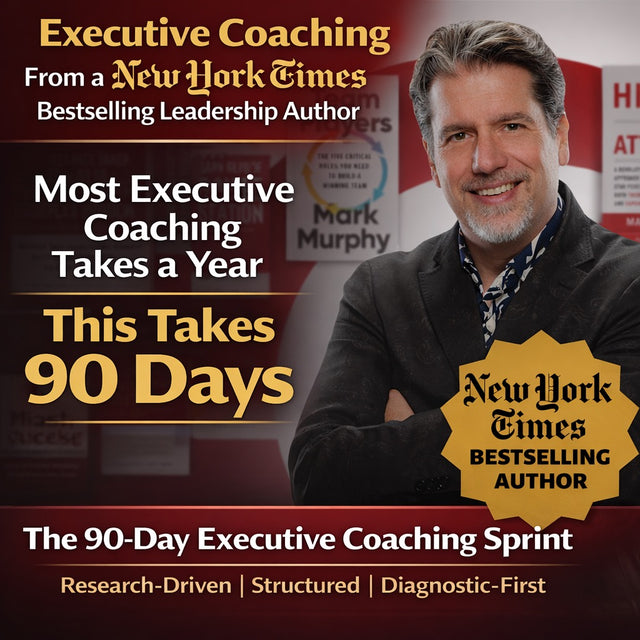
One useful way to understand executive coaching pricing packages is to look at a model that makes its structure explicit. Leadership IQ's executive coaching approach is built around a 90-Day Executive Coaching Sprint rather than an open-ended retainer. That is an important distinction because it ties price to a bounded, time-constrained engagement design.
The Sprint is structured as a fixed-scope package with 12 sessions over 90 days, including a strategic intake, ten weekly sessions, and a wrap-up session. It also includes between-session support, reflection prompts, a progress report, and a post-coaching development plan. The structure emphasizes urgency, accountability, and visible movement rather than a loosely defined long-term conversation.
This kind of package design is especially relevant for leaders who do not need indefinite coaching, but do need a serious intervention around executive presence and communication, stakeholder influence, decision-making, delegation, team alignment, or resistance management.
Leadership IQ also describes an optional Blind Spot Breakthrough Diagnostic that adds stakeholder interviews, severity ratings, benchmarking, and a dedicated reveal session. That matters from a pricing perspective because it shows how coaching packages can expand through diagnosis rather than by simply adding more coaching sessions. In many executive contexts, the most valuable addition is not another hour of reflection. It is sharper visibility into the patterns that others already see but the leader does not.
Done well, that kind of front-loaded diagnosis can make a coaching engagement more efficient and more credible. It can also help organizations justify the strategic investment because the work is tied to visible leadership challenges rather than abstract promises of growth.
Why Packages Often Beat Pay-As-You-Go Coaching
Many leaders initially assume that pay as you go coaching will be more flexible and therefore more attractive. In reality, fixed coaching packages often outperform hourly billing in executive settings for a few reasons.
Packages create commitment. When the timeline, session cadence, and deliverables are defined upfront, both the coach and the client are more likely to treat the work as a serious coaching engagement rather than a series of isolated conversations.
Packages support better leadership development because they create structure around reflection, practice, and reinforcement. Change at the executive level usually requires more than insight. It requires repeated application under pressure.
Packages make it easier for organizations to govern the investment. HR leaders and senior sponsors often need clarity on scope, confidentiality, progress markers, and total cost. Fixed packages make those issues easier to manage.
This does not mean hourly coaching has no place. It can work well when the problem is narrow, the executive is highly self-directed, or the relationship is primarily advisory. But for many organizations, structured packages create a better balance of clarity, accountability, and cost control.
What the Evidence Suggests About Coaching Package Design
Research on coaching generally points toward positive effects, but the details matter. Coaching is not a magic intervention where more sessions automatically produce better results. The value of coaching often depends on whether the design matches the problem and whether the work translates into behavior change on the job.
That has direct implications for executive coaching pricing packages.
This is why serious buyers should evaluate a provider's theory of change. What does the coach believe actually drives improvement? Is the package designed around awareness, behavior change, stakeholder alignment, habit formation, or broader leadership system support? Those assumptions shape the package and its price.
Context Matters More Than Most Buyers Realize
Executive coaching does not happen in a vacuum. A senior leader operates inside a system of peers, bosses, direct reports, politics, incentives, and culture. That is one reason stakeholder touchpoints and context management often play such a large role in more expensive packages.
A leader may know intellectually that they need to delegate more or listen better. But if their role rewards urgency, over-control, or conflict avoidance, then insight alone will not change much. Coaching is more likely to work when the package helps the leader apply new behaviors in the actual environment where the problem lives.
This is one reason structured executive coaching packages often include elements such as stakeholder interviews, sponsor conversations, or progress reviews. Those features are not administrative extras. They are often part of what makes the coaching relevant to the executive's real world.
Executive Coaching as a Risk-Reduction Investment
Organizations often justify executive coaching as leadership development, but in many cases the real logic is risk management.
Some senior leaders need coaching because they are moving into bigger roles and need support making the transition successfully. Others need coaching because certain patterns, poor delegation, weak strategic thinking, low self-awareness, conflict-heavy behavior, or ineffective communication, create a real risk of failure.
This is where the economics become easier to understand. When an executive is responsible for a large team, major strategy execution, important customer relationships, or a critical business function, the cost of poor leadership can dwarf the cost of coaching. A failed transition, a preventable resignation, or an executive derailment can create disruption far more expensive than even a relatively premium coaching package.
That does not mean every executive coaching investment produces a clean or provable ROI. It does mean the financial logic often rests on preventing costly leadership failure, improving leadership effectiveness, and protecting organizational performance.
How to Evaluate Whether Executive Coaching Is Worth the Investment
When buyers ask whether executive coaching is worth it, they often want certainty. Realistically, coaching is best evaluated through a mix of qualitative and operational measures rather than a simplistic formula.
Useful evaluation questions include:
- Did the executive improve on the specific leadership goals identified at the start?
- Did stakeholders observe meaningful changes in communication skills, self awareness, emotional intelligence, or decision making?
- Did the leader's effectiveness improve in ways that affected team performance, alignment, or execution?
- Did the engagement help avoid a larger cost such as turnover, failed transition, or executive conflict?
A pragmatic way to think about value is cost per leadership outcome. Instead of asking only whether the coaching cost felt high or low, ask what the organization gained relative to the problem being solved.
If a package helped a senior leader stop behaviors that were driving attrition, improve cross-functional influence, or become more credible during a critical transition, the investment may be justified even if the exact ROI is difficult to calculate.
How Leadership IQ Can Fit Smoothly Into This Discussion
For a search term like executive coaching pricing packages, readers are often comparing providers while also trying to understand how different package structures work. That is exactly where Leadership IQ can fit naturally.
Leadership IQ's coaching model stands out less because it makes vague claims about transformation and more because it defines the engagement clearly. The 90-Day Executive Coaching Sprint creates a fixed package with visible structure, high session cadence, and clear deliverables. For executives and organizations that are frustrated by long, ambiguous retainers, that kind of design can be appealing because it links coaching costs to a specific timeframe and a more disciplined process.
Leadership IQ's research can also fit naturally when it sharpens the practical case for coaching. Blind Spots research is especially relevant because executive coaching often begins only after a gap has emerged between how leaders think they are showing up and how others actually experience them. The point is not to insert proprietary concepts at random. The point is that blind spots are often the hidden mechanism behind coaching demand, especially when a leader's results have plateaued or stakeholder confidence has eroded.
The same is true of why CEOs get fired. Many executive failures are not caused by a lack of technical skill. They stem from judgment failures, people issues, strategic misreads, or behavior patterns that become too costly to ignore. Coaching is often most valuable when it addresses those deeper executive risks before they turn into public or irreversible problems.
How to Choose the Right Executive Coach or Leadership Coach
Selecting the right executive coach requires more than comparing hourly rates or glossy credentials. Buyers should evaluate both the coach and the coaching package.
Useful vetting questions include:
- What kinds of leaders has the coach worked with before?
- What challenges does the coach handle especially well?
- How does the coach structure the first coaching session and the overall coaching engagement?
- What assessments, diagnostics, or stakeholder touchpoints are included?
- How is confidentiality handled?
- How are stalls or resistance handled if progress slows?
- What does success look like, and how will it be evaluated?
The right executive coach is not simply the one with the most certifications or the most polished sales language. The right coach is the one whose method, experience, and package design fit the leadership challenge at hand.
When Life Coaching, Leadership Coaching, and Executive Coaching Diverge
Some searchers also compare executive coaching with life coaching or broader leadership coaching. That distinction matters for pricing and expectations.
Life coaching often focuses on broader personal goals, clarity, confidence, or whole-person development. Leadership coaching usually focuses more specifically on workplace leadership behavior, management capability, and professional goals. Executive coaching typically goes further into organizational complexity, influence, stakeholder management, decision making, executive presence, and performance under high stakes.
These categories overlap, but they are not interchangeable. A senior executive trying to improve board communication, navigate a tense leadership team, or lead through a major transition usually needs a coach with specialized expertise in executive settings, not just a generalist focused on personal growth.
A Fair Pricing Evaluation Checklist
Before signing any proposal, executives and organizations should pressure-test the package.
Ask:
- What exactly is included in the package?
- How many coaching sessions are included, and over what timeframe?
- Are assessments or stakeholder interviews included?
- Who is actually delivering the coaching?
- How much preparation happens outside each session?
- Is there support between sessions?
- How are confidentiality boundaries defined?
- What happens if momentum stalls?
- Is there a written engagement agreement?
- What is the total cost, and what additional fees might arise?
These questions help separate polished marketing from real package value.
Sample Ways to Think About Coaching Packages and Pricing Templates
Although every provider structures things differently, buyers often benefit from thinking in template form.
A lighter package might include a discovery session plus six structured sessions over a few months, with light email support.
A mid-tier package might include a more robust intake, eight to twelve sessions, an assessment or limited stakeholder input, and a written development roadmap.
A more comprehensive executive package might include a strategic intake, stakeholder interviews, multiple structured sessions, accountability check-ins, detailed reporting, and a wrap-up plan designed to extend the work beyond the engagement.
Those package templates are useful not because they define the perfect structure for every leader, but because they help buyers compare what different coaching fees are actually purchasing.
Procurement Tips for Organizations
Organizations buying executive coaching packages at scale should think beyond the individual leader.
They should consider:
- Which leader populations need coaching most
- Whether the provider can handle confidentiality and governance well
- Whether the package supports measurement without undermining trust
- How coaching aligns with broader leadership development goals
- Whether the pricing model supports budgeting and repeatability
For HR leaders, one of the biggest mistakes is approving packages that look similar on the surface but are fundamentally different in rigor, structure, and intended outcomes.
Final Thoughts on Executive Coaching Pricing Packages
Executive coaching pricing packages are ultimately about more than price. They are about what kind of leadership problem is being solved, what mechanism is being purchased to solve it, and how much rigor is built into the engagement.
Some buyers need a simple block of coaching sessions. Others need a comprehensive coaching program with diagnosis, stakeholder insight, accountability, and a clearly defined endpoint. Some need long-term support through monthly retainers. Others will get more value from an intensive, fixed-scope package.
The smartest buyers do not focus only on hourly rates or headline coaching costs. They look at package design, coach fit, leadership risk, and the likelihood that the engagement will produce real changes in behavior and performance.
That is the real question behind executive coaching pricing packages. Not what the market charges in the abstract, but what kind of coaching investment is most likely to help leaders succeed.