Leadership Roles and Responsibilities: What Every Leader Is Actually Accountable For
Only 20.4% of employees believe their leader is doing an excellent job distinguishing between high and low performers. That's not just a performance management problem — it's a role clarity crisis. When leaders don't understand what they're actually responsible for, they can't prioritize their time, energy, or decisions effectively. Leadership IQ research reveals that organizations with unclear leadership roles consistently struggle with accountability, employee engagement, and measurable results.
The confusion isn't just about job titles or org charts. It's about the fundamental gap between what organizations think leadership means and what leaders are actually equipped to do. When 67% of managers regularly avoid giving critical feedback and 61% spend more time trying to fix their worst performers than developing their best, we're looking at leaders who don't know where to focus their efforts. Leadership roles in an organization encompass various levels and styles, aiming to influence and guide teams toward shared goals — and when those roles aren't clearly defined, everything downstream breaks.
This guide covers what leadership roles actually entail at every level, the core leadership skills each role demands, how roles evolve across career stages, and how to measure whether your leaders are fulfilling their responsibilities. If you're ready to start building these capabilities, explore Leadership IQ's training programs. For personalized development, consider executive coaching. Or bring these frameworks to your organization through a leadership keynote.

Define the Leadership Role
A leadership role is a defined set of accountabilities for influencing, developing, and guiding people toward organizational goals — distinct from the technical or operational work those people perform. The leadership process is a lifelong journey of continuous learning and growth, not a one-time promotion event.
A leader versus a manager: managers focus on executing processes, maintaining systems, and driving efficiency through others. Leaders set direction, develop people, and create the conditions where teams can achieve goals that exceed expectations. In practice, effective leadership requires both — but the distinction matters because it defines where leaders should invest their time.
Three common leadership roles: the team leader (directly managing individual contributors and accountable for daily performance), the manager of managers (building leadership capability in others and bridging strategy to execution), and the executive leader (chief executive officer, vice president, chief information officer — setting strategic direction for business units or the entire organization). The Player role is also essential — where individuals contribute directly to achieving organizational goals while also influencing others.
Discover your own leadership style and how it maps to your current role:
Why Unclear Roles Produce Weak Results
Leadership IQ's research with 689 HR directors and executives paints a stark picture. Nearly 70% of high performers are at risk of burnout because they're carrying too much workload and covering for low performers. Only 35% of HR executives would trust their managers to handle difficult employees without HR support. That's not a skills problem — that's a role definition problem. If leaders don't know they're responsible for managing difficult personalities, they won't develop the competence to do it.
Research across 3,018 leaders reveals the specific gaps this creates. Only 19% are adept at reducing employee burnout, and just 26% have mastered developing middle performers into high performers. These aren't random skill deficits — they're predictable outcomes when leadership responsibilities aren't clearly articulated.
When roles are murky, employees can't distinguish between what their leader should handle versus what they should escalate. Decision making slows because authority isn't clear. Accountability breaks down because nobody knows who owns which outcomes. The result: overall productivity drops and well being suffers across the team.

Core Leadership Skills for Team Leaders
Effective leaders combine strong communication, emotional intelligence, and strategic decision making to inspire teams and drive results. Effective leadership requires a blend of interpersonal soft skills and technical hard skills. Here are the top leadership skills relevant to teams, with team leader-specific examples:
- Performance feedback delivery — The ability to give specific, behavior-based feedback that changes performance. Team leader example: using the FIRE framework to address a missed deadline in your weekly one-on-one
- Communication adaptability — Adjusting your communication style to match your audience. Effective leaders are active listeners who can adapt their communication for different audiences. Team leader example: leading with data for your analytical direct report and with impact for your personal communicator
- Emotional intelligence — Recognizing and managing your own emotions while reading others'. Emotional intelligence is crucial for fostering empathy and navigating conflict. Team leader example: noticing a normally engaged team member has gone quiet and addressing it privately before it becomes a performance issue
- Goal setting — Creating inspiring, measurable objectives that connect daily work to the bigger picture. Team leader example: setting quarterly goals that each team member can trace directly to the organization's top priorities
- People management and development — Building capability in others through coaching, stretch assignments, and structured support. A key responsibility is evaluating your team's performance, assessing individual strengths and weaknesses, and identifying areas for improvement
- Conflict management — Addressing disagreements before they damage team dynamics. According to the American Management Association, managers spend at least 24% of their time managing conflict
Decision Making and Making Decisions
One of the foremost responsibilities of a leader is to make good decisions while leading people — ensuring that decisions are logical and well-considered. A simple decision making framework: (1) Define the decision in one sentence. (2) List three viable options. (3) Evaluate each against your top three criteria (impact, feasibility, alignment with organizational goals). (4) Decide within a defined timeframe. (5) Communicate the rationale.
Making decisions under pressure — two examples: A team leader discovers at 2 PM that a client deliverable due at 5 PM has a critical error. She evaluates three options (fix internally, request extension, partial delivery with fix timeline), weighs client relationship impact against quality, and decides within 15 minutes. A manager learns that two key employees want to transfer to the same internal role. He evaluates who's the better fit, considers development impact for both, and makes a transparent decision the same day rather than letting uncertainty linger.
One-step checklist for transparent decisions: After every significant decision, share three things — what you decided, why you decided it, and what you considered but rejected. This practice builds trust even when people disagree with the outcome.
Critical Thinking for Leaders
Critical thinking for leaders means evaluating information objectively, questioning assumptions, and reaching well-reasoned conclusions — even under time pressure and with incomplete data. The FrED framework provides a structured approach: Frame the problem clearly, gather relevant Evidence, consider alternative Diagnoses, and decide based on the strongest evidence. This prevents the two most common leadership thinking errors: jumping to conclusions and anchoring on the first piece of information.
Exercise to practice critical thinking: Take a recent decision you made and write down the three assumptions that drove it. Then ask: "What if each assumption were wrong?" This retrospective challenge builds the habit of questioning your own reasoning before you commit to action.
Conflict Management Techniques
A study found that 60% of U.S. employees have not received any conflict management skills training — a significant gap in essential leadership competencies. When conflicts arise, effective leaders should resolve or mitigate the conflict before it negatively impacts the business. Properly managed conflict can lead to stronger bonds or new ideas.
Five conflict management strategies for leaders: (1) Address conflicts early — small issues compound into big ones. (2) Separate the people from the problem — focus on behaviors and outcomes, not personality judgments. (3) Listen to both sides fully before forming a view. (4) Find common ground — identify shared goals that both parties care about. (5) Document agreements and follow up — a conflict isn't resolved until the new behavior holds.
Short mediation script for team leaders: "I've noticed tension between you and [name] around [specific issue]. I'd like to help us work through this. [To person A]: Can you describe the situation from your perspective? [To person B]: And your perspective? What would a good outcome look like for both of you? Let's agree on specific next steps and check in next week."
Traits of a Good Leader for Effective Leadership
Six observable traits of a good leader: (1) Integrity — being consistent, honest, and ethical even when unobserved, which earns the trust necessary to establish credibility. (2) Self-awareness — understanding your strengths and weaknesses, often cited as the starting point for effective leadership. (3) Adaptability — one of the most important leadership skills, allowing leaders to respond effectively to internal and external changes. (4) Accountability — owning outcomes, good and bad, without deflecting blame. (5) Empathy — reading team dynamics and individual needs accurately. (6) Decisiveness — making timely decisions with available information rather than waiting for certainty.
Behaviors that demonstrate effective leadership: following through on commitments, giving direct feedback without avoiding discomfort, investing time in developing others' capabilities, and creating an environment of open communication where people feel safe raising concerns.
A good leader fulfills the role consistently. A great leader transforms the team's understanding of what's possible.
What Makes a Great Leader
Three real-world great leader examples with transferable lessons:
The turnaround leader. A VP inherited a division with the lowest engagement scores in the company. Instead of launching a grand strategy, she spent her first 30 days in one-on-one conversations with every team member, asking what was broken and what they needed. Then she fixed the three most-cited problems within 60 days. Lesson: great leaders listen before they act, and they demonstrate credibility through visible follow-through.
The developer. A team leader noticed his two strongest performers were plateauing. Instead of giving them more work (the default), he gave them stretch assignments outside their comfort zone — one led a cross-functional project, the other mentored a struggling peer. Both were promoted within a year. Lesson: great leaders invest in growth, not just output.
The innovator. An executive leader noticed her organization was consistently late to market. Rather than demanding faster execution, she created a "rapid experiment" process where teams could test new ideas in creative ways without full business cases. Three of those experiments became the company's fastest-growing product lines. Lesson: innovative leaders create systems for innovation, not just ideas.
Leadership Style and Organizational Culture
Main leadership style categories: Diplomats prize interpersonal harmony. Pragmatists demand high standards. Stewards value process and cooperation. Idealists focus on innovation and vision. Transformational leadership inspires teams by focusing on the bigger picture and fostering a culture of innovation. Strategic leadership focuses on long-term goals and defining company culture, while operational leadership translates strategic goals into actionable plans.
How leadership style shapes organizational culture: good leaders are intentional about communicating the organization's culture to their teams, which is vital for team building, people management, and creating a positive, high-performing work environment. A leader's default style sets the tone for how the team communicates, handles conflict, approaches risk, and treats each other.
Adapting your leadership style to context: highly ambitious employees want to be challenged and pushed. Employees experiencing burnout need structure and stability. New leaders need directive support. Experienced professionals need autonomy. The most effective leaders adjust their approach based on what the situation and the person require, not what feels most comfortable.
Formal Leadership Roles Organizations Define
Organizations structure leadership roles across multiple roles and levels, each carrying distinct responsibilities while building on the universal foundation.
Front-line team leaders carry the most direct people management responsibilities. They're accountable for daily performance conversations, immediate problem-solving, and translating priorities into individual action. Research shows these leaders struggle most with difficult conversations — only 50% can comfortably tell an employee "not yet" when promotion expectations can't be met.
Middle managers bridge strategy and execution. They're responsible for cascading organizational goals while building leadership capability in other managers. The challenge: 61% spend more time fixing poor performers than developing their best people.
Senior executives — chief executive officer, vice president, chief information officer — focus on strategic direction, organizational capability building, and culture creation. Only 40% demonstrate high proficiency in overcoming resistance to change. Each level carries increasing scope but doesn't eliminate the responsibilities of lower levels.
How Roles Change Across Career Stages
Early-career leaders focus on transitioning from individual contributors to people management — developing skills in feedback delivery, performance differentiation, and basic coaching. Many haven't received proper preparation, and the gap shows.
Mid-career leaders shift toward systems thinking and strategic execution. They become accountable for outcomes beyond their direct span of control, requiring skills in influence, collaboration, and complex problem-solving. This is where managing hybrid teams (only 28% are adept) and reducing burnout (only 19%) become critical.
Senior leaders evolve into architects of organizational capability. The coaching leadership style becomes essential — these leaders must develop other leaders rather than managing individual contributors directly. Leaders who prioritize authentic relationship building create a foundation for exceptional performance, leading to increased productivity and reduced absenteeism.
Professional Development Opportunities and Professional Development
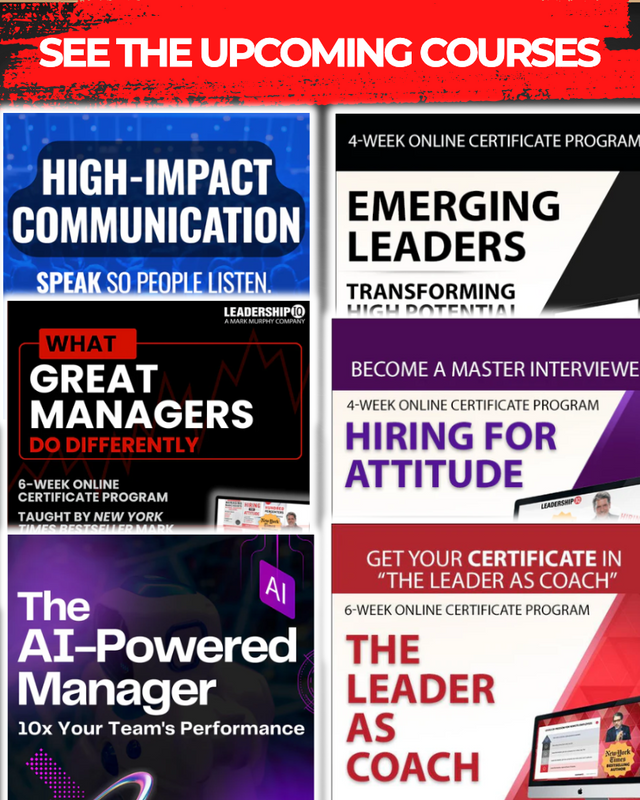
Professional development opportunities for leaders include: structured training programs (like Leadership IQ's research-based courses), executive coaching for personalized skill building, peer learning groups for accountability and shared problem-solving, stretch assignments that push leaders outside their comfort zone, and conference and industry events for broader perspective.
Short microlearning paths for ongoing growth: 15–20 minute modules completed weekly, each focused on one specific leadership capability. This approach fits the reality that leaders can't disappear for week-long seminars. Mentorship programs for first-time leaders: pair new leaders with experienced managers who can provide real-time guidance during the critical first year in a leadership position.
Development Plan for Team Leaders
12-month development plan template: Months 1–3: Establish baseline through 360-degree feedback and leadership style assessment. Focus on the single highest-impact skill gap. Milestone: deliver structured feedback using the FIRE framework at least three times per week. Months 4–6: Expand to a second skill area — conflict management or goal setting. Milestone: resolve one team conflict using the mediation script above. Months 7–9: Shift to development of team members. Milestone: create an individual development plan for every direct report. Months 10–12: Integrate all skills and measure results. Milestone: demonstrate measurable improvement in 360-degree feedback scores and team engagement.
Learning resources for each milestone: Leadership IQ training modules, coaching sessions (peer or professional), and assigned reading from Leadership IQ's research library.
Implementing Effective Leadership in Teams
Three practical steps to embed effective leadership: (1) Make leadership responsibilities explicit — write down what each leader is accountable for and share it with their team. Ambiguity kills accountability. (2) Build leadership skills practice into daily work — assign specific behaviors to practice each week, debrief results, and adjust. (3) Measure leadership effectiveness separately from business results — because a leader can hit their numbers while destroying their team's engagement.
Delegation checklist for team leaders: Define the outcome clearly. Choose the right person based on capability and development needs. Provide the authority and resources they need to succeed. Set check-in points that balance oversight with autonomy. Debrief the outcome — both what was delivered and how the team member grew through the experience.
Two team rituals that boost accountability: Start every week by reviewing the previous week's commitments (did we do what we said we'd do?) and end every week with a brief reflection on what each person learned. These rituals make accountability visible and normalize continuous improvement.
Measuring Impact: Decision Making, Conflict Management, Leadership Skills
KPI for decision making quality: percentage of decisions that achieved their intended outcome, reviewed quarterly. Track this by documenting decisions, rationale, and results — then reviewing the hit rate.
Metric for conflict frequency: number of escalated conflicts per quarter (decreasing trend indicates better early intervention). Metric for resolution time: average days from conflict identification to documented resolution (shorter is better). Both metrics reveal whether your leaders are fulfilling their conflict management responsibilities.
Track leadership skills using a 360-feedback tool administered quarterly. Compare self-ratings to team member ratings — the gap between how leaders see themselves and how others experience them is the most actionable data point for development.
Resources and Next Steps
Leadership IQ programs and research: training programs mapped to every leadership level, from first-time team leaders to executive leadership. Assessment tools for leadership style, communication style, and leadership effectiveness. Research articles on leadership roles, performance differentiation, and team engagement.
Three immediate actions for aspiring leaders: (1) Take the leadership style quiz above to understand your default approach and its blind spots. (2) Identify the one leadership skill that, if improved, would have the biggest impact on your team's performance — and practice it daily for 30 days. (3) Ask your team: "What's one thing I could do differently that would make the biggest difference for you?" Act on what you hear. That's how leadership roles transform from job titles into real capability.
How Training Clarifies and Prepares Leaders for Their Roles
Understanding leadership roles is just the first step — developing the capabilities to excel in those roles requires structured, research-driven training. Leadership IQ's programs focus on the practical skills that transform role clarity into performance improvement: how to have difficult conversations that 67% of managers avoid, techniques for developing middle performers that only 26% have mastered, and methods for reducing burnout that just 19% currently use effectively.
You can also explore executive coaching for personalized development or bring these frameworks to your organization through a leadership keynote.