Nonprofit Executive Coaching: Evidence, Strategy, and a Practical Framework for Boards and Senior Leaders
Why Nonprofit Executive Coaching Has Become a Strategic Leadership Issue
Nonprofit executive coaching has become more than a discretionary leadership perk. In many organizations, it now sits at the intersection of governance, leadership continuity, staff retention, fundraising effectiveness, and mission execution. Nonprofit executives operate inside a leadership environment that is structurally different from the corporate settings assumed by much of the executive coaching literature. They answer to a board with fiduciary authority, manage relationships with funders and donors who may carry both explicit and implicit expectations, work within compliance requirements set by regulators and auditors, and lead staff teams that are often stretched thin while serving communities with urgent needs. In that context, nonprofit executive coaching can be one of the few structured ways to strengthen judgment, prioritization, communication, and follow-through at the exact point where leadership pressure is most intense.

The size and economics of the sector add another layer of complexity. Many nonprofits are small by budget, which means leadership development spending must compete directly with program delivery. That tension often causes organizations to delay investments in coaching until a transition, crisis, board conflict, or leadership stall becomes impossible to ignore. Yet the same budget pressure also makes leadership quality more consequential. When a nonprofit has little margin for error, a senior leader’s ability to make clear decisions, align stakeholders, retain talent, and communicate a focused direction can shape organizational performance in a way that ripples across mission delivery, fundraising, and community trust.
The deep research report highlights a sector facing rising demand, widespread financial pressure, limited reserves, inflation-driven costs, and uncertainty around future funding streams. In that climate, leadership effectiveness is not an abstract development topic. It affects whether the organization can stay focused, preserve staff capacity, maintain donor confidence, and adapt without losing its mission center.
Workforce strain raises the stakes further. Burnout, retention risk, and chronic overload are not side issues in the nonprofit sector. They are leadership issues. When staff members feel exhausted, unclear on priorities, or repeatedly pulled into shifting initiatives, mission execution suffers. Nonprofit executive coaching can help leaders address the behaviors that often sit underneath these problems, such as urgency signaling, lack of delegation, weak feedback loops, poor decision cadence, or inconsistent communication. In that sense, coaching is not simply about helping a leader feel better supported. It is about improving the conditions under which the organization can perform.
Governance adds another reason nonprofit executive coaching matters. The board-chief executive partnership can be one of the most productive forces in a nonprofit, or one of the most destabilizing. Boards sometimes drift into micro-governance, split around conflicting expectations, or struggle to separate governance duties from management responsibilities. Coaching can help nonprofit executives clarify boundaries, manage board politics without becoming cynical, communicate more effectively with the chair, and maintain a mission-centered stance even when stakeholder demands compete.
That combination of resource scarcity, stakeholder complexity, mission pressure, and governance scrutiny explains why nonprofit executive coaching has become a strategic issue rather than a nice-to-have. The question is no longer whether nonprofit leaders benefit from support. The better question is which kind of coaching best fits the realities of nonprofit leadership.
What Nonprofit Executive Coaching Is and What It Is Designed to Do
Nonprofit executive coaching is a structured, confidential leadership development process designed to help senior nonprofit leaders improve how they think, decide, communicate, influence, and execute. It is not therapy, and it is not simply mentoring. Therapy typically addresses personal healing and mental health concerns. Mentoring usually involves advice from someone who has walked the same path. Executive coaching focuses on helping a leader strengthen performance in the role they hold now or the role they are growing into.

For nonprofit leaders, that often means working through issues such as board relations, leadership presence, stakeholder communication, prioritization under resource constraints, delegation, fundraising leadership, team alignment, and leadership blind spots. The coach’s role is not to run the nonprofit, dictate strategy, or replace sound governance. The coach serves as a thought partner and accountability mechanism, helping the leader see patterns that may be invisible from inside the role and convert insight into specific behavioral change.
The strongest nonprofit executive coaching engagements are grounded in observable leadership behavior. They do not promise personality transformation or generic inspiration. They focus on concrete shifts that matter to the organization, such as stronger decision making, better board communication, improved team follow-through, more effective delegation, healthier operating rhythms, and clearer alignment between leadership behavior and mission impact. The research synthesis in the report points in this same direction: coaching tends to have its strongest effects on behavior and goal-related action, more than on deep personal traits or broad attitudinal change.
That matters for nonprofit leaders because their work is so visible to staff, boards, donors, and communities. A coaching engagement should help the executive not only think differently, but lead differently in ways other people can actually experience.
The Unique Challenges Facing Nonprofit Leaders
Nonprofit leadership brings a distinct set of pressures that shape the need for executive coaching. In corporate settings, executive coaching is often discussed in terms of leadership competencies or executive presence. In nonprofits, the real leadership challenge is usually more structural. Leaders sit in the tension between mission and margin, long-term aspiration and daily scarcity, board authority and management autonomy, donor expectations and operational reality.
Governance and the Board-Executive Relationship
One of the defining differences in nonprofit leadership is that the chief executive does not answer to a single boss. The executive answers to a board, and that board may contain members with very different views of the role they should play. Some directors want to stay strategic. Others want to get involved in operations. Some focus heavily on fundraising. Others focus on program outcomes or risk. The result is that many nonprofit executives spend substantial time managing role ambiguity and stakeholder complexity.
This is one reason nonprofit executive coaching can have such high leverage. A coach can help the leader clarify decision rights, establish better communication rhythms with the board chair, reduce the likelihood of surprises, and respond to competing agendas without drifting away from mission priorities. When board dynamics become strained, coaching can also help the executive manage their own reactions so that tension does not escalate into defensiveness, avoidance, or mixed messages.
Financial Constraints and Resource Scarcity
Many nonprofit executives lead under persistent resource constraints rather than temporary budget pressure. Limited reserves, unpredictable funding, and increasing service demand force leaders to make difficult tradeoffs with very little room for error. Under these conditions, poor prioritization is expensive. Weak follow-through drains capacity. A badly scoped initiative can consume time and morale that the organization cannot afford to lose.
This is where nonprofit executive coaching often becomes highly practical. The coaching conversation is not only about personal leadership style. It is about how a leader creates discipline around priorities, resists the temptation to chase every good idea, sets a sustainable pace, and builds team systems that protect capacity. When resources are tight, sharper leadership decisions can produce outsized impact.
Burnout, Retention, and Workload Pressure
Nonprofit leaders often inherit teams dealing with chronic overload. Staff burnout can show up as turnover, disengagement, conflict, or a decline in service quality. While some of these pressures come from the funding environment itself, leadership behavior still shapes how intensely staff experience them. Leaders influence whether priorities stay stable, whether meetings are useful, whether truth can travel upward, whether delegation is real or cosmetic, and whether people feel trapped in constant urgency.
A skilled executive coach helps nonprofit leaders examine how their own habits may either reduce or intensify burnout. That work often includes feedback routines, decision clarity, communication, accountability, and how the executive creates psychological safety without lowering standards. In this sense, nonprofit executive coaching can strengthen both leadership effectiveness and workforce sustainability.
Fundraising and External Stakeholder Demands
Fundraising presents another distinctive leadership challenge. Many nonprofit executives are expected not only to run the organization, but also to serve as a visible ambassador to donors, foundations, and community stakeholders. That requires strategic communication, emotional steadiness, and the ability to connect financial asks to mission in a credible way. It also requires bringing the board into fundraising in ways that are productive rather than performative.
Coaching in this area is usually less about teaching fundraising mechanics and more about helping the executive lead a culture of philanthropy, strengthen external influence, handle uncomfortable conversations, and align internal operations with external promises.
Why Leadership Development Matters So Much in the Nonprofit Sector
Leadership development in the nonprofit sector is often underfunded precisely because it is easy to label as overhead. But that framing misses the real issue. Leadership quality affects whether strategy becomes action, whether boards and executives function well together, whether staff stay or leave, whether donors feel confidence, and whether the organization can hold steady under pressure.
The research report notes the long-running critique of the overhead myth, including the argument that leadership, governance, transparency, and results matter more than simplistic overhead ratios. That point is especially relevant when evaluating nonprofit executive coaching. Coaching should not be treated as cosmetic spending. It should be evaluated as a capacity investment, especially when it is tied to leadership transition, succession risk, execution discipline, staff retention, board effectiveness, or fundraising strength.
For nonprofit leaders, leadership development often needs to build a set of interlocking capabilities rather than a single skill. Those capabilities may include:
- strategic decision making under uncertainty
- board communication and stakeholder management
- delegation and accountability
- executive presence and confidence
- conflict navigation
- team alignment and role clarity
- self-awareness and recognition of blind spots
- resilience and work-life balance under mission-driven pressure
- fundraising leadership and external influence
The strongest coaching engagements start by identifying which of these capabilities matter most in the leader’s current context, rather than applying a generic template.
How Nonprofit Executive Coaching Strengthens Decision Making and Mission Impact
Good nonprofit executive coaching strengthens the leader in ways that can improve the organization’s mission impact. That connection is not always direct or immediately measurable, but it is real. A leader who makes clearer decisions, communicates priorities more consistently, and builds healthier operating rhythms can increase the organization’s ability to execute, retain talent, and stay aligned with its purpose.
Research in the report suggests that coaching is especially effective when outcomes are defined behaviorally and linked to organizational realities the nonprofit can track. That may include decision cycle time, meeting effectiveness, retention of key staff, cross-functional coordination, donor pipeline stability, or progress on strategic goals.
For nonprofit executives, coaching can improve decision making by helping them slow down where reflection is needed and accelerate where hesitation is costly. It can also strengthen mission impact by helping the leader distinguish between activity and progress. Many nonprofits are filled with worthy ideas, urgent requests, and noble distractions.
The mission connection becomes especially strong when coaching addresses recurring leadership patterns such as overcommitment, conflict avoidance, inconsistent follow-through, or difficulty saying no. These behaviors often look personal on the surface, but in a nonprofit they can distort budget choices, staff energy, donor confidence, and service delivery. Changing them can create real organizational lift.
Leadership IQ’s Approach to Nonprofit Executive Coaching
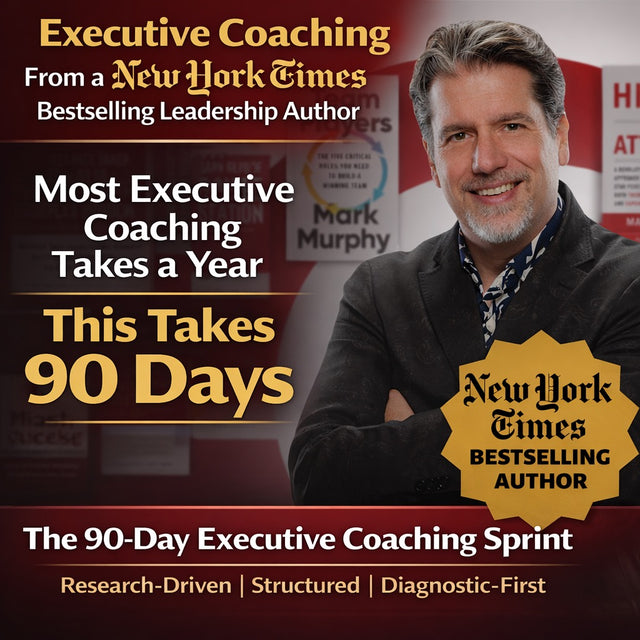
Leadership IQ’s executive coaching approach fits particularly well with nonprofit leaders who need a focused, practical process rather than an open-ended conversation. The methodology described in the source material is diagnostic-first, time-bound, and built to produce observable change quickly. Instead of starting with broad self-reported goals alone, the process begins by identifying what is actually driving leadership challenges, then translating those findings into targeted action.
A central feature of the model is the 90-Day Executive Coaching Sprint, which includes 12 sessions over 12 weeks and begins with a deep strategic intake. The structure is designed to help executives test changes in real time, revisit results weekly, and build momentum through short feedback loops rather than waiting months to see whether anything has changed. Week 12 culminates in a documented review of progress and a forward plan.
That design has several strengths for nonprofit leaders. First, it respects the reality that nonprofit executives often cannot spend a year in a vague development process with loosely defined outcomes. They need support that is practical, accountable, and connected to live issues such as board complexity, executive isolation, decision fatigue, leadership transitions, change fatigue, team problems, or post-crisis recalibration. Leadership IQ explicitly frames coaching around those kinds of high-stakes leadership challenges rather than as a remedy for something being broken.
Second, Leadership IQ’s approach places unusual emphasis on blind spots and stakeholder reality. Its optional blind spot diagnostic uses qualitative stakeholder interviews and benchmarking to surface patterns that a typical self-assessment may miss. That can be especially valuable in nonprofit settings, where executives may receive filtered feedback from boards, staff, and donors, and where the social costs of not hearing the truth can be substantial.
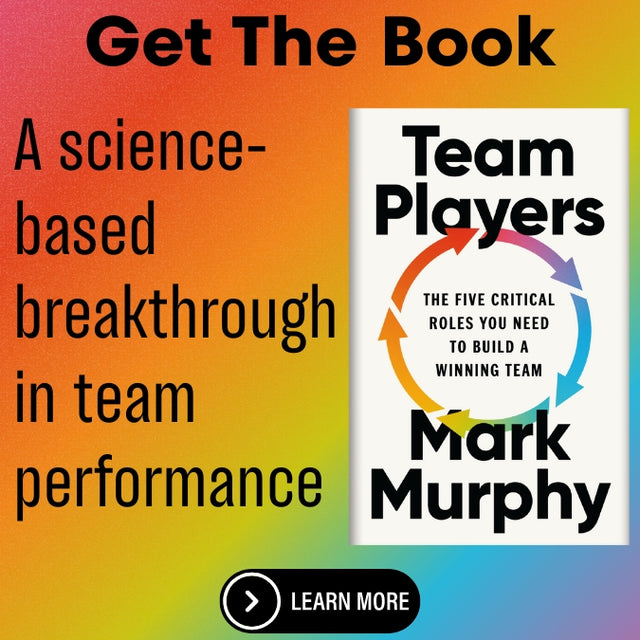
Third, the model integrates proprietary frameworks that can help leaders understand themselves and their teams more clearly. The Team Players framework examines five distinct team roles, while the FIRE Model supports more effective feedback. These tools can be useful for nonprofit executives who are trying to strengthen team alignment, improve communication, or address execution and people-management issues in a way that is concrete rather than abstract.
This approach also aligns well with several issues Mark Murphy has researched over the years. Leadership IQ’s work on blind spots is especially relevant in nonprofit environments where senior leaders may be highly committed to the mission yet still unaware of the behaviors that are frustrating staff or confusing stakeholders. The same is true of research around why CEOs get fired, which often comes down less to technical incompetence and more to issues like poor judgment, relationship breakdowns, weak adaptability, or blind spots that grow unchecked. Those themes translate directly into nonprofit executive coaching because nonprofit leaders face equally high consequences when leadership patterns erode trust or execution, even if the organizational context differs from the corporate world.
Coaching Models and Provider Approaches in the Executive Coaching Market
Executive coaching is not one standardized service. Providers make very different choices about how coaching begins, how progress is measured, how involved the organization is, and whether the process is oriented toward reflection, behavior change, assessments, scaled access, or stakeholder visibility. Those differences matter a great deal when selecting nonprofit executive coaching.
Some providers emphasize platform-enabled coaching at scale, which can work well when an organization wants broad access for multiple leaders. Others lean on assessment-heavy competency models, which may fit nonprofits that want coaching tied into succession planning and formal talent systems. Some use research-managed coach networks, while others focus on stakeholder-visible behavior change or leadership advisory anchored in executive assessment. The report reviews several of these approaches, including BetterUp, Korn Ferry, Center for Creative Leadership, FranklinCovey, Marshall Goldsmith’s Stakeholder Centered Coaching, and Egon Zehnder.
For most nonprofits, the key question is not which provider has the biggest brand name. The key question is which coaching design best fits the organization’s reality. A nonprofit dealing with one executive in a high-stakes transition may need a compressed, diagnostic-first process with visible behavior change. A larger nonprofit system may need a more scalable coaching platform for several leaders. A board focused on succession planning may prefer a more assessment-led model.
Leadership IQ occupies a distinctive place within that landscape. Its structure is compressed, individualized, diagnostic-first, and built around rapid behavioral experimentation. For nonprofits that need focused executive support with a clear beginning, middle, and end, that can be a very strong fit.
What Research Says About Executive Coaching Outcomes
The evidence base for executive coaching is stronger than it once was, though it still comes with limits. Meta-analyses and systematic reviews generally show positive effects across outcomes such as performance, skills, well-being, coping, work attitudes, and goal-directed self-regulation. At the same time, the research also points to wide variation in methods, contexts, and outcome definitions.
For nonprofit leaders, the practical takeaway is straightforward. Executive coaching is most likely to be useful when it is tied to observable behavioral change and connected to outcomes the organization cares about. Research summarized in the report suggests that coaching tends to have stronger effects on behavior than on deep attitudes or personality characteristics. That makes nonprofit executive coaching especially valuable when the organization needs visible improvements in how the leader manages priorities, communicates, delegates, handles conflict, or influences stakeholders.
The report also highlights the importance of the working alliance between coach and executive, especially around goals and tasks. Rapport matters, but clear goals and disciplined work appear to matter even more. That is a useful filter for nonprofit buyers. A coaching relationship that feels supportive but never sharpens into concrete action may be pleasant, but it is unlikely to withstand budget scrutiny or produce meaningful organizational benefit.
Multisource feedback and 360-degree input can also be helpful, but only if designed thoughtfully. The report notes that stakeholder feedback is most valuable when it is specific, behavior-based, and paired with strong follow-through. Generic ratings can create false precision without revealing what actually needs to change. That is one reason qualitative stakeholder interviews can sometimes produce more useful insight than standardized score averages alone.
When Nonprofit Leaders Should Consider Executive Coaching
Nonprofit executive coaching can be useful at many points in a leader’s career, but several moments tend to stand out.
One is transition. A newly promoted executive director, CEO, or senior leader often faces a sudden expansion in visibility, complexity, and consequence. Decisions are more public, stakeholder relationships are more political, and the room for learning by trial and error is smaller.
Another is scale. A leader who has been successful at one level may find that what worked before no longer works when the organization becomes larger, more complex, or more externally scrutinized.
Coaching is also valuable during strain. That might mean board conflict, post-crisis rebuilding, culture fatigue, stalled fundraising, staff turnover, or a period when the executive feels isolated, overloaded, or trapped in reactive leadership.
Finally, coaching can be powerful before things deteriorate. Some of the best coaching engagements begin when a leader is performing reasonably well but wants to improve executive presence, strengthen decision making, increase self-awareness, and avoid the blind spots that can quietly derail otherwise capable leaders.
How to Design a Strong Nonprofit Executive Coaching Engagement
A strong nonprofit executive coaching engagement begins with problem definition. The organization should be clear about whether the need involves transition, performance elevation, stakeholder alignment, trust repair, fundraising leadership, or broader leadership development. The more specific the problem, the easier it is to choose the right coaching method.
The next step is deciding how diagnosis will work. Some engagements rely heavily on interviews, some on 360 feedback, some on assessments, and some on combinations of all three. The key is making sure the coaching is targeting the right behaviors and not simply the leader’s self-description of the problem.
Confidentiality also needs to be explicit. In organizational coaching, the relationship is often triadic: the executive is the coaching client, but the sponsor may be a board chair, HR leader, foundation, or CEO. That makes it critical to define what progress information can be shared, what remains confidential, and how sponsor check-ins will work. Nonprofit organizations need enough visibility to know the coaching is on track, but not so much that the process turns into surveillance or disguised performance management.
The measurement plan should be strong enough to avoid vagueness without pretending the organization can calculate a single precise ROI number. In practice, that usually means identifying behavioral leading indicators, gathering specific stakeholder feedback over time, and connecting the coaching to a small number of organizational outcomes already being tracked.
Practical Tips for Choosing a Nonprofit Executive Coach
When evaluating nonprofit executive coaching options, boards and senior leaders should look past polished marketing language and focus on fit.
The first issue is context fluency. A coach should understand the realities of nonprofit governance, donor dynamics, board relationships, and mission-driven accountability. Generic leadership advice that ignores those realities will not travel well into a nonprofit setting.
The second issue is method. Ask how the coaching will begin, what diagnostics will be used, how goals will be defined, how progress will be measured, and how confidentiality will be handled. Strong answers tend to be specific.
The third issue is visibility of outcomes. The coach does not need to reveal private conversations, but they should be able to explain how change will become visible in the leader’s behavior and in the organization’s experience of that leader.
The fourth issue is pace and structure. Some leaders benefit from a longer, more reflective process. Others need a defined sprint with a strong cadence. Nonprofit executives facing immediate pressure often benefit from coaching that is practical, structured, and action-oriented.
The fifth issue is chemistry. Expertise and method matter, but the executive must also trust the coach enough to surface the real problems instead of polishing appearances.
Red Flags in Nonprofit Executive Coaching
There are several warning signs nonprofit organizations should take seriously.
One is coaching that functions as disguised remediation without clear expectations. If the board wants the leader to change but refuses to define the issue or set sponsor boundaries, the coaching process is likely to become muddled.
Another is a coach who lacks nonprofit fluency. Boards, donors, volunteers, funders, and mission accountability create leadership conditions that differ substantially from many corporate settings. A coach who cannot navigate those distinctions may default to advice that sounds smart but fails in practice.
A third red flag is undefined measurement. If the provider cannot explain how progress will be assessed beyond vague satisfaction or personal insight, the engagement may not stand up to scrutiny.
A fourth is overreliance on a single diagnostic tool. No one instrument captures the full social and political reality of nonprofit leadership. Strong coaching usually blends multiple truth sources rather than treating one assessment as definitive.
Measuring Success in Nonprofit Executive Coaching
Success in nonprofit executive coaching should be defined in terms that matter to both the leader and the organization. That usually starts with leadership behavior. Is the executive making clearer decisions, communicating priorities more consistently, managing the board relationship more effectively, delegating better, and creating healthier team rhythms?
From there, organizations can look for supporting outcomes such as stronger staff retention, improved stakeholder confidence, better meeting discipline, greater fundraising steadiness, or more reliable execution of strategic priorities. It is rarely possible to attribute these outcomes to coaching alone, but it is often possible to see whether coaching is contributing to a more effective leadership pattern.
The most useful evaluation combines qualitative and quantitative evidence. Narrative feedback from board members, staff, or peers can reveal whether leadership behavior is changing in ways that are visible and meaningful. Organizational indicators can then provide supporting evidence that the changes are helping the nonprofit operate more effectively.
The Future of Nonprofit Executive Coaching
Several trends are shaping the future of nonprofit executive coaching. The coaching market is growing and becoming more professionalized, which means nonprofit buyers have more choices but also more variability to sort through. Technology-enabled delivery is expanding, making virtual coaching, hybrid models, and broader access easier than before. Diagnostic rigor and stakeholder validation are becoming more important, especially for buyers who need to justify coaching as a serious leadership investment. And coaching is increasingly being treated not as a standalone service, but as part of a broader leadership development system.
For nonprofits, those trends point in a useful direction. The most effective nonprofit executive coaching will likely be practical, evidence-informed, behavior-focused, and tightly connected to mission, governance, and organizational realities.
Final Thoughts on Nonprofit Executive Coaching
Nonprofit executive coaching is most valuable when it is treated as a serious investment in leadership effectiveness, not a vague perk and not an indulgence. Nonprofit executives carry an unusual combination of mission pressure, stakeholder complexity, resource scarcity, and public accountability. They need support that matches that reality.
The best coaching helps leaders become more self-aware, more disciplined in decision making, more effective with boards and teams, and more capable of leading through uncertainty without exhausting the organization around them. It strengthens leadership skills that matter in the nonprofit sector, from interpersonal skills and confidence to sharper prioritization, better communication, and stronger execution.
For organizations that want a focused, structured, and diagnostic-first approach, executive coaching from Leadership IQ offers a compelling model. Its executive coaching methodology is built around practical leadership change, rapid feedback loops, and the kind of observable progress that nonprofit boards and senior leaders often need to see.
In the end, nonprofit executive coaching is not about polishing a title. It is about helping leaders do one of the hardest jobs in the professional world with greater clarity, effectiveness, and mission impact.