Qualities of a Good Manager: Traits, Skills, and Characteristics That Actually Matter
Only 20.4% of employees believe their leader does an excellent job distinguishing between high and low performers. Nearly 70% of high performers face burnout risk because they're covering for underperformers. These aren't occasional missteps — they're symptoms of a fundamental crisis in what we think makes a good manager. Key qualities of a good manager include clear communication, empathy, integrity, strategic thinking, and the ability to delegate. Effective management relies on a blend of interpersonal skills and strategic decision making that transforms traditional managers into influential leaders.
The qualities of a good manager aren't found in resumes or interview performance — they're visible in the performance, engagement, and growth of the people they manage. Good managers combine technical expertise with strong interpersonal skills, acting as coaches who empower employees to achieve individual and company goals. This guide covers the core qualities, how to develop them, and which to prioritize for your context.
If you're ready to build these capabilities, explore Leadership IQ's training programs. For personalized development, consider executive coaching. Or bring these frameworks to your organization through a leadership keynote.

What Makes a Good Manager?
Great managers don't happen by accident. Leadership IQ research across 3,018 leaders reveals massive gaps in fundamental capabilities: only 43% deliver constructive feedback that changes behavior, just 26% have mastered developing middle performers. Organizations with excellent leaders show 35% higher engagement — yet most companies promote based on technical skills rather than proven management qualities.
The most telling indicator: are employees learning new skills, overcoming roadblocks, and understanding strategy? When you see these three outcomes consistently, you're looking at genuine management ability. A good manager empowers their team rather than just directing tasks.
Discover your own leadership style — it shapes how you express every management quality:
Core Traits of an Effective Manager
The research reveals ten core qualities that separate effective managers from the rest. These aren't personality traits you're born with — they're learnable skills that create measurable results. We've prioritized traits with measurable team impact, grounded in evidence-backed leadership behaviors.
Active Listening
Active listening is hearing what team members mean, not just what they say, by giving full attention, asking clarifying questions, and confirming understanding before responding. Three observable listening behaviors: paraphrase key points before replying, ask follow-up questions that dig deeper, and notice what isn't being said. Leadership IQ research shows that managers who listen effectively identify problems earlier and make better-informed decisions. Good managers are excellent communicators who engage in active listening to understand employees' concerns and needs.
Practice Exercises for Active Listening
Role-play exercise 1: In your next one on one meeting, commit to asking three open-ended questions before offering any solution. Role-play exercise 2: Pair with another manager and practice summarizing each other's points for five minutes. Daily five-minute listening habit: before every conversation, set the intention "I will understand before I respond." Listening skills improve with deliberate practice, not just good intentions.
Emotional Intelligence
Emotional intelligence involves understanding and managing your own emotions while empathizing with the needs and challenges of team members. Empathy is the ability to understand and share another person's feelings — it helps managers connect more deeply and understand how to help employees succeed. Empathy in management helps identify when employees are struggling or overwhelmed, allowing managers to offer support before burnout occurs. Empathetic and supportive management increases employee engagement by over 60%, reducing turnover as employees feel valued. Leaders with high emotional intelligence and adaptability steer teams through change without losing momentum.
Metric to assess EI: ask direct reports in anonymous surveys "Does your manager understand what you're feeling during difficult situations?" Short coaching prompt: "Before reacting to a frustrating situation, pause and ask: What is this person likely feeling right now, and how does that change my approach?"

Communication Skills
Effective communication includes articulating goals clearly, providing regular feedback, and practicing active listening. Effective communication is a staple that all the best managers have — encompassing listening skills and clearly communicating job responsibilities and expectations. Establishing communication norms can streamline conversations and reduce project mistakes that often stem from communication errors rather than performance issues.
Two formats to model: In one on one meetings, use "What's going well? What's blocking you? What do you need from me?" In written communication, lead with the action needed, then provide context. Example phrases for clarity: "The outcome I need is..." and "Here's exactly what great looks like for this project..." Communication style should adapt to each team member's preferences — Leadership IQ identifies four styles: Analytical, Intuitive, Functional, and Personal.
Decision Making
Speed standard: routine decisions within 24 hours, complex decisions within one week with a clear timeline communicated. Quality standard: every decision should have a stated rationale that team members can understand. Framework: define the decision, list options, evaluate against criteria, decide, communicate rationale. Building confidence as a manager helps in making decisions more efficiently, which benefits the team and organization. Decision making skills separate confident managers from hesitant ones.
Conflict Resolution
Conflict resolution outcomes to aim for: both parties feel heard, the underlying issue is addressed (not just the symptom), and the working relationship is preserved or strengthened. Two mediation steps: (1) Meet with each party individually to understand their perspective. (2) Bring them together to focus on shared goals and specific behavioral agreements. Escalation guideline: if two mediation attempts don't resolve the issue or if the conflict involves policy violations, involve HR. Only 31% of leaders are proficient at managing difficult personalities.
Integrity and Accountability
Integrity and accountability involve leading with honesty and transparency, admitting mistakes, and ensuring actions align with stated values. Good managers demonstrate accountability by taking responsibility for their mistakes — this builds trust and encourages a culture where team members feel safe to experiment. Leaders who hold themselves accountable set a positive example and facilitate problem-solving and learning from mistakes. Accountability is crucial for trust and transparency: leaders must use mistakes as opportunities for improvement. By setting clear, measurable goals and providing regular constructive feedback, managers foster a culture of accountability and continuous improvement.
Trust and Optimism
Trust is foundational for leaders to influence others without coercion. Trust between management and employees plays an important role in job satisfaction, with 61% of respondents believing it is crucial. When employees trust their managers, they're more confident proposing ideas, leading to increased innovation. Building trust requires intentional actions — consistency between words and deeds, transparency in decision making, and following through on commitments.
Optimism is an often-underrated quality. Demonstrating optimism in adversity helps employees view challenges as opportunities for growth. A leader who encourages calculated risk-taking and creates psychological safety unlocks innovative ideas that drive company growth. Only 44% of leaders keep employees optimistic during challenging periods — making this a differentiating quality. Positive attitude and optimism create a productive work environment where employees feel energized rather than depleted.
Respect
Respect extends beyond tolerance — it involves valuing each team member's unique contributions, technical skills, and perspectives, fostering a culture of inclusion. Great managers respect their employees, company, and customers, modeling respect and encouraging a respectful workplace culture. When everyone demonstrates respect, it helps teams overcome communication and cultural challenges and work effectively toward shared goals. An inclusive environment where employees of all backgrounds feel respected promotes psychological safety.
Delegation
Effective delegation involves identifying the right tasks, choosing appropriate team members based on their skills and aspirations, and providing necessary support. Managers skilled at delegating and giving employees autonomy create more confident, capable teams. Delegation is not just about assigning tasks — it's a critical skill that empowers employee development and facilitates growth. Delegate tasks based on each employee's strengths and development goals. Accountability checklist: define the outcome, assign ownership, set check-in points, debrief the result.
Employee Engagement and Company Culture
Engaged employees are more committed to organizational goals, directly boosting profitability. The link between engagement and company culture runs through management quality — managers create the culture their teams experience daily. Two quick actions to boost employee engagement: (1) In your next team meeting, ask each person "What's one thing that would make your work more meaningful?" and act on it. (2) Recognize one specific contribution publicly this week — name the person, describe the behavior, explain the impact. Culture-building activity: monthly team building activities where team members share a recent learning or challenge — this builds stronger relationships and normalizes growth.
Principles of Good Management
Core responsibilities of good management: performance differentiation (distinguishing high from low performers), energy allocation (investing in best performers rather than fixing worst), clear expectations (everyone on the same page about what great work looks like), and continuous development (growing the whole team's capabilities). Include delegation as a measurable practice: track what you delegate, to whom, and the outcome each quarter.
What Makes a Good Leader
Leadership behaviors versus managerial tasks: leaders focus on developing people and creating conditions for growth; managers focus on systems, processes, and accountability. Both are essential. Two ways leaders inspire discretionary effort: connect daily work to purpose ("Here's why this matters") and demonstrate confidence in team members' capabilities (Confidence in leadership inspires trust, encouraging employees to take risks and contribute more effectively to team goals). Leadership IQ's four-style model (Diplomat, Pragmatist, Idealist, Steward) shows that effective leadership comes in different forms — the key is matching style to context.
Attributes of a Great Manager vs a Good One
Great managers excel at developing middle performers (only 26% have mastered this), inspiring resilience (only 44% keep employees optimistic during difficulty), overcoming resistance to change (only 40%), and setting inspiring goals (only 40%). The attribute that most clearly separates great from good: connecting individual work to larger purposes so employees understand how their contributions matter. Results-oriented thinking: great managers measure success by team growth, engagement, and results — not by how busy everyone appears.
Continuous Learning and Development
Learning cadence: weekly micro-learning (10–15 minutes on one management skill), monthly practice sessions (role-play or peer coaching), quarterly skill assessment and goal refresh. Microlearning topics: feedback delivery frameworks and coaching questions that build ownership. Metric for learning uptake: percentage of managers who apply a new technique within two weeks of learning it. Continuous learning isn't optional — it's what keeps management qualities sharp as the business evolves.
Developing Better Managers and Becoming a Better Manager
Six-week manager development plan: Weeks 1–2 — assess current skills through 360 feedback and the leadership style quiz. Identify one core quality to develop. Weeks 3–4 — practice daily using structured frameworks (FIRE for feedback, Word Pictures for expectations). Seek feedback weekly. Weeks 5–6 — evaluate results through team feedback, adjust approach, and set next development target. Mentorship pairing: match first time managers with experienced leaders who model the qualities you want to build. Template for one on one coaching: "What's working well? What's your biggest challenge? What skill are you developing? How can I help?"
Quick At-a-Glance Comparison of Top Traits
Three highest-impact traits for small teams: active listening (direct connection to every team member), feedback delivery (immediate performance impact), and delegation (builds capability and prevents burnout). Three highest-impact traits for scaling teams: communication clarity (keeps everyone aligned), accountability systems (maintains standards across team), and change leadership (navigates growth complexity). Starter trait for first time managers: clear expectations — it's the foundation that makes every other quality more effective.
Choosing Which Traits to Prioritize
Choose based on team size and complexity: small teams benefit most from listening and coaching; large teams need systems for accountability and communication. Choose based on current engagement survey results: low engagement suggests prioritizing emotional intelligence and recognition; low clarity suggests prioritizing expectations and feedback. Choose based on strategic priorities: growth phase prioritizes delegation and change leadership; stability phase prioritizes accountability and continuous improvement.
Choose Based on Team Capability
Assess team skill gaps first — if your team is strong technically but weak interpersonally, prioritize conflict resolution and team building. If the team executes well but lacks direction, prioritize vision and goal-setting. Match manager development to team needs — your growth should serve your team's success.
Which Trait Fits Your Context Best
Select one quick-win trait first — a quality where improvement will be visible to your team within 30 days. Then plan longer-term skills after that quick win builds momentum and credibility. The qualities of a good manager compound: each quality you develop makes the others more effective.
Management Skills to Develop
Feedback delivery: 67% avoid it — developing this skill immediately sets you apart. Use the FIRE framework (Facts, Interpretation, Reaction, End result). Performance coaching: ongoing conversations about goals, obstacles, and development. Remote/hybrid team management: only 28% are adept. Burnout prevention: only 19% are adept, yet 68% of high performers face risk. Self awareness: the average boss has 3–4 blind spots their team sees clearly. Burnout prevention also requires examining energy allocation — when managers spend most time on low performers, high performers feel neglected.
Adaptability and Learning Agility
The most important skill for long-term management success: learning agility — quickly adapting, learning from mistakes, and continuously improving. This includes seeking feedback actively, experimenting with new approaches, and admitting when something isn't working. Creative thinking and adaptability allow managers to navigate uncertainty while maintaining team confidence. Treat management as a craft requiring ongoing development, not a role you master once.
Develop the Qualities That Create High Performing Teams
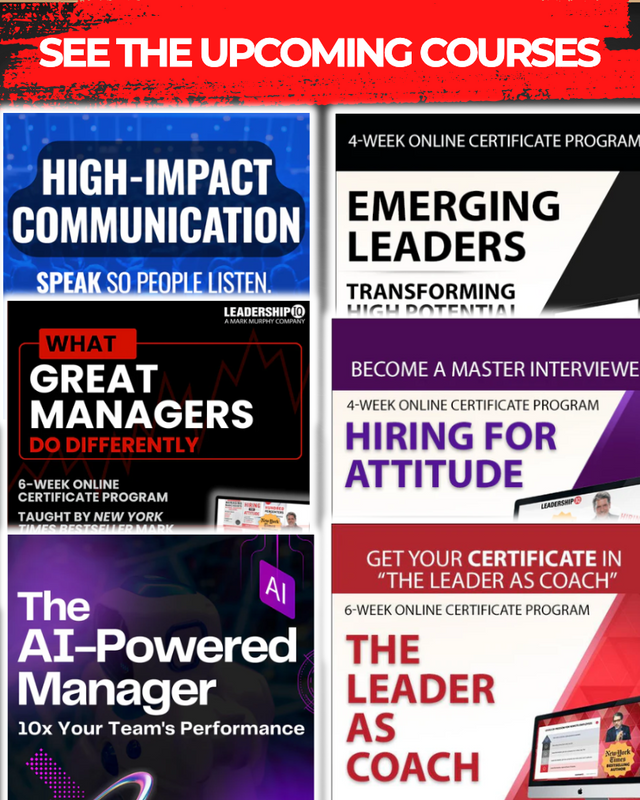
Leadership IQ's management training programs are designed around the research-backed qualities that actually create better team performance. From feedback delivery techniques to burnout prevention strategies, from emotional intelligence development to delegation frameworks — every module provides practical tools for immediate application.
Explore Leadership IQ's management training programs.
You can also explore executive coaching for personalized development or bring these frameworks to your organization through a leadership keynote.