Executive Coaching Companies: How to Find the Right Partner for Leadership Development
Only 20.4% of employees believe their leader can distinguish between high and low performers, according to Leadership IQ research on 5,995 employees. That's not just a performance problem — it's a leadership crisis that costs companies millions in disengaged talent, failed initiatives, and missed opportunities. Yet most organizations keep throwing generic leadership development at the problem, hoping something sticks.
The executive coaching industry promises to fix this gap. But with thousands of providers claiming transformational results, how do you separate the data-driven programs from the feel-good workshops that change nothing? The executive coaching industry has seen significant growth, with many organizations recognizing the importance of leadership development to navigate complex business environments — which means the stakes for choosing the right provider have never been higher.
This guide walks you through how to evaluate executive coaching companies, what coaching services should include, how to match leaders with the right coach, and how to measure whether the investment is delivering measurable outcomes. If you're ready to explore options now, visit Leadership IQ's training and coaching programs. Or bring research-backed leadership frameworks to your entire organization through a leadership keynote.

Executive Coaching Companies: Services, Credentials, and Business Goals
Reputable executive coaching companies typically provide a range of services designed to enhance leadership performance, including one-on-one coaching sessions, behavioral assessments, 360-degree feedback, strategic skill-building, and specialized transition support. Core coaching services offered by top providers include:
- One-on-one executive coaching for senior leaders, c suite executives, and emerging leaders
- Leadership team facilitation and executive coaching team development
- Career coaching and career transition support, including succession planning
- Assessment-led development programs using 360-degree feedback, behavioral change coaching, and emotional intelligence baselines
- Leadership training programs mapped to organizational levels and business goals
These services map to common business goals: improving employee engagement, reducing turnover, accelerating succession planning, strengthening executive presence, and driving organizational change. The best providers scale across regions and functions, serving global organizations and global teams with consistent quality and cultural intelligence.
Why Picking the Wrong Company Is an Expensive Mistake
Leadership IQ's comprehensive study of 3,018 leaders revealed that only 19% are adept at reducing employee burnout, and just 26% have mastered developing middle performers into high performers. When you choose the wrong executive coaching company, you're not just wasting budget — you're allowing critical leadership gaps to persist while your competitors pull ahead.
Research shows that employees with excellent leaders demonstrate 35% higher engagement than those with poor leaders. That translates to higher retention, better performance, and stronger financial results. But most executive coaching companies can't prove they actually move these metrics. Too many firms rely on subjective feedback and feel-good testimonials instead of measurable behavioral change.
When Leadership IQ studied why new hires fail, they found that 46% fail within 18 months — and 89% of those failures stem from attitude problems, not technical skills. If your coaching company isn't addressing the interpersonal skills that drive real results, you're investing in expensive therapy, not business transformation.

Types of Coaching Services and Career Coaching Options
One-on-One Executive Coaching
One-on-one executive coaching is the most intensive format — a certified executive coach works directly with a leader to develop specific leadership capabilities, address challenges, and build the behavioral competencies that drive team performance. Executive coaching methodologies often include developmental coaching (helping leaders thrive in their current roles or prepare for future challenges) and agility coaching (preparing leaders to lead through rapid change by strengthening adaptability, focus, and resilience).
Team Coaching and Group Cohort Programs
Executive coaching team engagements address the collective dynamics that determine whether a leadership team can effectively lead the entire organization. Group cohort programs bring together leaders at similar levels for shared learning, peer accountability, and the cross cultural communication that builds strong leadership across diverse teams.
Career Coaching and Succession Planning Tracks
Career coaching supports leaders through career transitions — promotions, lateral moves, or transitions into new industries. Coaching can dramatically shorten the onboarding curve for newly promoted or external executives, reducing ramp-up time from 18–24 months to just six months, thereby accelerating their success in new roles. Succession planning tracks identify and develop top talent for future leadership roles, building the pipeline your organization needs for sustainable success.
Assessment-Led Development Programs
These programs start with comprehensive diagnostics — 360-degree assessments, behavioral profiles, emotional intelligence baselines, and stakeholder interviews — then build customized development programs around the specific gaps identified. This diagnostic-first approach ensures that every coaching hour addresses the capabilities that will have the biggest impact on business goals.
Executive Coaches: Qualifications, Certifications, and Experience
Coaches should hold certifications from recognized professional bodies, such as the International Coaching Federation (ICF) or EMCC, to ensure adherence to professional ethics and standards. Certified executive coaches typically hold ACC, PCC, or MCC credentials, each representing progressively more training hours and coaching experience.
Beyond certifications, look for coaches with substantial real-world leadership experience. The best executive coaches have navigated real organizational challenges themselves — they understand the pressures of executive decision-making because they've lived it. Typical coaching experience for top leaders-level work is 10+ years, with documented industry-specific case examples. Ask potential providers for case studies from organizations similar to yours in industry, scale, and complexity.
When selecting an executive coach, consider their qualifications, experience, and the selection process used by the provider to ensure they have the necessary skills and industry knowledge to meet your needs. For effective coaching, it's important that the firm understands the complexities of the specific industry or stage of growth of the organization.
Matching Leaders to an Executive Coach
The coaching relationship requires trust and psychological safety, making it essential to assess compatibility through initial chemistry calls with potential coaches. Coach matching criteria should include: leadership level and scope of the engagement, industry experience, coaching style compatibility, and specific developmental challenges the leader faces.
Require chemistry checks via trial coaching sessions before committing to a full coaching engagement. Most reputable executive coaching providers offer an initial session where the leader and coach can assess fit. This isn't a formality — a poor coach-leader match can undermine the entire engagement regardless of the coach's credentials.
Involve key stakeholders in coach selection. The leader's manager, HR partner, and sometimes direct reports should have input on what leadership capabilities the coaching should develop. This stakeholder involvement ensures alignment between individual development and organizational priorities and helps assess how a coaching provider aligns their services with your business goals.
External coaches often provide greater objectivity and confidentiality for sensitive leadership challenges compared to internal coaches, who offer deeper organizational knowledge. The best executive coaching companies help you determine which model — or a hybrid of both — fits your situation.
Coaching Sessions: Formats, Frequency, and Timelines
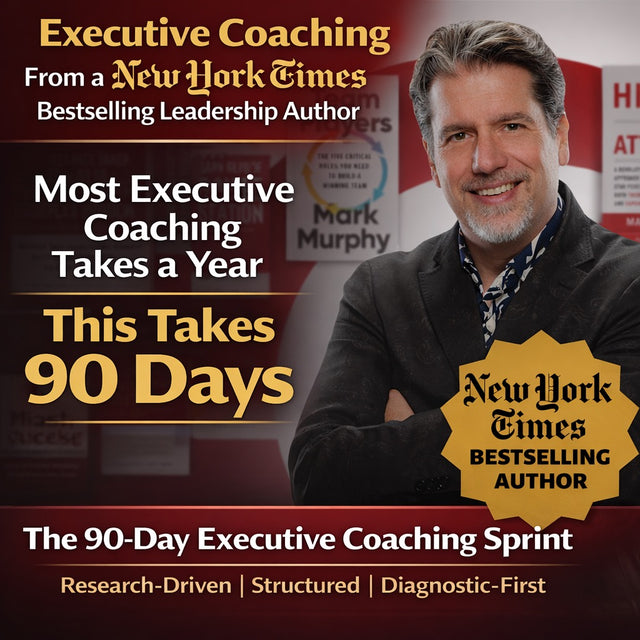
Typical coaching sessions run 60–90 minutes, with cadence ranging from weekly (intensive sprints) to biweekly (standard engagements) to monthly (sustainment phase). Short-term sprint coaching formats — like Leadership IQ's 90-Day Executive Coaching Sprint — deliver visible behavioral change within a defined timeframe. Long-term coaching engagements (6–12 months) are better suited for complex developmental challenges, transformational change, or career development trajectories with quarterly milestones and stakeholder check-ins.
Leadership development programs often include a combination of one-on-one coaching, team performance enhancement, and personalized learning experiences tailored to your organization's goals. The right format depends on the urgency of the challenge, the leader's availability, and whether the engagement targets individual growth or leadership team development.
Development Programs and Curriculum Design
The best development programs are mapped to leadership levels: emerging leaders need foundational skills in feedback delivery, team dynamics, and self awareness. Mid-level leaders need strategic thinking, change management, and cross-functional influence. Senior executives need executive presence, organizational change leadership, and strong business acumen.
Include modular learning and applied projects — classroom or virtual instruction paired with real-world application between modules. Each module should have clear learning objectives tied to specific leadership capabilities and measurable outcomes. This structure ensures that coaching isn't theoretical — it's immediately applicable to the challenges leaders face every day.
Emotional Intelligence and Behavioral Change Workstreams
Integrate emotional intelligence into every coaching plan — not as a standalone module, but as a thread that runs through all leadership development. Use 360 assessments to baseline EQ development: self awareness, self-regulation, social awareness, and relationship management. Design measurable behavior-change interventions with specific behavioral targets (e.g., "pause before responding in high-pressure situations") and track progress at 30, 60, and 90 days.
Services offered by executive coaching firms typically include 360-degree assessments, behavioral change coaching, and strategic skill-building to enhance emotional intelligence and business results. This integration of EQ development with business strategy is what separates executive leadership coaching from generic personal development.
Measuring Coaching Impact, Client Satisfaction, and ROI
Success metrics for coaching should go beyond anecdotal feedback to include methods like 360-degree feedback, stakeholder interviews, and performance metrics. Define KPIs tied to business goals at the start of every coaching engagement: improved leadership performance scores, employee engagement improvements, retention rates within the leader's span of control, and promotion rates for coached leaders.
Collect client satisfaction scores and testimonials systematically — not as marketing collateral, but as genuine feedback that informs program improvement. Track promotion and retention outcomes as ROI metrics: did coached leaders get promoted at higher rates? Did their teams show lower voluntary turnover? Require NPS reporting for coaching programs to benchmark satisfaction against industry standards.
The strongest executive coaching companies combine behavioral assessments, 360-degree feedback, and business impact measurements. They don't just ask if clients feel better — they measure whether they perform better.
Coaching Experience Delivery: Digital, Hybrid, and In-Person
Tech-enabled coaching platforms offer scheduling, progress tracking, session recording, and measurement dashboards — reducing administrative overhead and providing data visibility for HR and talent management teams. Hybrid program logistics typically combine virtual coaching sessions (convenient for busy executives) with periodic in-person intensives (valuable for team dynamics work and deeper relationship-building).
Data privacy measures for digital delivery are non-negotiable. Ensure that any platform used for coaching complies with organizational security standards and that coaching content — session notes, assessments, and feedback — is encrypted and accessible only to authorized parties. This confidentiality is essential for the psychological safety that makes coaching effective.
Pricing, Contracts, and Scaling Across the Enterprise
Common pricing models include per-session rates ($300–$600+ per session for senior leaders), engagement-based pricing (flat fee for a defined sprint or program), and enterprise retainers (annual contracts with access to a pool of certified executive coaches). Contracting terms typically include defined scope, confidentiality provisions, cancellation policies, and renewal options.
Plan pilot-to-scale rollouts for enterprise programs: start with 5–10 leaders in a 90-day pilot with clear success metrics. Use pilot results to build the business case for broader deployment. This approach reduces risk, generates internal champions, and provides the data needed to justify enterprise-wide investment in executive coaching services.
Comparing Executive Coaching Companies: Selection Checklist
When evaluating executive coaching providers, compare side by side: coach credentials and ICF certification levels, years of coaching experience at the relevant leadership level, industry-specific expertise, proven track record with measurable outcomes, and breadth of services (individual, team, assessment, career coaching).
Evaluate integration with HR and talent systems — can the provider connect coaching data with your performance management, talent development, and succession planning processes? Assess proof points and third-party recognitions: published research, client satisfaction data, books authored, and strategic partnerships with recognized institutions.
Choosing the right executive coaching provider involves evaluating their track record with organizations similar to yours, ensuring they understand the complexities of your industry and scale. It's essential to assess how a provider aligns their services with your business goals and collaborates with internal stakeholders to ensure effective integration of coaching into your broader talent development efforts.
Case Studies, Testimonials, and Client Satisfaction Proof
Case Study 1: A healthcare system engaged Leadership IQ to coach 12 senior leaders struggling with feedback delivery and employee engagement. After a 90-day sprint, feedback proficiency increased by 40%, engagement scores rose for the first time in three years, and voluntary turnover among high performers dropped 22%.
Case Study 2: A technology company used Leadership IQ's diagnostic assessments to identify that its leadership team's primary gap was change management — only 35% of its managers could overcome resistance to change effectively. After a 6-month coaching engagement combining individual coaching with team facilitation, change adoption rates improved by 50% and project delivery timelines shortened by 20%.
Case Study 3: A financial services firm used executive leadership coaching to accelerate onboarding for three externally hired VPs. Coaching shortened their ramp-up from the typical 18–24 months to under six months, with all three reporting full productivity within the first two quarters.
Getting Started with Leadership IQ: Pilot Programs and Next Steps
Leadership IQ's executive coaching is built on more than two decades of original research involving hundreds of thousands of leaders and employees. The 90-Day Executive Coaching Sprint delivers measurable results in a fraction of the time traditional coaching requires. Unlike generic development programs, every coaching engagement starts with diagnostic assessments based on proprietary research on leadership effectiveness, performance differentiation, and team dynamics.
Pilot program proposal: Start with 5–10 leaders, a full diagnostic assessment, 90 days of structured coaching, and pre/post measurement of leadership effectiveness and team performance. Leadership IQ provides access to certified executive coaches with deep understanding of your industry and organizational context. A stakeholder briefing and alignment session ensures that key stakeholders — HR, the leader's manager, and the leader themselves — are aligned on objectives and success metrics from day one.
FAQ and Resources for Choosing an Executive Coach
How long do coaching engagements typically last? Sprint formats run 90 days. Standard coaching engagements run 6–12 months with biweekly coaching sessions. Career transition and succession planning engagements may extend longer depending on complexity.
What certifications should I look for? At minimum, ICF ACC or PCC credentials. For c suite executives and senior executives, look for coaches with MCC credentials or equivalent experience and a proven track record at that level.
How do I know if coaching is working? Define measurable outcomes at the start — 360-degree feedback scores, employee engagement metrics, stakeholder interview themes, and behavioral indicators. Review progress at 30, 60, and 90 days. If behavioral shifts aren't visible by 60 days, the approach should be recalibrated.
What's the difference between coaching and consulting? Consultants tell you what to do. Coaches help you build the capabilities to solve problems yourself. The best executive coaching companies integrate both — they provide frameworks and expert guidance while building the leader's own leadership capabilities for sustainable success.
Checklist for vetting executive coaches: Verify ICF or EMCC certification. Request industry-specific case studies with measurable outcomes. Conduct a chemistry call. Confirm their measurement methodology. Ask how they collaborate with HR and key stakeholders. Clarify pricing, confidentiality terms, and renewal options.
Why Leadership IQ Belongs on Your Shortlist
With methodologies featured in seven bestselling leadership books and frameworks used by Fortune 500 companies worldwide, Leadership IQ offers the research foundation and proven track record that serious executive leaders demand. Their coaching doesn't just help leaders feel more confident — it develops the specific competencies that drive organizational performance and business results.
You can also explore executive coaching engagements for personalized senior leader development or bring these frameworks to your entire organization through a leadership keynote.