Business Coaching for Entrepreneurs and Small Business Owners: What to Expect and How to Get the Most from It
Leadership IQ's research on over 20,000 new hires reveals a startling fact: 46% of newly-hired employees fail within 18 months, and it's not due to technical skills. The same pattern emerges when entrepreneurs struggle to scale their businesses. They don't fail because they can't build a product or understand their market — they fail because they can't effectively lead and develop their teams. That's where business coaching services become essential, but not in the way most people think.
Most entrepreneurs assume business coaching means getting advice on business strategy or operations. But the data tells a different story. Attitudes drive 89% of hiring failures, and those same interpersonal dynamics that sink new employees also derail growing businesses. The entrepreneurs who succeed aren't just good at their craft — they're good at coaching others to excel at theirs. A great business coach acts as a strategic partner who helps you see your business more clearly and gives you the tools to build it stronger.
A survey by the International Coach Federation found that 89% of small business owners who hired a business coach reported a return on investment, indicating that coaching can significantly impact revenue growth. Below, we'll cover exactly what business coaching services include, how they create measurable business results, what to look for in the right coach, and how to get started. If you're ready to explore options now, visit Leadership IQ's training programs. For personalized one on one coaching, explore executive coaching. Or bring these frameworks to your entire organization through a leadership keynote.

Why Leadership IQ Business Coaches Deliver Faster Business Results
Business coaching services encompass various types, including strategic growth, executive leadership, sales, operational, and team performance coaching. Here's why Leadership IQ's approach produces faster, more measurable business results than generic coaching:
- Research-backed methods: Every framework is built on data from over 20,000 employees and hundreds of organizations — not just one coach's personal experience
- Diagnostic-first approach: We identify your actual blind spots and pain points using validated assessment tools, not guesswork
- Visible results in 90 days: Structured sprints produce measurable behavioral change within a defined timeframe, keeping you accountable and on track
- Leader-as-coach development: We don't just make you a better leader — we teach you to develop leadership capabilities throughout your entire organization
- Practical tools, not theory: Word-for-word scripts, step-by-step conversation guides, and ready-to-use frameworks that work with real teams facing real challenges
Business coaching helps entrepreneurs set clear goals and develop action plans, which can lead to significant improvements in revenue and overall business performance. Coaching also helps business owners create a clear financial roadmap, setting realistic targets for growth and establishing the systems needed to achieve them — contributing to long-term sustainable revenue growth.
Coaching Services Offered: Executive Coaching, One-on-One, Group Coaching, In Person
One-on-One Coaching
One on one coaching is the most intensive format — you work one on one with a Leadership IQ coach to address your specific challenges, develop customized action plans, and build the leadership skills that will have the biggest impact on your business. Sessions are tailored to your exact goals, your industry, and your team dynamics. This is the format for business owners who want specialized guidance and the fastest path to results.
Group Coaching
Group coaching offers substantial cost savings while maintaining quality. When entrepreneurs with similar challenges work together, they benefit not just from professional coaching but from peer learning, collective wisdom, and built-in accountability. Leadership IQ's certificate programs provide the same research-backed content and practical frameworks at a fraction of the cost of individual coaching. Group coaching also pushes you out of your comfort zone — you'll hear perspectives and approaches you'd never encounter working solo.
Executive Coaching for Leadership Teams
Executive coaching for leadership teams addresses the collective dynamics that determine whether a company can scale. This isn't individual coaching done in parallel — it's facilitated development that improves how your leadership team communicates, makes decisions, and holds each other accountable. Senior leaders who go through this process together build the alignment and trust needed to navigate complex problems as a unit.
In person sessions are available for all formats and are particularly effective for leadership team engagements where reading team dynamics and body language matters. Virtual options are equally rigorous for individual and group coaching and eliminate geographical barriers.

How Our Process Converts Coaching Sessions into Business Results
A structured coaching process typically includes assessment, goal setting, regular sessions, and support with implementation to ensure leaders develop the necessary skills to succeed. Here's how it works at Leadership IQ.
Initial Assessment and Goal Alignment
Every engagement starts with a diagnostic intake that goes far beyond surface-level goal-setting. Using assessment tools drawn from research on thousands of leaders, we identify the root causes of your leadership challenges — the blind spots that are actually limiting growth. When choosing a coach, it's important to assess your business needs and define specific, measurable goals to find a coach with the right expertise.
We define KPI targets with the business owner — these might include employee retention rates, team productivity metrics, revenue growth, or engagement scores. The first coaching session is scheduled immediately after the assessment so momentum isn't lost between diagnosis and action.
Ongoing Coaching Session Structure
A typical 60-minute coaching session follows this flow: review progress on previous action items (10 minutes), address the highest-priority leadership challenge of the week (30 minutes), practice specific techniques through role-play or scenario analysis (15 minutes), and define action items for the coming week (5 minutes).
Action items are assigned after every session — not aspirational goals, but specific behaviors to practice with your actual team. Accountability checkpoints between sessions (brief email or text check-ins) keep you on track and ensure you don't revert to old patterns between meetings. Effective coaching relationships focus on accountability and regular check-ins, which are essential for maintaining momentum and achieving set goals.
Measurement and Continuous Improvement
Agreed KPIs are tracked monthly. The coaching plan is iterated based on what the metrics reveal — if feedback delivery is improving but delegation isn't, we shift focus. Quarterly executive coaching reviews provide a comprehensive progress assessment and recalibrate goals for the next period. This measurement discipline is what separates coaching that delivers business results from coaching that feels good but doesn't change anything.
Why Entrepreneur Coaching Is Different from Executive Coaching
Executives typically coach within established systems and hierarchies. Entrepreneurs are building those systems while simultaneously trying to lead through them. The coaching needs are fundamentally different. Corporate executives might focus on influencing laterally across departments or managing up to a board. Entrepreneurs face a unique challenge: they're often the visionary, the decision-maker, the culture-setter, and the firefighter all at once.
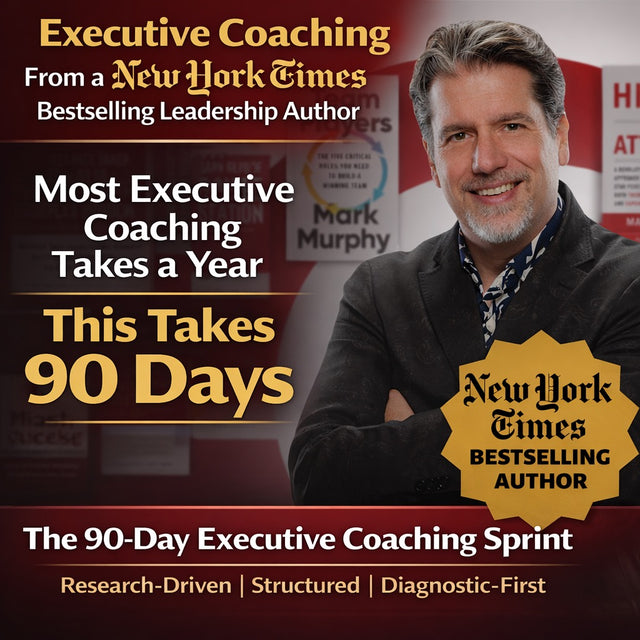
Entrepreneur coaching operates under different time pressures. Corporate change initiatives can unfold over 12–24 months. Startups and small businesses often can't wait that long. Leadership IQ's 90-Day Executive Coaching Sprint was built on this principle: visible results in 90 days, not open-ended conversations that drift from topic to topic.
The stakes are different too. When a corporate executive's coaching doesn't work, they might face a performance review. When an entrepreneur's leadership development fails, the entire business can collapse. That's why business coaching services for entrepreneurs need to be more diagnostic, more targeted, and more immediately applicable. Different coaching styles — including directive coaching (where the coach provides specific guidance) and non-directive coaching (which encourages clients to find their own solutions through questioning and reflection) — cater to various client needs and preferences. The right coach matches their style to yours.
Small Business Coaching: Specialized Support for Owners Scaling Up
Small business coaching addresses unique challenges that don't exist in larger organizations. When you have 5–50 employees, every hiring decision matters enormously. Leadership IQ's landmark study found that only 19% of new hires achieve unequivocal success, and for small businesses, a bad hire can be catastrophic.
Small business coaching helps owners develop systems and strategies to meet diverse goals, offering mentorship to reframe their thinking about business and tools to achieve measurable success. The coaching focuses heavily on developing systems that prevent hiring failures, building accountability without micromanagement, and getting new hires up to speed and integrated into the team culture quickly.
A typical small business coaching program can run anywhere from 90 days to 12 months, with sessions tailored to the business owner's unique goals and challenges. Small business owners also learn to identify which leadership activities provide the highest return on investment and how to systematically develop their team's capabilities without abandoning critical business functions.
Building Leadership Systems in Small Organizations
Effective small business leadership coaching creates scalable systems that work regardless of the owner's daily involvement. This includes developing other leaders within the organization who can coach and develop team members. The coaching also addresses succession planning and knowledge transfer — critical issues for businesses that have grown up around the founder's expertise.
Sales and marketing coaching aids in building sales strategies and increase revenue through improved conversion rates. Business coaching can lead to increased revenue by helping entrepreneurs identify and focus on the most profitable areas of their business, refine their sales processes, and develop effective marketing strategies. For small business owners, these revenue-focused capabilities are often just as critical as leadership development.
Proof and Case Studies Showing Business Results
When a mid-stage SaaS founder came to Leadership IQ, his company was growing revenue but losing top talent faster than it could replace them. Diagnostic assessment revealed two key focus areas: the founder avoided difficult feedback conversations (a pattern shared by 67% of managers) and had never built systems for developing his managers into coaches. Over a 90-day sprint, the founder practiced Leadership IQ's FIRE framework for feedback, implemented weekly coaching conversations with his direct reports, and built an accountability system for his leadership team. Results at 90 days: voluntary turnover dropped by 30%, manager effectiveness scores improved by 25%, and two team leads were promoted into roles previously filled by external hires.
The pattern repeats across industries. Business owners who invest in structured coaching consistently report improvements in team productivity, retention, and their own decision making quality. The 89% ROI figure from the International Coach Federation survey isn't accidental — it reflects what happens when coaching is structured, measured, and focused on the leadership behaviors that drive business results.
Who Should Engage Leadership IQ Coaching Services
Small business owners seeking growth who've hit a ceiling because they're doing everything themselves and need to build a team that can operate without constant oversight. Scaling executive teams needing clarity — when your leadership team isn't aligned on priorities, accountability, or decision making, and the dysfunction is showing up in team performance. Founders transitioning from operator to owner — the skills that built your business aren't the same skills that will scale it, and you need specialized support for this business journey transition.
Whether you're running a new business, navigating the messy middle of scaling, or preparing your company for a major transition, the right partner provides expert guidance tailored to where you are in your business journey and where you need to go.
Programs and Pricing for Business Owners
Starter plan for early-stage owners: Designed for founders and small business owners in the first stages of building a team. Includes foundational leadership skills development, hiring frameworks based on Leadership IQ's "Why New Hires Fail" research, and structured coaching sessions focused on the three to five skills with the highest immediate impact.
Growth plan for scaling businesses: For business owners with 10–50 employees who need to build leadership capabilities across their team. Combines one on one coaching for the owner with group coaching for managers, plus assessment tools to measure progress against defined KPIs.
Enterprise plan for large teams: Comprehensive leadership development for organizations with 50+ employees. Includes executive coaching for senior leaders, manager development programs, team facilitation, and organizational culture initiatives. Custom pricing for in person programs and multi-site deployments.
All plans include diagnostic assessments, practical tools and frameworks, and measurement systems to track ROI. Online coaching programs have eliminated geographical barriers and reduced overhead costs, making quality coaching accessible to entrepreneurs regardless of location.
Where to Find the Right Coach Worth Hiring
Leadership IQ's research reveals that 82% of hiring managers see signs that their new hire will fail, but they hire them anyway. The same pattern occurs when entrepreneurs choose business coaches — they often ignore red flags because they're desperate for help or impressed by marketing rather than substance.
The best business coaches ground their work in research, not just real world experience. They can cite specific studies, share data driven insights on what works and what doesn't, and explain why their approaches are effective. They provide frameworks and tools based on analysis of thousands of leaders, not just anecdotal wisdom.
The best coaching relationships are built on a foundation of trust and a shared commitment to your goals, requiring open communication and a good match between coach and client. Look for coaches who offer structured, time-limited programs with clear outcomes rather than open-ended coaching relationships. The right coach can explain exactly what skills you'll develop, what tools you'll receive, and how you'll measure progress.
Warning Signs to Avoid
Avoid coaches who promise to solve problems overnight or who claim their approach works for everyone. Quality coaches recognize that effective leadership requires individualized approaches. Be skeptical of coaches who can't provide concrete examples of results or who rely primarily on testimonials rather than data. They should be transparent about what they can and can't deliver and set realistic expectations about timeframes.
Common Questions About Business Coaching and Executive Coaching
Results Timeline and Expectations
How quickly will I see results? Behavioral shifts are typically visible within 30 days. Measurable business results — improvements in team productivity, retention, and leadership effectiveness — usually emerge within 60–90 days. Full organizational impact takes 6–12 months. Variables that affect outcomes include how consistently you practice new skills between sessions, the severity of existing leadership gaps, and whether your team is receptive to new management approaches.
Format and Logistics
Virtual versus in person? Both formats are equally rigorous. Virtual coaching works exceptionally well for individual sessions and eliminates travel time. In person sessions are preferred for leadership team engagements where reading team dynamics and body language is important. Group coaching cohort sizes are typically 6–12 participants, large enough for diverse perspectives and small enough for personalized attention.
Risk and Guarantees
Leadership IQ's structured approach reduces risk through clear milestones and regular measurement. If the coaching isn't delivering results at the 30-day checkpoint, the approach gets adjusted — not continued unchanged for six months hoping things improve. Contact us for details on trial engagements, rescheduling policies, and satisfaction commitments.
Get Started with Leadership IQ Coaching Services
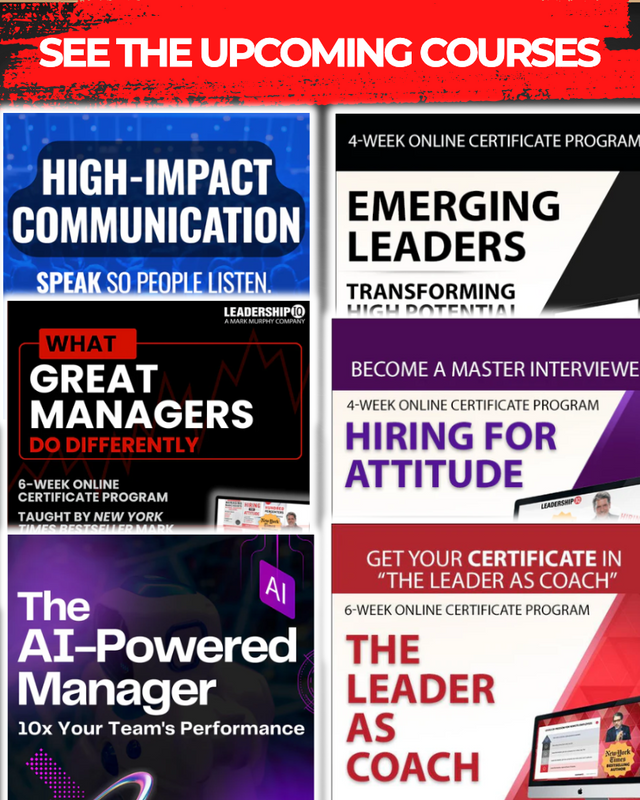
Leadership IQ's business coaching programs are built on research involving over 20,000 employees and hundreds of organizations. Whether you need individual coaching through the 90-Day Executive Coaching Sprint or prefer the structured learning of certificate programs like "What Great Managers Do Differently" or "The Leader As Coach," every program provides research-backed tools and frameworks designed to produce visible business results.
To get started: Book a free consultation to discuss your business goals, map your current leadership challenges, and receive a customized coaching proposal. Have your recent business performance data available — revenue trends, retention rates, and engagement scores help us design the most targeted intervention from day one.
You can also explore executive coaching for personalized senior leader development or bring these frameworks to your entire organization through a leadership keynote.