Executive Coaching Package: Evidence-Based Design, Market Realities, and What Buyers Should Evaluate
Why an executive coaching package matters now
An executive coaching package matters because executive coaching now sits at the intersection of leadership performance, organizational risk, and procurement discipline. Boards, CEOs, CHROs, and senior HR leaders increasingly recognize that leadership capacity can limit execution, succession, transformation, culture, and retention. At the same time, the market for coaching remains fragmented, lightly regulated, and hard to compare across providers. Two coaching engagements may use the same label while offering very different levels of diagnostic rigor, session intensity, stakeholder involvement, confidentiality protections, and outcome measurement.
That creates a practical buying problem. Many organizations know they need leadership development support, but they struggle to determine which coaching services are substantive, which are overly dependent on executive self-report, and which are structured to produce visible behavior change rather than a series of interesting conversations.

The broader coaching industry has also reached a scale where it can no longer be treated as a niche service. Industry estimates point to a profession with significant worldwide revenue and a growing number of practitioners. At the same time, related leadership advisory, leadership development, and platform-based coaching offerings expand the market far beyond what traditional coaching studies measure. In practice, many organizations are not simply buying a coach. They are buying some version of an executive coaching package, a defined bundle of diagnostics, coaching sessions, stakeholder interfaces, accountability structures, and progress reviews.
That shift matters because leadership development has developed a credibility problem in many organizations. Executives have sat through plenty of workshops, competency models, leadership training programs, and feedback exercises that generated insight but failed to produce meaningful behavioral change on the job. Buyers now want more than inspiration. They want an executive coaching package that helps a leader navigate ambiguity, influence across functions, improve decision quality, handle political complexity, build stronger teams, and translate coaching conversations into observable progress.
This is one reason more sophisticated coaching buyers are asking harder questions. They want to know how the package identifies the right problems, how it supports new behaviors between sessions, how it manages confidentiality, how it involves stakeholders without turning coaching into surveillance, and how it defines success.
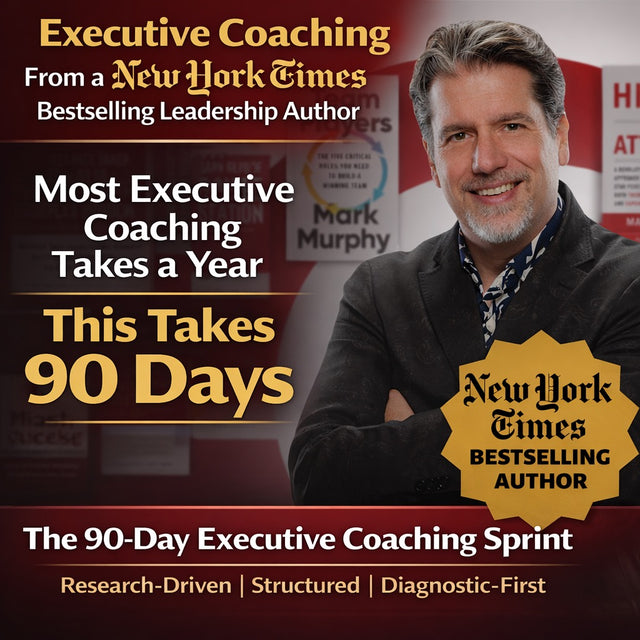
That same lens helps explain why Leadership IQ’s executive coaching approach is relevant in this market. Leadership IQ’s coaching methodology is built around a defined 90-day sprint, structured diagnostics, weekly cadence, practical frameworks, and formal documentation of progress. Those choices reflect a clear point of view about what makes an executive coaching package effective: accurate diagnosis, fast iteration, accountability, and a design that is intended to generate evidence of change rather than vague impressions of growth.
What an executive coaching package actually is
An executive coaching package is not simply a set number of sessions. It is a behavior-change system wrapped in a commercial and organizational contract.
The package defines several things at once. It establishes the relationship between coach and executive. It sets expectations with the sponsoring organization, often HR, the CEO, or the board. It determines how the executive’s strengths, blind spots, challenges, and desired outcomes will be assessed. It specifies cadence, duration, between-session support, and progress reviews. It also determines what counts as improvement and who gets to judge whether progress has occurred.

That distinction matters because many buyers still compare coaching offers as if they were purchasing blocks of time. They ask how many sessions are included, what the hourly billing looks like, whether the coach has a certain credential, and how quickly the engagement can start. Those are reasonable questions, but they are not the most important ones. The harder and more useful question is whether the executive coaching package is designed to solve the actual leadership constraints that are limiting performance.
A strong coaching package, for example, should make it easier to address issues such as poor delegation, weak executive presence, conflict avoidance, political misreads, team dysfunction, strategic drift, role transition challenges, and execution failures. It should help senior leaders build self-awareness, identify patterns in their behavior, test new strategies, and sustain new habits under real operating pressure. It should also be structured in a way that fits the reality of busy leaders rather than assuming they have unlimited time for reflection.
That is why the best executive coaching packages function as governance systems as much as development tools. They manage expectations, protect confidentiality, create accountability, and increase the odds that a coaching engagement produces sustainable change.
Executive coaching overview: the role of coaching in leadership development
Executive coaching plays a distinct role within the broader leadership development landscape. It is not the same as training, mentoring, consulting, therapy, or performance management, even though many organizations blur those boundaries.
Leadership training often delivers broad frameworks to groups. Consulting often diagnoses a business problem and recommends solutions. Mentoring typically involves advice from someone with relevant experience. Therapy addresses mental health and emotional functioning in a clinical context. Executive coaching, at its best, is a structured process that helps leaders improve how they think, decide, influence, communicate, and execute in their real role.
That makes coaching especially valuable in situations where the leader’s challenge is not a lack of information but a gap between insight and behavior. A senior executive may know, in theory, that delegation matters, that stronger communication is needed, or that a role transition requires a different leadership style. The harder issue is converting that knowledge into daily behavior while managing pressure, politics, time constraints, and identity.
This is why leadership coaching and executive leadership coaching have become attractive to organizations looking for targeted coaching rather than generic professional development. A coaching package can be tailored to a newly promoted executive, a CEO dealing with board complexity, a functional leader trying to improve cross-functional influence, or a senior leader whose team performance is being undermined by blind spots the leader does not fully see.
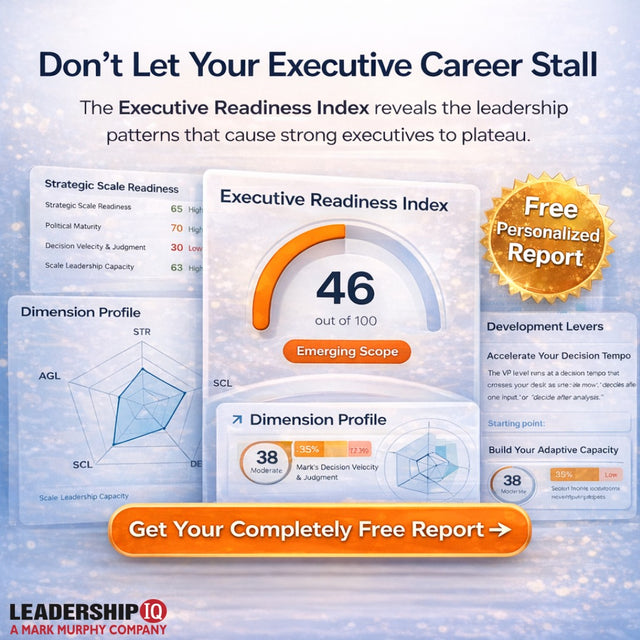
Leadership IQ’s evidence-based coaching approach is built around exactly that problem. Rather than assuming leaders can accurately diagnose their own development needs, the methodology starts with a structured intake and can be expanded through a more intensive blind-spot diagnostic that incorporates anonymous stakeholder interviews, severity ratings, and benchmarking. The underlying premise is that feedback alone is often insufficient, especially when leaders operate in environments where candor is filtered by power dynamics.
For HR leaders and executive buyers, that is an important distinction. The value of coaching does not come from the label. It comes from the design of the coaching engagement.
Core components of an executive coaching package
Contracting and the three-party relationship
Most executive coaching involves at least three parties: the executive being coached, the coach, and the sponsoring organization. Sometimes the sponsor is HR. Sometimes it is the CEO, a board member, or a business unit leader. That three-party structure is one of the most important reasons executive coaching packages need clear design.
A credible package should define confidentiality boundaries, sponsor updates, data handling expectations, escalation rules, and the limits of coaching scope. Without that clarity, the relationship can easily become confused. The executive may worry that candor will be used against them. The sponsor may assume they are buying direct visibility into the executive’s private reflections. The coach may be left managing ambiguous expectations that should have been resolved in contracting.
This is one reason confidentiality management is not a side issue in executive coaching services. It is central to whether the engagement works. Senior leaders are unlikely to speak openly about reputational fears, political conflicts, difficult peers, succession concerns, or internal doubts unless they trust the boundaries of the process.
Diagnostics and baseline measurement
The diagnostic design of a coaching package is often the single biggest factor shaping whether it produces real value.
Some coaching packages begin with self-reported goals. Others use 360 feedback, personality tools, strengths tools, structured interviews, or stakeholder interviews. Some rely heavily on what the executive says they want to work on. Others try to identify the patterns that matter most to colleagues, teams, and sponsors.
This is an area where Leadership IQ has a clear point of view. Its executive coaching package is explicitly diagnostic-first. The 90-Day Executive Coaching Sprint begins with a 90-minute Strategic Foundations session, and the optional Blind Spot Breakthrough Diagnostic adds 15 to 20 anonymous stakeholder interviews, benchmarking, severity ratings, and a dedicated reveal session. The goal is to reduce dependence on self-diagnosis and improve precision from day one.
That stance fits a common organizational reality. Many executives do have blind spots. They may not realize how their urgency creates confusion, how their need for control slows others down, how their communication style discourages dissent, or how their decision habits create friction. A coaching package that begins with incomplete diagnosis risks optimizing around the wrong problem.
Goal setting and development plan design
Every executive coaching package needs a clear development plan, but not every development plan is equally useful. Weak coaching packages produce broad aspirations such as “improve communication,” “be more strategic,” or “increase executive presence.” Stronger packages convert those themes into concrete behaviors and decision points.
For example, a better development plan might specify that the executive will change meeting structure, shorten decision cycles, delegate one level deeper, improve follow-through routines, seek valuable feedback from key stakeholders, or adopt a new cadence for one-on-one conversations. These goals are more actionable, easier to practice, and easier to observe.
Cadence, session design, and between-session accountability
A coaching package should never be judged only by how many sessions it includes. Session count matters, but cadence and transfer mechanisms matter more.
Some executive coaching services are delivered monthly over six or twelve months. Others are biweekly. Leadership IQ’s package takes a different approach, using twelve sessions over twelve weeks. That weekly cadence is designed to create tighter accountability, quicker feedback loops, and less drift between sessions. The argument is straightforward: if a leader is trying to build new behaviors under real pressure, long gaps can reduce momentum and allow old habits to reassert themselves.
Between-session accountability also matters. Many coaching conversations feel productive in the moment, but the leader returns to a full calendar, an overloaded team, and a dozen competing priorities. Without practical transfer mechanisms, insights often evaporate. That is why the best coaching packages include action planning, behavioral experiments, check-ins, applied frameworks, and structures that help the executive use what they learned in real time.
Progress reviews and exit design
A package should also define how progress will be reviewed and how the engagement concludes. Too many coaching engagements end with a vague sense that the leader found the experience helpful. That may be true, but it is not enough for an organizational investment.
Leadership IQ’s coaching package includes a formal final review, a written progress report, and a forward-looking development plan. That matters from both a leadership development and procurement perspective. It creates an endpoint, a synthesis of progress, and a clearer bridge from the coaching engagement into ongoing leadership practice.
Leadership IQ executive coaching packages and methodology
Leadership IQ’s executive coaching package is noteworthy because it is unusually explicit in a market where many providers remain vague about structure, scope, or deliverables.
The flagship offer is a 90-Day Executive Coaching Sprint built around twelve sessions in twelve weeks. The package is designed for leaders dealing with issues such as leadership plateaus, executive blind spots, competing priorities, isolation at the top, political complexity, and the need to strengthen execution and bench leadership. Instead of presenting coaching as an open-ended reflective process, Leadership IQ positions it as a focused intervention with defined scope, fixed cadence, clear deliverables, and published pricing.
That package design carries several implications.
First, it reflects the belief that executive coaching should produce observable movement quickly.
Second, it assumes that diagnostic quality has to come before coaching advice or reflection.
Third, it emphasizes practical tools rather than abstract leadership theory. Leadership IQ integrates proprietary frameworks such as Team Players and the FIRE Model into the coaching process so leaders can apply them to immediate workplace challenges.
Fourth, it treats documentation as part of the coaching service rather than an afterthought.
This also creates a more distinct value proposition than many executive coaching services that rely on soft descriptions of transformation without clearly stating what happens, when it happens, and what the buyer receives.
The optional Blind Spot Breakthrough Diagnostic further strengthens that positioning. For organizations that want greater precision, especially when an executive’s reputation, influence, or team dynamics are at stake, anonymous stakeholder interviews can reveal information that a standard self-assessment or broad 360 summary may miss. That design also aligns naturally with Leadership IQ’s broader research on blind spots, which emphasizes that as leaders gain authority, honest signals often become weaker and more filtered.
That makes Leadership IQ particularly relevant for organizations that want an executive coaching package grounded in practical leadership realities rather than generic coaching language.
Executive leadership coaching offerings and leadership levels served
A strong executive coaching package should be clear about who it is built for. Not every coaching service is equally suited to the C-suite, senior vice presidents, functional executives, or emerging leaders.
The most demanding executive leadership coaching contexts tend to involve senior leaders who operate in environments defined by influence, ambiguity, pressure, and reputational consequences. These executives often need help with matters such as organizational leadership, strategic prioritization, delegation, board communication, executive team dynamics, change management, succession readiness, and successfully transitioning into a larger role.
Leadership IQ’s executive coaching offering is framed around these upper-level challenges rather than broad career coaching. Its language and structure suggest a focus on senior leaders, executives in transition, high-potential leaders moving into bigger roles, and leaders facing political or performance complexity. The emphasis on leadership plateau, decision fatigue, blind spots, and executive isolation fits the kinds of challenges that emerge most strongly at the executive level.
That distinction matters because buyers should avoid coaching packages that sound sophisticated but are really designed for more general professional development. A useful executive coaching package for senior leaders should account for role complexity, organizational stakes, and the reality that changes in one executive’s behavior can affect an entire team or business unit.
What buyers should expect each coaching package to include
When organizations compare executive coaching packages, they should push beyond broad promises and ask what each package actually includes.
A strong package should clearly specify session count and session length. It should state whether the engagement includes diagnostics, stakeholder interviews, assessments, or feedback tools. It should explain whether between-session support is included, whether there is a written development plan, whether progress reviews occur midstream, and what final documentation is delivered.
This level of clarity is not just a procurement convenience. It shapes outcomes.
For example, if a package includes only coaching sessions with no meaningful upfront diagnosis, no structured accountability, and no defined conclusion, it may still generate a positive coaching experience, but it is less likely to produce targeted coaching tied to the organization’s desired outcome. Conversely, a package that includes a clear intake, practical action planning, stakeholder-informed diagnosis, progress review, and a final development plan is much more likely to support sustainable change.
This is one area where Leadership IQ’s coaching package has an advantage. It is transparent about structure and deliverables. The 90-Day Sprint includes a defined cadence, structured diagnostics, practical framework integration, between-session application, and a comprehensive closing review. That gives HR and executive buyers a clearer sense of what they are purchasing than they get from many loosely scoped coaching engagements.
Pricing models, coaching fees, and what drives package cost
Pricing is one of the least transparent aspects of the coaching market. Coaching fees vary widely based on the coach’s reputation, experience, industry background, geographic market, session cadence, package length, stakeholder involvement, diagnostic depth, and whether the provider is an individual coach, platform, boutique firm, or major leadership advisory organization.
This makes hourly billing a poor way to evaluate value. Hourly pricing may look simple, but it can obscure the larger question of intervention design. A lower-cost package with shallow diagnostics and limited accountability may be far more expensive in practical terms than a higher-priced package that solves the right problem quickly.
A better way to evaluate cost is to ask what drives the total design. Does the package include meaningful diagnosis, executive-level expertise, clear goal architecture, support for role transition, tailored coaching conversation design, and a credible process for turning sessions into new habits and new behaviors?
Leadership IQ’s published price point is useful precisely because it offers unusual transparency. Rather than hiding pricing behind opaque discovery calls or custom quoting, it presents the core package as a defined engagement with a stated fee. That helps buyers compare the cost not merely to other coaching services, but to the value of a targeted intervention with explicit scope and measurable deliverables.
For organizations evaluating executive coaching package options, the most helpful pricing questions usually include these:
How much of the fee goes toward diagnostics versus coaching sessions?
What is included between sessions?
What level of customization is provided?
How is progress documented?
What experience does the coach have with leaders at this level?
What happens if the coach-executive fit is poor?
How much of the value comes from structured methodology rather than brand language?
These questions reveal more than a price sheet ever will.
Market landscape: the main types of executive coaching services
The executive coaching market is not one unified category. It is a collection of overlapping provider models, each of which packages coaching differently.
Some organizations hire a single professional certified coach or experienced executive coach directly. This can work well when the coach has deep credibility, strong fit, and a method that aligns with the executive’s needs. The strength of this model is flexibility and direct access. The downside is that quality control, diagnostic rigor, and measurement design can vary enormously.
Many leadership development firms bundle coaching into broader development offerings. These packages often connect coaching with assessments, workshops, succession planning, or organizational development initiatives. This can be useful when the goal is to align coaching with talent management and broader leadership strategy.
Some firms provide executive coaching as part of executive assessment, succession work, or leadership advisory. In these cases, the package may be closely linked to role transition, performance risk, or succession acceleration. This can be especially relevant for C-suite appointments and board-sensitive roles.
Platforms and networks often sell coaching at scale across entire organizations. They may include dashboards, matching systems, program governance, and broad access across leadership levels. This can be attractive when the goal is to support larger populations, but it raises a different question for senior-level packages: whether the offering has enough depth, confidentiality, and contextual sophistication for high-stakes executive work.
Methodology-specific coaching organizations
Some providers differentiate themselves through a defined coaching practice or theory of change. Leadership IQ belongs in this group because it uses a specific, structured package design grounded in diagnostic-first methodology, practical leadership frameworks, and a compressed cadence intended to produce visible movement.
For buyers, the key point is that choosing a provider means choosing a theory of how change happens.
What research says about executive coaching effectiveness
The research base on executive coaching is much stronger than it was twenty years ago, though it remains imperfect. Broadly, the literature supports the conclusion that coaching can have positive effects on performance, self-regulation, resilience, work attitudes, and behavior. At the same time, the evidence varies in quality, and results often depend on how coaching is designed and measured.
One of the most useful takeaways for buyers is that coaching tends to have stronger and more credible effects on observable behaviors than on vague internal states. That matters because many coaching packages still rely too heavily on executive satisfaction, self-reported growth, or generalized impressions of confidence.
A more disciplined interpretation of the research suggests several things.
Coaching can work.
Feedback alone is usually not enough.
Self-awareness is helpful but not sufficient.
Behavior change needs repetition, feedback, and application.
Context matters.
Measurement choices shape perceived success.
Those points align closely with a package design perspective. The research does not justify the belief that any coaching conversation is valuable by definition. It supports the idea that well-structured coaching, tied to clear goals and supported by mechanisms for transfer, can improve leadership effectiveness.
That is one reason Leadership IQ’s executive coaching package is well positioned conceptually. Its design choices, diagnostic precision, weekly cadence, structured action orientation, and emphasis on evidence of change all fit what sophisticated buyers should want from an evidence-based coaching engagement.
Why executive blind spots should shape package design
One of the most underappreciated issues in executive coaching is that senior leaders are often the least likely people to receive direct, useful, and timely feedback.
As authority rises, information quality can fall. Direct reports become cautious. Peers become political. Boards see only selected slices of behavior. Teams adapt around the leader’s habits. Over time, the executive can become increasingly insulated from the very signals that would help them improve.
This is why blind spots matter so much in executive coaching package design. If the package assumes that leaders can accurately identify their own biggest issues, it may miss the highest-leverage opportunities for change.
Leadership IQ’s broader research and positioning around blind spots fit naturally here. The company’s point is not simply that leaders need more feedback. It is that they need better diagnosis and better interpretation of what the organization is experiencing. That logic also supports using stakeholder-informed data when appropriate, especially in cases where the executive’s self-perception may differ sharply from others’ experience.
This is also a place where your own research can strengthen the article naturally. Leadership IQ’s work on blind spots gives a practical explanation for why some coaching packages fail before they begin. They are aimed at the wrong target. The executive may be polishing strengths, talking through ideas, or exploring leadership philosophy when the real issue is delegation, candor, conflict, ego defensiveness, inconsistent execution, or the inability to adapt style under pressure.
For buyers, that means diagnostic quality should be treated as a core evaluation criterion, not a nice extra.
How to evaluate an executive coaching package before you buy
The best way to evaluate an executive coaching package is to treat the decision like a strategic investment, not a soft benefit.
Ask how the package identifies the real problem
If the provider mostly relies on the executive’s self-assessment, that may not be enough. Ask what diagnostic tools, interviews, assessments, or stakeholder inputs are used. Ask how the provider distinguishes symptom from cause.
Ask how insight becomes action
Many packages offer strong conversations but weak transfer. Ask what happens between sessions. Ask how the leader practices new strategies. Ask how new habits are reinforced under time pressure.
Ask how progress will be measured
A serious provider should be able to describe what observable change looks like. That may involve leadership behaviors, team responses, decision quality, retention signals, execution metrics, or stakeholder perceptions. The exact metric mix will vary, but the package should not depend entirely on a leader saying, “I feel like I’m improving.”
Ask how confidentiality is protected
Confidentiality is a central condition for candor. Buyers should understand what gets shared with sponsors, at what level of detail, and under what circumstances. This is especially important when the coaching engagement includes stakeholders, diagnostics, or enterprise reporting.
Ask what the package is optimized for
Some packages are built for a role transition. Some are designed for behavioral repair. Some focus on executive presence, strategic thinking, or change management. Some are intended to scale coaching across entire organizations. A package should fit the problem it is being hired to solve.
Ask whether the package design fits busy leaders
Senior executives do not need elegant development plans that collapse under calendar pressure. They need practical coaching that works in the middle of meetings, decisions, conflict, travel, and competing priorities. The best coaching package is one the leader can actually use.
Leadership IQ scores well on several of these dimensions because the package is explicit about diagnosis, cadence, scope, and accountability. It is built for targeted coaching, not vague developmental drift.
Leadership development outcomes and how to measure ROI
Executive coaching ROI is often oversimplified. In many cases, the real value of coaching is not captured by a single financial formula. That does not mean measurement is impossible. It means measurement should be realistic and role-specific.
A useful executive coaching package should identify a few outcomes that matter in the executive’s context. Those might include stronger delegation, faster decision cycles, improved cross-functional relationships, reduced conflict escalation, better one-on-one leadership, improved team engagement, stronger succession readiness, or better retention among high performers in the executive’s span of control.
These are often more useful than generic return-on-investment claims because they connect directly to the executive’s role.
When possible, organizations should blend several types of evidence:
observable leadership behaviors
stakeholder feedback
operating or execution metrics
team indicators
retention or promotion signals
progress against a defined development plan
That kind of blended measurement is especially important in executive leadership coaching because many of the most meaningful changes are indirect. A better coaching conversation can lead to a better decision routine, which leads to a more confident team, which leads to faster execution. The causal path may be real even if it does not fit neatly into a one-line ROI spreadsheet.
This is another area where Leadership IQ’s documented progress review strengthens the package. By requiring an explicit final assessment and written development output, the package increases the chances that the organization can identify what changed and what should happen next.
Why many coaching packages fail
Many coaching packages fail for reasons that are both simple and avoidable.
They start with weak diagnosis.
They define goals too broadly.
They rely too much on self-awareness and not enough on behavior practice.
They schedule sessions too far apart.
They do not create accountability between sessions.
They leave sponsor expectations unclear.
They treat confidentiality casually.
They end without a real progress review.
They confuse a pleasant coaching experience with transformational change.
These failure modes are not hypothetical. They show up repeatedly in leadership development work. The executive may enjoy the process, gain language for their challenges, and feel supported, yet colleagues still experience the same problems. Meetings are still unproductive. Direct reports still feel hesitant. Decisions still bottleneck. Conflict still gets deferred. The package generated insight, but not meaningful movement.
This is why the structure of the executive coaching package matters as much as the talent of the coach.
Choosing package length: short sprint or longer engagements?
How many sessions should an executive coaching package include? The answer depends on the objective.
A shorter, more intensive sprint can work well when the leader is dealing with a high-priority issue that requires rapid attention, such as a difficult role transition, leadership plateau, urgent blind spot, team friction, or a need to reset behaviors quickly. In those situations, weekly sessions and a tightly scoped development plan may create the right level of momentum.
Longer engagements can make sense when the work involves slower-cycle challenges such as sustained change management, executive team rebuilding, deep cultural shifts, or ongoing development across a new role. These longer engagements may offer more room for experimentation and adjustment, but they also increase the risk of drift if the cadence is too light or the goals are too diffuse.
Leadership IQ’s package clearly stakes out the sprint side of the market. It argues, in effect, that many executives do better with structure, speed, and defined accountability than with a long, loosely bounded engagement. That is not the right answer for every situation, but it is a credible answer to a very real problem in executive coaching.
Scaling coaching services across an organization
When organizations move from one-off coaching to broader leadership development strategy, the package design question changes.
The issue is no longer just whether one executive will benefit. It becomes whether coaching can be deployed across senior leaders, high-potential leaders, or key functional groups in a way that preserves quality and governance.
This is where HR leaders should think carefully about phased rollout, sponsorship, communication, coach matching, and measurement consistency. Some coaching services are well suited to scale because they use a standardized package structure, shared methodology, defined progress reviews, and consistent contracting.
That does not mean every leader should receive identical coaching. It means the organization benefits from having a coherent model for how coaching engagements start, what they include, how confidentiality is managed, and how outcomes are reviewed.
Leadership IQ’s package structure could be helpful in this context because it offers a repeatable framework rather than a purely artisanal service. The defined sprint model, diagnostic-first logic, and closing documentation make it easier to compare engagements and govern quality across multiple leaders.
Implementation roadmap for an executive coaching package
Organizations that want coaching to succeed should think through implementation before the first coaching session begins.
clarifying the business reason for the coaching engagement
identifying the specific leadership challenges involved
defining sponsor expectations and confidentiality boundaries
selecting the right package length and intensity
choosing the coach or methodology based on the executive’s context
establishing baseline diagnostics
creating a development plan tied to desired outcomes
scheduling progress reviews and milestone dates
planning sustainment after the formal package ends
This may sound procedural, but it often determines whether coaching becomes a meaningful lever or a discretionary add-on. The more important the leader’s role, the more important the implementation discipline.
Executive coaching package trends shaping the market
Several market trends are reshaping how buyers think about executive coaching packages.
One trend is the move away from standalone coaching toward more system-integrated leadership development. Buyers increasingly want coaching tied to role demands, transformation work, succession risk, and business execution.
A second trend is greater scrutiny of AI, privacy, and data handling. As coaching platforms add transcription, summaries, nudges, and analytics, executives and organizations will ask tougher questions about confidentiality and the use of sensitive coaching content.
A third trend is a higher standard for evidence. Sophisticated buyers are less impressed by inspirational claims and more interested in whether stakeholders can observe change.
A fourth trend is the growing recognition that diagnostic quality may matter more than coaching charisma. In a crowded market full of polished language, the providers that stand out will be the ones that can identify the real problem, create a practical intervention, and show credible progress.
That trend works in favor of executive coaching packages that are highly structured, evidence-based, and explicit about methodology. It also supports the market logic behind Leadership IQ’s approach. In a field where many coaching services still sound interchangeable, a diagnostic-first package with fixed cadence, practical frameworks, and clear deliverables offers a stronger basis for evaluation.
Final thoughts on choosing the right executive coaching package
The right executive coaching package is not the one with the most polished brochure, the most fashionable language, or the longest list of credentials. It is the one that fits the leader’s challenge, the organization’s context, and the buyer’s need for both confidentiality and accountability.
That means looking beyond session count and beyond generic promises of transformation. It means asking how the package diagnoses leadership problems, how it turns insight into new behaviors, how it supports busy leaders under pressure, how it measures progress, and how it protects candor.
For many buyers, the best package will be one that brings more structure to a market that often resists structure. That is why the design of Leadership IQ’s executive coaching package deserves attention. Its methodology reflects a practical, evidence-informed view of what executive coaching should accomplish: identify the real issue, create focused momentum, support targeted behavior change, and leave behind more than a good conversation. It should leave behind visible leadership improvement.
For organizations evaluating executive coaching services, that is the standard worth using.
FAQ about executive coaching packages
What is an executive coaching package?
An executive coaching package is a defined coaching engagement that typically includes diagnostics, coaching sessions, a development plan, accountability structures, and some form of progress review. It is more than a session bundle. It is the design of the intervention.
How many coaching sessions should an executive package include?
There is no universal answer. The right number depends on the executive’s challenge, urgency, leadership level, and desired outcome. Some issues respond well to an intensive short sprint. Others may require longer engagements.
What should a coaching package include?
A high-quality package should include a clear intake, defined goals, a practical coaching cadence, between-session application, confidentiality boundaries, and a way to review progress. Stronger packages also include robust diagnostics and a final development plan.
Are coaching fees usually hourly or package-based?
Both models exist. Package-based pricing is often more useful because it clarifies scope, deliverables, and accountability. Hourly billing can hide major differences in methodology and support.
How do I choose the right package for senior leaders?
Choose the package based on the leader’s real challenge, not generic leadership language. Look for diagnostic rigor, relevant executive experience, confidentiality discipline, practical transfer mechanisms, and a credible method for observing change.
Is executive coaching the same as leadership coaching or career coaching?
No. There is overlap, but executive coaching is typically aimed at leaders with significant organizational responsibility and higher-stakes performance demands. Career coaching is often more focused on career direction, job search, or professional navigation.
Why do blind spots matter in executive coaching?
Because many senior leaders do not receive direct, accurate feedback. A coaching package that can identify blind spots more clearly is more likely to target the behaviors that actually need to change.
What makes Leadership IQ’s executive coaching package different?
Leadership IQ’s package stands out for its 90-day sprint design, diagnostic-first methodology, practical framework integration, fixed cadence, and formal documentation of progress. It is structured to reduce drift and increase the odds of visible behavior change.