Executive Coaching Programs: How to Evaluate What Works, What Doesn’t, and What Delivers Real Leadership Change
Executive coaching programs have moved from being a niche executive perk to becoming a serious lever for leadership performance, succession readiness, transition support, and behavior change. As organizations place higher demands on senior leaders, they are also becoming more discerning about the kinds of coaching they buy. The central question is no longer whether coaching can help. It is which executive coaching programs actually produce observable improvements in leadership behavior, team effectiveness, and business performance, and which simply create the appearance of progress.
That distinction matters because the term executive coaching programs now covers a remarkably wide range of offerings. Some are rigorous, structured, and tied to clear behavioral outcomes. Others are largely open-ended conversations with fuzzy goals, unclear accountability, and little evidence that anything meaningful changed. Two programs may both promise twelve sessions with a seasoned coach, yet deliver radically different value depending on how they diagnose problems, set goals, measure progress, and connect development to the executive's real operating environment.

For executives, HR leaders, boards, and talent decision-makers, the challenge is to separate executive coaching programs that create insight from those that create change. Insight can be useful, but insight by itself does not improve cross-functional influence, correct leadership blind spots, accelerate role transitions, repair stakeholder trust, or strengthen team execution. Effective coaching programs need a stronger architecture than that. They need a credible process for identifying the right problem, translating that problem into specific behavioral shifts, reinforcing those shifts in real time, and validating whether change is visible to the people who work with the leader every day.
That is why the market has been shifting toward more structured, evidence-aware executive coaching programs. Buyers increasingly want coaching that is integrated with leadership development, aligned to business goals, and supported by some combination of assessment, stakeholder input, follow-through, and outcome measurement. They want programs that can help leaders perform better, not merely feel more reflective.
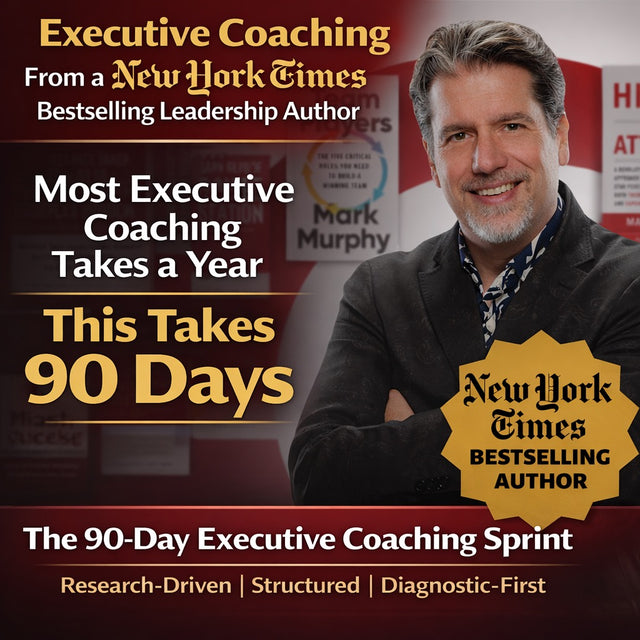
This is also where Leadership IQ's executive coaching approach becomes relevant as a useful example inside the broader market. Rather than treating coaching as an open-ended series of conversations, Leadership IQ frames its work as a diagnostic-first, time-bounded intervention designed to create visible behavior change. Its 90-Day Executive Coaching Sprint uses a structured twelve-session format over twelve weeks, beginning with a deep strategic intake and ending with a formal progress review and forward-looking action plan. That design reflects a wider truth about strong executive coaching programs: the best ones are built around disciplined problem definition, real-world experimentation, and measurable progress rather than vague aspiration.
Leadership IQ's perspective is especially relevant because it starts from a problem many executive coaching programs underplay. Senior leaders often do not have an accurate view of what most needs to change. At higher levels in the organization, honest feedback becomes filtered, political, softened, delayed, or absent altogether. Executives may know they need to become more strategic, influential, or effective with their teams, but they are often less clear on the precise behaviors that are undermining those goals. A coaching program that starts with self-defined goals can therefore end up coaching the wrong issue.
That risk of misdiagnosis is one reason more organizations are scrutinizing executive coaching programs with greater seriousness. They want to know how a coaching provider identifies the actual leadership challenge, not just how polished the sessions sound.
That risk of misdiagnosis is one reason more organizations are scrutinizing executive coaching programs with greater seriousness. They want to know how a coaching provider identifies the actual leadership challenge, not just how polished the sessions sound. They want to know whether the program can surface blind spots, involve stakeholders appropriately, create accountability for action, and demonstrate that the leader is doing something differently in the moments that matter. In that sense, evaluating executive coaching programs has become less like buying a perk and more like evaluating any other business intervention. The design matters. The mechanism matters. The evidence matters.
Why Executive Coaching Programs Matter More Than Ever
The growth of executive coaching programs reflects a broader shift in how organizations think about leadership development. Traditional classroom learning still has a role, but most senior leadership challenges are not solved by knowledge transfer alone. Executives rarely fail because they have never heard the right idea. They struggle because translating judgment into action inside a politically complex, fast-moving organization is difficult. The hardest leadership problems tend to involve uncertainty, influence without authority, cross-functional friction, blind spots in how behavior lands on others, and the pressure of making high-stakes decisions with incomplete information.
Those realities make executive coaching programs attractive because coaching can target leadership behavior inside the leader's actual context. Instead of discussing leadership in the abstract, coaching can focus on the real board relationship, the actual conflict with a peer, the recurring meeting dynamic that stalls decisions, the transition into a bigger role, or the team pattern that keeps producing weak execution. In principle, executive coaching programs are well suited to the complexity of senior leadership because they can be customized around real-time challenges rather than generic content.
But this advantage only materializes when the program is built to convert reflection into action. Plenty of coaching engagements are thoughtful and pleasant while producing very little durable change. That is one reason coaching is increasingly being treated not as an informal developmental benefit but as a structured capability-building intervention. Organizations want more than stimulating conversations. They want leaders who communicate more clearly, delegate more effectively, influence more skillfully, listen more accurately, and avoid the blind spots that so often derail otherwise talented executives.
This need is especially pronounced during moments of leadership transition. A newly promoted executive may have exceptional functional expertise yet still struggle to operate at enterprise scale. A first-time C-suite leader may need to shift from domain mastery to strategic integration. A founder may need to evolve from direct operator to organizational leader. A technically brilliant executive may need to become more politically effective without losing authenticity. These are not problems that training alone reliably solves. They require repeated experimentation, reflection, calibration, and reinforcement in the flow of work. That is exactly the terrain where strong executive coaching programs can provide value.
The same logic applies to performance risk. When organizations use coaching to address derailment risk, blind spots, stakeholder conflict, or weak team leadership, the goal is not inspiration. It is correction. The executive needs to do something differently, and others need to experience that difference. This is why the design of executive coaching programs matters so much. Programs that rely mainly on introspection may generate awareness. Programs that incorporate diagnosis, feedback, stakeholder patterns, and behavioral accountability are more likely to generate change.
Leadership IQ's research on blind spots fits naturally into this conversation because it points to a core challenge in executive development: leaders frequently do not change simply because someone told them about a weakness. Awareness alone is often insufficient. A leader may hear feedback, agree with it intellectually, and still repeat the same behavior because there is no practical structure for converting insight into different actions. That is one reason executive coaching programs need a disciplined mechanism for bridging awareness and execution. Without that bridge, coaching often becomes an expensive form of reflection.

What Executive Coaching Programs Actually Are
In the broadest sense, coaching is a structured conversation designed to help a client improve performance, thinking, and development. In organizational practice, however, executive coaching programs are more than a series of one-on-one conversations. They are operating systems for behavior change. A real program includes decisions about how coaching is scoped, how coaches are selected, how goals are defined, how confidentiality is handled, how sponsors are involved, how accountability works, and how outcomes will be evaluated.
That is why it is more useful to think of executive coaching programs as governed systems rather than isolated sessions. The sessions matter, but the surrounding architecture determines whether those sessions lead anywhere. A weak architecture often produces vague goals, poor alignment, political confusion, and unreliable evaluation. A strong architecture creates clarity about what problem is being solved, what success looks like, how the coaching will work, and what evidence will count as progress.
In practice, most executive coaching programs involve six core stages.
The first stage is intake and sponsor alignment. This is where the executive, the coach, and often an HR leader, CEO, or board sponsor clarify the purpose of the engagement. Is the coaching meant to accelerate a transition, improve executive presence, address a stakeholder problem, reduce derailment risk, or prepare the leader for broader enterprise responsibility? This stage also sets boundaries around confidentiality, which is one of the most important trust conditions in any executive coaching program. If the executive believes the coach is functioning as a hidden evaluator, candor drops immediately.
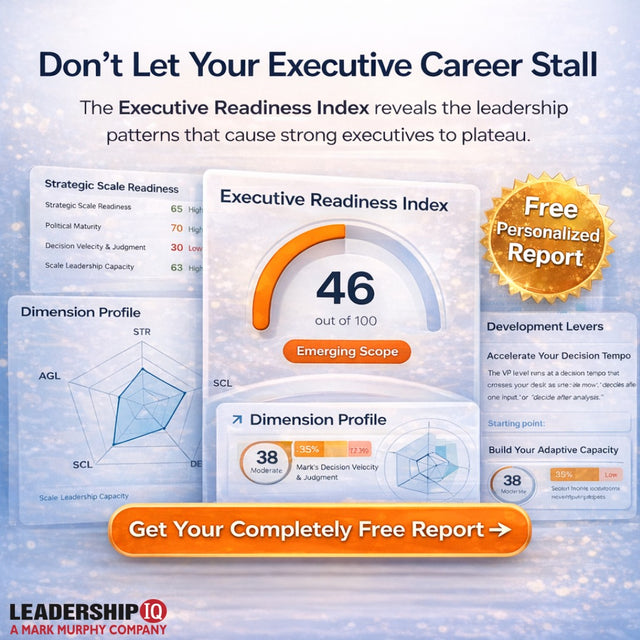
The second stage is diagnosis. Some executive coaching programs rely mostly on the leader's own view of what needs work. Others use 360 feedback, psychometrics, stakeholder interviews, competency assessments, or proprietary diagnostics to create a sharper baseline. The choice here is consequential. Coaching can only be as good as the problem definition. When a program starts with a weak diagnosis, everything downstream becomes less reliable.
The third stage is goal formation. Strong executive coaching programs translate ambitions into observable behavioral objectives. It is not enough to say a leader should be more strategic, more influential, or more collaborative. What does that mean in real terms? Does it mean asking different questions in meetings, involving stakeholders earlier, setting clearer decision rights, shifting how feedback is delivered, or changing how priorities are communicated? The better the behavioral definition, the better the coaching.
The fourth stage is coaching delivery itself. This is where cadence, intensity, and structure become important. Some programs meet weekly and push leaders into rapid experiments between sessions. Others meet monthly and emphasize reflection. Some provide practice assignments, stakeholder engagement, and structured debriefs. Others remain more conversational. These differences are not cosmetic. They reflect different theories of change.
The fifth stage is accountability and reinforcement. Coaching rarely works through insight alone. Leaders need repetition, rehearsal, follow-up, and some mechanism that makes changed behavior more likely under real-world pressure. Without reinforcement, the executive often reverts to old habits as soon as the calendar becomes crowded or the political environment becomes stressful.
The sixth stage is evaluation and closure. This is where executive coaching programs often reveal their true rigor or lack of it. Weak programs end with vague claims that the leader found the work valuable. Stronger programs can articulate what changed, how progress was assessed, where improvement is visible, and what next steps remain. That clarity matters not just for sponsors but for the executive, because it distinguishes actual development from a pleasant but inconclusive experience.
Leadership IQ's 90-Day Executive Coaching Sprint illustrates this programmatic approach clearly. Its structure begins with a 90-minute diagnostic intake, moves through weekly coaching and experimentation, and ends with a progress review plus a formal action plan. Leadership IQ also offers an optional Blind Spot diagnostic built around anonymous stakeholder interviews and severity ratings. Whether a buyer ultimately chooses Leadership IQ or another provider, that design philosophy highlights an important principle: executive coaching programs work best when they are built as behavior-change systems rather than loose advisory relationships.
The Executive Coaching Programs Market
The market for executive coaching programs is both large and fragmented. Buyers can choose from solo executive coaches, boutique firms, managed coaching networks, leadership development institutions, large consulting and assessment firms, and digital coaching platforms that combine human coaches with technology. Each category brings a different mix of strengths, constraints, and risks.
Boutique coaching firms and independent executive coaches often compete on seniority, personalization, industry knowledge, and relationship depth. In the best cases, these providers deliver highly tailored support and unusually strong trust with clients. That can be valuable, especially for CEOs, founders, or senior executives dealing with sensitive political situations. The downside is that quality control varies widely, measurement practices are often inconsistent, and scaling across an enterprise can become difficult.
Leadership development institutions and managed coaching networks tend to differentiate on consistency, research grounding, and governance. These providers often manage coach quality more formally and integrate coaching with broader development offerings. For companies that want executive coaching programs deployed across multiple leaders or regions, this category can feel more reliable than relying on loosely connected individual coaches.
Large consulting, assessment, and talent advisory firms position executive coaching programs as part of a broader leadership ecosystem. Their appeal is integration. Coaching can be linked to succession planning, onboarding, assessment, leadership competencies, transformation efforts, and enterprise strategy. This model is especially attractive to larger organizations that want one provider capable of supporting multiple talent processes. The trade-off is that large-firm coaching can become abstract or overly competency-driven if the work is not translated into concrete behavior.
Digital coaching platforms and hybrid human-plus-technology providers are the newest major category. They promise scale, centralized governance, coach matching, dashboards, security infrastructure, and broader access. Some are well suited to organizations that want coaching support across a much larger employee population, not just a few senior leaders. The key question with these models is whether scale comes at the expense of depth, contextual judgment, or nuance. For many executive-level situations, especially politically sensitive or identity-level transitions, human judgment still matters enormously.
For buyers, the fragmentation of the market makes evaluation more complicated. The phrase executive coaching programs sounds standardized, but the underlying services vary dramatically. One provider may define coaching as long-horizon identity work. Another may define it as stakeholder-based behavior change. Another may blend coaching with assessments and content. Another may package coaching inside a leadership platform. Comparing them requires clarity about what organizational problem needs to be solved.
This is also where Leadership IQ occupies a distinct position. Its executive coaching offering is neither a vague open-ended advisory relationship nor a mass-market digital platform. It is a structured, time-bounded, diagnostic-first model built around rapid behavior change. That gives it a clear point of view in a crowded market. It is especially relevant for buyers who are skeptical of coaching drift, who want a defined beginning and end, and who believe visible behavior change matters more than ongoing reflection for its own sake.
What the Research Says About Executive Coaching Programs
The research base on executive coaching programs is broadly encouraging, though not as tidy as vendor marketing sometimes implies. Across meta-analyses and systematic reviews, coaching in workplace settings tends to show positive effects in areas such as behavioral change, performance, coping, work attitudes, and well-being. At the same time, study quality varies, methods differ, and outcomes are not always measured in consistent ways. That means the evidence supports coaching as a meaningful intervention, but not every coaching program should be assumed to work equally well.
One of the most useful insights from the research is that coaching tends to show stronger effects when outcomes are defined behaviorally rather than attitudinally. This has direct implications for executive coaching programs. If success is measured by whether the executive feels more thoughtful, hopeful, or self-aware, the evaluation will remain fuzzy. If success is measured by whether the executive is delegating better, involving stakeholders earlier, leading meetings more effectively, or handling conflict with more discipline, the assessment becomes much more concrete.
That emphasis on behavior aligns well with the design of stronger executive coaching programs. Programs that build around observable actions, feedback loops, and stakeholder-relevant changes are structurally closer to the parts of coaching where the evidence appears strongest. Programs that rely heavily on personal reflection without translating it into specific leadership behaviors are harder to evaluate and more vulnerable to overclaiming.
Another consistent theme in the research is the importance of the working alliance between coach and executive. Trust, shared goals, and clarity around tasks all matter. That does not mean coaching is simply about chemistry, but it does mean coach quality and fit are not secondary concerns. They are part of the mechanism. Even a well-designed coaching program will underperform if the executive does not trust the coach, sees the work as superficial, or feels misunderstood.
The research also reinforces the importance of context. Coaching does not happen in a vacuum. A leader's environment can amplify or flatten the effects of coaching. If the organization has a weak feedback culture, low psychological safety, confused sponsorship, or no reinforcement around changed behavior, the coaching may generate good intentions that fade quickly. By contrast, when the organization supports experimentation, provides useful stakeholder input, and treats the coaching as a real development effort rather than a quiet remediation plan, outcomes are more likely to stick.
This context issue is crucial for executives and HR leaders evaluating executive coaching programs. It means the buyer cannot treat the coach as the entire intervention. The organization itself is part of the equation. Programs that acknowledge this reality, whether through stakeholder involvement, sponsor alignment, re-measurement, or team-level integration, are generally better designed for transfer into actual work.
Leadership IQ's methodology reflects several of these evidence-aligned principles. Its emphasis on diagnostic precision addresses the problem-definition issue. Its weekly cadence and coaching-debrief cycles reflect repetition and real-world practice. Its focus on whether behavior changes are visible to others reflects the stronger case for behavioral outcomes. Its optional stakeholder interview process addresses the self-awareness problem that so often undermines executive development. The point is not that only one model fits the research, but that the strongest executive coaching programs usually embody similar design logic even when they use different language.
Different Architectures of Executive Coaching Programs
Not all executive coaching programs are built on the same underlying model. Understanding the major architectures helps buyers compare offerings more intelligently.
Open-Ended Relationship Coaching
This is still one of the most common forms of executive coaching. The leader meets with a coach on a regular basis, discusses challenges, reflects on patterns, and works toward goals that are often self-defined. The best versions of this model can be deeply valuable, especially when the executive is already self-aware, the coach is highly skilled, and the issues are less about acute behavior correction than ongoing judgment and growth.
The weakness of this model is drift. Because it is often light on diagnostic rigor, external validation, and time-bound accountability, it can become difficult to know whether the leader is actually changing or simply having good conversations. Many buyers have had the experience of funding coaching that sounded useful while remaining unable to identify what, specifically, improved.
Diagnostic-First, Time-Bounded Coaching
This model starts with the assumption that executive coaching programs should be built around precise diagnosis and finite, intensive change cycles. Leadership IQ's 90-Day Executive Coaching Sprint is a clear example. The executive begins with a structured diagnostic intake, moves through a weekly cadence of experimentation and debrief, and ends with a documented review of progress and next steps.
The strength of this architecture is discipline. A defined endpoint reduces drift. Weekly coaching increases behavioral focus. Diagnosis reduces the risk of coaching the wrong problem. The program feels less like an open-ended advisory relationship and more like a concentrated leadership intervention.
This model is especially attractive when the organization wants visible change within a reasonable timeframe, such as during role transitions, stakeholder concerns, or identified blind spots. The main limitation is that some deep identity-level changes may continue beyond the formal sprint, which is why time-bounded programs often work best when paired with follow-through support if needed.
Stakeholder-Centered Coaching
Stakeholder-centered executive coaching programs place heavy emphasis on how others experience the leader. Progress is not judged mainly by the coach or the executive but by stakeholders who observe the executive's behavior over time. This architecture is especially useful when the goal is to improve specific leadership behaviors that affect peers, direct reports, or cross-functional partners.
The major advantage is that it creates an external standard for success. If stakeholders experience real improvement, the coaching is working. If they do not, the leader and the sponsor have a clearer signal that more work is needed. The main risk is that stakeholder involvement must be carefully managed so the executive still experiences the process as developmental rather than punitive.
Competency-Integrated Coaching
These executive coaching programs are often offered by large talent advisory and assessment firms. Coaching is linked to competency models, leadership frameworks, psychometrics, and sometimes succession planning. The organizational appeal is obvious. This architecture makes it easier to align coaching with broader talent systems and leadership standards.
The danger is abstraction. Competency language can become so broad that leaders end up discussing traits rather than behaviors. Unless the coach and sponsor translate competencies into concrete daily actions, the coaching can sound impressive while remaining vague in practice.
Platform-Based and Hybrid Coaching
These models use technology for coach matching, measurement, dashboards, scalability, and in some cases AI-supported practice or reflection. They can make coaching more accessible across larger populations and create stronger centralized governance. For many organizations, that scalability is compelling.
The open question is depth. Some platform-based executive coaching programs are excellent for broad access and structured accountability. Others feel standardized in ways that may not serve senior leaders dealing with highly contextual, political, or identity-level challenges. Buyers need to distinguish between scale as an operational strength and scale as a substitute for nuanced coaching.
What High-Quality Executive Coaching Programs Do Differently
The strongest executive coaching programs tend to share a handful of design characteristics, even when their branding and methods differ.
They begin with a credible diagnosis. Rather than assuming the executive already sees the issue clearly, they create ways to surface what is actually happening. This may involve stakeholder input, assessment tools, interview data, or structured intake processes. The goal is not to overwhelm the leader with diagnostics. It is to make sure the coaching starts in the right place.
They convert goals into observable behaviors. Instead of targeting broad attributes, they define what the executive should do differently. A strong coaching goal might involve setting clearer priorities, asking more strategic questions, reducing defensiveness in feedback conversations, involving stakeholders earlier in decisions, or adjusting how authority is exercised in meetings. These are behaviors people can actually observe.
They build practice into the work. Coaching becomes more effective when leaders are trying things between sessions, then returning to debrief what happened. This creates faster learning loops and keeps the program anchored in reality. Leadership IQ's weekly sprint format fits this logic well because it keeps the executive close to real-world application rather than allowing insights to sit untouched for a month.
They create accountability that goes beyond good intentions. This can take the form of stakeholder check-ins, documented commitments, re-measurement, structured progress reviews, or sponsor alignment. The exact method varies, but the principle remains the same. If nothing in the program makes changed behavior more likely, the coaching depends too heavily on willpower.
They connect the executive's behavior to the surrounding system. Leadership failures rarely affect only the individual. They alter team dynamics, cross-functional trust, meeting quality, decision velocity, and execution discipline. That is why some of the most effective executive coaching programs look beyond the individual leader to the team or stakeholder system around them.
This is another place where Leadership IQ's frameworks can fit smoothly into a broader article about executive coaching programs. The FIRE Model offers a disciplined way to structure feedback in a factual, less defensive manner. The Team Players framework provides a lens for understanding how leadership behavior can distort team role balance and undermine execution. These are not random add-ons. They are examples of how a coaching methodology can move beyond general leadership advice into practical tools that help leaders change how they operate with other people.
Common Failure Modes in Executive Coaching Programs
Organizations often assume coaching failures are mysterious or impossible to predict. In reality, the breakdowns are usually fairly consistent.
One failure mode is vague goals. When a coaching program starts with broad aspirations and never translates them into behaviors, it becomes almost impossible to evaluate progress. The executive may leave sessions feeling stimulated, yet neither the sponsor nor the team sees a clear difference.
A second failure mode is misdiagnosis. The coaching addresses the issue the executive is most comfortable discussing rather than the issue that most needs to change. This is especially common when senior leaders lack candid feedback. Leadership IQ's blind spots research fits here naturally because it captures the core problem: many executives cannot correct what they cannot fully see.
A third failure mode is weak sponsor alignment. Executive coaching programs often operate in a triadic relationship involving the executive, the coach, and an organizational sponsor. If confidentiality rules, goals, or expectations are poorly defined, the process becomes politically confusing. The leader may treat the coaching as personal reflection while the sponsor expects visible performance correction.
A fourth failure mode is insufficient reinforcement. The executive understands what needs to change but does not have enough practice, follow-up, or external support to sustain new behavior. Under pressure, old habits return. This is why cadence and structure matter so much. Coaching that is too sporadic often loses behavioral momentum.
A fifth failure mode is measurement theater. Some executive coaching programs use polished language about impact, ROI, and outcomes without clearly defining how progress was measured. Satisfaction surveys and anecdotal praise can be useful, but they are not enough if the organization is making meaningful investments in leadership development.
The simplest way to pressure-test a coaching provider is to ask a few practical questions. What will this executive do differently by the fourth week of the program? How will others notice the difference? What evidence will count as progress? How will confidentiality be handled? What happens if the initial problem definition turns out to be wrong? Providers who can answer those questions with clarity usually have stronger program design than those who retreat into broad leadership language.
How to Choose Executive Coaching Programs That Actually Work
Choosing among executive coaching programs starts with choosing the right decision logic. The organization needs to know what kind of problem it is trying to solve.
If the need is transition support, the program should focus on speed to effectiveness, stakeholder integration, role clarity, and early wins. If the need is performance improvement, the program should target specific behaviors and business-relevant outcomes. If the need is derailment prevention, the coaching must surface negative patterns and blind spots, not just strengths. If the need is strategic transformation, the program has to connect the leader's behavior to broader cultural and execution changes.
Once the purpose is clear, buyers should evaluate executive coaching programs across four dimensions.
First is diagnostic rigor. How does the provider determine what most needs to change? Does the process rely only on the leader's own view, or does it include assessments, stakeholder interviews, benchmarking, or structured intake? Leadership IQ scores well on this dimension because its methodology is explicit about diagnosis, and its optional Blind Spot diagnostic adds anonymous stakeholder input and severity ratings.
Second is accountability. What keeps the coaching from becoming a sequence of good intentions? Is there documented progress? Re-measurement? Stakeholder involvement? Action commitments? Weekly practice? Strong executive coaching programs make progress hard to fake.
Third is transfer into the leader's actual system. Does the coaching stay confined to personal reflection, or does it connect with team dynamics, stakeholder relationships, execution problems, and the executive's real work environment? Coaching creates more value when it changes how the leader operates inside the system, not merely how the leader thinks about the system.
Fourth is measurement validity. How does the provider know the program worked? What data is used? How is progress defined? What happens at closure? Buyers should be wary of providers who speak confidently about impact while remaining vague about what was actually measured.
Coach quality and fit should also be evaluated seriously. The coach's background, judgment, ability to challenge constructively, and credibility with senior leaders matter a great deal. So does the chemistry between coach and executive. Coaching is not only a process question. It is also a relationship question. The strongest executive coaching programs recognize this and invest real thought into coach matching and governance.
Where Leadership IQ Fits in the Executive Coaching Programs Landscape
Leadership IQ fits most naturally in the segment of executive coaching programs that are structured, diagnostic-first, and oriented toward visible behavior change. That positioning is meaningful because it addresses several weaknesses that have historically made executive coaching difficult to evaluate.
First, Leadership IQ does not treat executive coaching as a drifting conversation. The 90-Day Executive Coaching Sprint creates a defined timeline, a weekly rhythm, and a formal end point. That structure helps keep the work focused and makes the engagement easier for executives and sponsors to evaluate.
Second, the methodology is explicitly built around the problem of leadership blind spots. That is a real advantage in executive coaching programs because misdiagnosis is so common at senior levels. Leaders often receive filtered feedback, and they can be highly skilled while still being inaccurate judges of the behavior that most undermines their effectiveness. Leadership IQ's optional Blind Spot diagnostic, including anonymous stakeholder interviews and benchmarking, gives the coaching a sharper starting point.
Third, Leadership IQ uses proprietary frameworks that can help translate coaching into action. The FIRE Model offers a practical structure for feedback conversations that keeps discussions grounded in facts and outcomes rather than emotional escalation. The Team Players framework gives leaders a way to understand how their behavior affects the balance of roles on a team, which is particularly relevant when executive coaching programs aim to improve team performance rather than just individual reflection.
Fourth, Leadership IQ's broader research can add credibility when it fits the topic naturally. Its work on leadership blind spots is directly relevant because it explains why many executives fail to improve simply by becoming more aware. Research such as Why CEOs Get Fired can also fit when the article is addressing derailment risk, succession concerns, or the costly consequences of unresolved executive behavior patterns. These ideas belong in the article only where they support the core argument, but when used in that way they strengthen the authority of the piece.
This does not mean Leadership IQ should be presented as the only valid coaching model. That would weaken the article's credibility. The stronger approach is to show that its methodology aligns with several of the best principles found across high-quality executive coaching programs: precise diagnosis, behavior focus, repetition, accountability, and visible change.
This does not mean Leadership IQ should be presented as the only valid coaching model. That would weaken the article's credibility. The stronger approach is to show that its methodology aligns with several of the best principles found across high-quality executive coaching programs: precise diagnosis, behavior focus, repetition, accountability, and visible change. That positioning feels natural because it is rooted in program design rather than sales language.
The Future of Executive Coaching Programs
Executive coaching programs are likely to become more structured, more measured, and more segmented over the next several years. Buyers are becoming more sophisticated. They want stronger evidence, better governance, clearer ethics, and more transparent distinctions between different types of coaching.
One likely shift is increased tiering. Organizations will use different forms of executive coaching programs for different needs. Intensive human coaching will remain important for high-stakes transitions, derailment risk, politically sensitive situations, and identity-level development. Broader populations may receive lighter-touch coaching, group coaching, digital reinforcement, or hybrid support. The market will become less defined by one-size-fits-all coaching and more by differentiated coaching architectures.
Another likely shift is tighter integration with leadership systems. Coaching will increasingly be linked to succession, onboarding, high-potential development, team effectiveness, and transformation work. Standalone coaching will still exist, but organizations will place more value on executive coaching programs that connect with real business priorities.
A third shift is stronger scrutiny around AI and digital support. Technology will absolutely play a growing role in structured reflection, rehearsal, nudges, and accessibility. But for senior executives, especially in politically complex environments, human judgment will remain critical. The issue is not whether AI belongs in the ecosystem. It is whether organizations establish clear guardrails about what technology is used for, what data is captured, and where human coaching remains indispensable.
Most important, the winners in this market are likely to be executive coaching programs that make their logic visible. Buyers increasingly want to understand how a program works, not just what it promises. They want to know the diagnosis, the mechanism, the cadence, the evidence, and the endpoint.
Final Thoughts on Choosing Executive Coaching Programs
The rise of executive coaching programs reflects a real need. Senior leadership is difficult, feedback is imperfect, blind spots are common, and many of the most important executive challenges are too contextual and behavioral to be solved through generic training alone. Coaching can be one of the most powerful leadership interventions available. It can also be quietly wasteful when its design is weak.
The difference comes down to architecture. Effective executive coaching programs are clear about the problem they are solving, disciplined in how they diagnose it, precise in how they define progress, and deliberate in how they reinforce changed behavior. They help leaders do something differently in real situations, and they create enough structure for sponsors and executives to see whether that difference is real.
For organizations evaluating executive coaching programs, the smartest question is not whether coaching works in theory. The smarter question is which program design is most likely to create the kind of leadership change the business actually needs.
That is why diagnostic-first, behavior-focused models deserve serious attention. Whether the answer is Leadership IQ's 90-Day Executive Coaching Sprint or another well-governed coaching model, the strongest choice will usually be the one that treats coaching as a practical system for behavior change rather than an elegant conversation without an ending.
When executive coaching programs are selected with that level of rigor, they stop being a soft developmental perk and become what they should have been all along: a strategic tool for building better leaders, stronger teams, and more effective organizations.