Leadership Training Topics: A Guide to Building a Relevant, Effective Curriculum
Only 29% of employees know whether their performance is where it should be. That single data point from Leadership IQ research reveals why most leadership training programs fail before they even begin. When employees can't distinguish between good work and great work, and their leaders can't teach them the difference, you don't have a training problem — you have a curriculum problem.
Most organizations approach leadership development like they're ordering from a restaurant menu, picking popular topics that sound impressive rather than addressing the specific competency gaps keeping their leaders awake at night. Effective leadership training has shifted from traditional command-and-control models to human-centered and technology-integrated competencies. Organizations with strong leadership development programs are 1.5 times more likely to outperform their competitors — but only when the right leadership training topics are selected and delivered effectively.
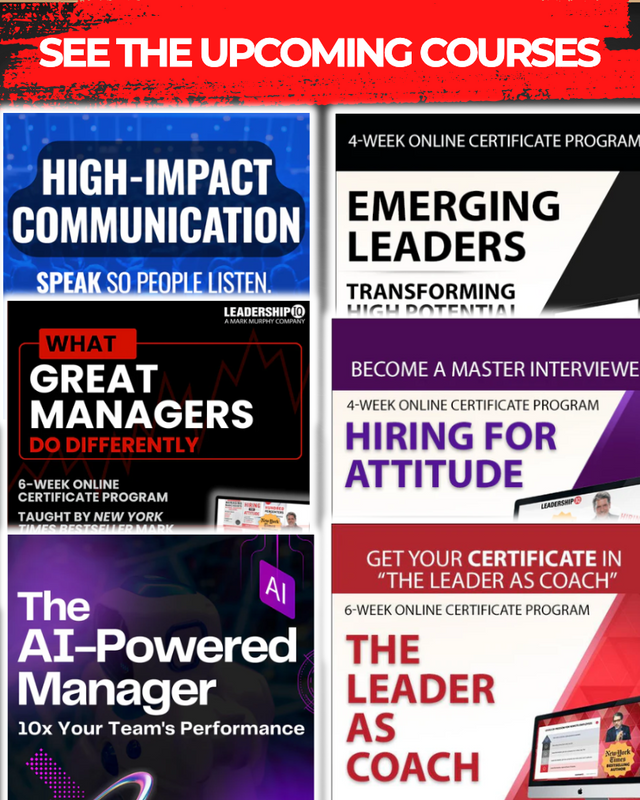
This guide covers the key leadership training topics that research shows produce the most significant behavior change, how to match topics to different audiences, and how to build a complete curriculum. If you're ready to start, explore Leadership IQ's training programs. For personalized development, consider executive coaching. Or bring these frameworks to your organization through a leadership keynote.

How We Chose Topics and Training Programs
Leadership IQ's study of 3,018 leaders uncovered a sobering reality about the leadership skills gap. Only 19% are adept at reducing employee burnout. Just 26% have mastered developing middle performers. A mere 28% can manage hybrid teams effectively. Selection criteria for the topics below are focused on business impact: Does the topic address a verified skill gap? Is it scalable across leadership levels? Can progress be measured? And does it provide specific behavioral tools rather than general principles?
The most effective leadership training topics share three characteristics: they address verified skill gaps, they provide specific behavioral tools, and they can be practiced immediately in real world scenarios. Topics that fail these criteria might generate positive feedback scores, but they won't change behavior. All examples and citations below align with Leadership IQ research.
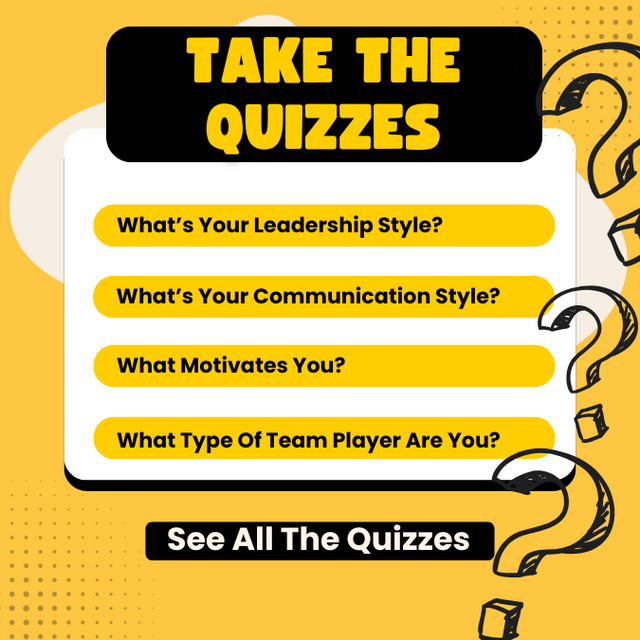
Start by understanding your own leadership style — it determines which topics will stretch you most:
Core Leadership Skills and Core Competencies
Essential leadership skills to cover in programs, mapped to measurable competency indicators: emotional intelligence (measured via 360-degree feedback on self-regulation and empathy), active listening and communication (measured via team perception surveys), strategic planning and vision-setting (measured via goal alignment audits), decision making and problem solving (measured via decision quality and speed), change management (measured via adoption rates), performance management and motivation (measured via engagement scores), coaching and mentoring (measured via mentee growth KPIs), and ethical leadership and inclusive behaviors (measured via trust and retention indicators).
Recommend assessment tools for baseline competency data: Leadership IQ's leadership style assessment, 360-degree feedback surveys, employee engagement pulse surveys, and performance differentiation audits. Baseline data determines which topics need priority — and prevents the common mistake of training leaders on topics where they're already competent while ignoring the gaps that actually hurt team performance.
Effective leadership training must blend interpersonal soft skills with tactical operational abilities. Leadership development is essential for professionals at all levels — it builds confidence, strengthens decision making, and prepares people for supervisory responsibilities. Effective leadership training programs should prioritize emotional intelligence, conflict resolution, strategic thinking, and effective communication to build adaptable, trusted leaders.

1. Emotional Intelligence
Emotional intelligence is a critical leadership competency that focuses on understanding emotions — both your own and others'. Leaders with high emotional intelligence may be better equipped to support employee engagement and collaboration. Emotional intelligence typically includes self awareness, self-regulation, motivation, empathy, and social skills — all essential for effective leadership.
Leadership training should focus on transitioning new managers from individual contributors to leaders, emphasizing emotional intelligence and effective communication. Two experiential exercises: (1) Emotion-labeling practice — pause three times daily to name the emotion you're feeling before it affects your behavior. (2) Empathy mapping — before every difficult conversation, write down what the other person is likely feeling, fearing, and needing. Then adjust your approach accordingly.
KPIs for measuring EQ improvements: 360-degree feedback scores on empathy and self-regulation dimensions, frequency of difficult conversations held (rather than avoided), and team engagement scores within the leader's span of control.
2. Active Listening and Communication
Strong communication is one of the most essential leadership development topics, as it influences nearly every aspect of team performance. Key communication skills leaders should develop include active listening, providing clear feedback, and aligning teams around goals. Effective communication skills training can help leaders overcome common barriers by teaching them how to provide clear, direct, and motivating statements. Poor communication costs organizations millions — and it's one of the most fixable gaps in most leadership teams.
Active listening techniques to teach: paraphrase before responding, notice body language and emotional undertones, and resist the urge to solve problems before fully understanding them. Role-play scenarios for feedback and clarification: practice delivering constructive feedback using the FIRE framework (Facts, Interpretation, Reaction, End result) with real world workplace scenarios. Improve communication measurement by tracking team perception improvements — survey team members quarterly on whether they feel heard, understood, and clear about expectations.
3. Strategic Planning and Vision Setting
Strategic planning modules for supervisors should link day-to-day operations to long-term organizational objectives, ensuring teams move in the same direction. Strategic thinking at this level means helping every team member understand how their work connects to the shared vision.
Instruct linking strategy to team goals and metrics: every goal should trace directly to an organizational strategy priority. Propose templates for annual and quarterly planning that translate abstract organizational goals into specific, measurable team objectives with clear owners and timelines. Companies with strong leadership development programs are 1.5 times more likely to outperform competitors — and strategic planning capability is a major driver of that advantage.
4. Decision Making and Problem Solving
Structured decision making frameworks to teach: (1) Define the decision in one sentence. (2) List three options. (3) Evaluate against top criteria. (4) Decide within a defined timeframe. (5) Communicate rationale and document for review. Include case studies for real world problem solving — present complex scenarios with incomplete information and competing priorities, then debrief the process. Critical thinking and problem solving skills are skills needed at every leadership level.
Recommend decision quality and speed metrics: percentage of decisions achieving intended outcome (reviewed quarterly), average time from problem identification to decision, and stakeholder alignment ratings post-decision.
5. Change Management and Adaptability
Agility and change management training is essential for leaders to navigate constant disruption and foster resilience during rapid organizational pivots. Only 40% of leaders are well-versed in overcoming resistance to change. Change management is a critical competency that focuses on helping teams adapt to new processes, technologies, or organizational priorities — essential for maintaining productivity and morale during uncertainty.
Techniques to teach: resistance-mapping (identify who will resist and why), communication plans tailored to different stakeholder audiences, and phased implementation that builds momentum through early wins. Effective change management involves understanding the drivers of change, the uncertainty it brings, and how to leverage it to create more effective ways of working. Leaders skilled in change management help their teams navigate resistance, ensuring transitions are smooth and team members feel supported.
Measure adoption and productivity after change: track adoption rates for new processes, monitor productivity metrics during transition periods, and survey team members on clarity and support levels.
6. Team Motivation, Engagement, and Performance Management
Keeping teams motivated is a challenge at every stage, and understanding what drives engagement supports stronger performance and retention. Engaged employees are more likely to contribute effectively to organizational success, making motivation a key focus for leadership training programs. Performance management tools to train leaders on: Word Pictures for defining performance standards, the FIRE framework for feedback conversations, and goal-setting techniques that inspire rather than overwhelm.
Pulse metrics to track engagement shifts: monthly surveys on motivation, clarity, and manager support — tracked as trend lines, not snapshots. Leadership well-being and burnout prevention focus on modeling healthy work habits and recognizing signs of burnout in teams. Only 19% of leaders can reduce burnout effectively — which makes this topic both high-impact and severely undertrained.
7. Mentoring, Coaching, and Leadership Development Topics
Key coaching topics include fostering professional growth, providing actionable feedback, and building a culture of transparency and accountability. Training in coaching and mentoring equips leaders with tools to help team members reach their full potential, fostering a culture of ongoing learning and development.
Effective leadership mentoring begins with setting clear, actionable goals that align personal growth with organizational needs. Mentoring is highly individualized, adapting to the mentee's unique career path and challenges, while traditional leadership training follows a structured curriculum for groups. Mentoring provides sustained support — consistent guidance, feedback, and accountability that helps leaders navigate challenges and continually improve.
Outline mentoring frameworks to pair with training programs: match mentors and mentees based on development goals, set monthly meeting cadence, define measurable growth objectives, and review progress quarterly. Include coaching practice sessions with feedback loops: participants practice coaching conversations, receive peer and facilitator feedback, and refine their approach before applying it with their actual teams.
8. Ethics, Inclusive Leadership, and Effective Leadership Behaviors
Ethical leadership is an essential leadership development topic for leaders who influence people and organizational outcomes. Training in ethical leadership helps leaders navigate complex moral dilemmas and foster integrity-based cultures. Companies with moral leaders have been shown to have 15% higher employee engagement and significantly lower rates of misconduct.
Inclusive leadership involves cultivating diversity, equity, and inclusion to foster a sense of belonging and diverse perspectives. DEI training helps recognize unconscious bias and fosters an inclusive workforce where all employees feel valued. Specify ethical decision guides for leader scenarios: present dilemmas where the financially optimal choice conflicts with ethical standards, and practice structured decision-making that weighs all stakeholders. Include inclusive leadership exercises and bias checks. Recommend measuring trust and retention indicators as outcomes.
9. Conflict Resolution
Conflict is unavoidable in team environments, and learning how to address it constructively is a critical leadership competency. Workplace conflict happens for many reasons: disagreements about procedures, different or unmet needs, interests or ideas of employees, and personality clashes. Developing conflict resolution skills helps supervisors feel more confident navigating challenging situations while maintaining positive working relationships.
Only 31% of leaders are proficient at managing difficult personalities. Effective curriculum provides specific scripts and techniques for addressing narcissistic behaviors, redirecting blamers, and setting boundaries with drama creators. This topic is especially critical for training managers and new supervisors who haven't yet developed confidence in navigating interpersonal conflict.
10. Digital Leadership and Hybrid-Team Facilitation
Digital leadership and AI fluency are critical competencies for leaders to manage ethical implications and use data for informed decision making. Managing remote and hybrid teams requires specialized training that most organizations haven't developed — only 28% of leaders are adept at managing hybrid teams, and just 33% excel at managing remote employees.
Include remote leadership protocols and virtual tools: set communication norms for different channels, establish meeting structures for virtual and hybrid formats, and build accountability systems that work across distributed teams. Suggest exercises for hybrid engagement and accountability. Recommend adoption metrics for digital collaboration tools — because introducing technology without measuring whether people actually use it effectively is a common failure mode.
In Person Workshops: Experiential and Applied Topics
Design in person workshops for simulation and practice — topics that require role-play, body language reading, and group dynamics work best face-to-face. Difficult conversations, conflict resolution, team building, and public speaking all benefit from the immediacy and energy of in person delivery. Include facilitator guides and participant debrief templates. Outline logistics and capacity recommendations — most experiential workshops work best with 12–20 participants.
Topics for Different Audiences
Quick Scan: Which Topic Fits Which Audience
Emerging leaders — focus on active listening, mentoring, feedback delivery, and transitioning from individual contributor to leadership role. Mid-level managers — prioritize decision making, performance management, conflict resolution, and change management. Senior executives — prioritize strategic planning, succession planning, organizational culture design, and leading through crisis.
New managers need leadership training topics focused on establishing authority without damaging relationships, delegating effectively, and having difficult conversations with former peers. Middle managers face unique challenges caught between senior leadership expectations and front-line realities. Remote and hybrid team leaders require specialized training in building trust without face-to-face interaction and maintaining team cohesion across different work arrangements.
Topics for Discussion in Group Settings
Case study discussions work well for complex leadership challenges — use real world scenarios participants recognize from their own experience. Role-playing exercises prove especially valuable for interpersonal skills: since only 43% of leaders can deliver feedback effectively, group settings provide safe spaces to practice before having these conversations with actual employees.
Peer coaching sessions allow experienced leaders to share strategies while newer leaders ask questions without judgment. These work particularly well for topics like stress management and burnout prevention, where personal experience provides more valuable insights than theoretical frameworks. Empowering teams through psychological safety — where people feel safe to take risks and share new ideas — is one of the most impactful discussion topics in group formats.
How to Choose Topics for Your Training Programs
Choose Based on Audience Needs
Map topics to role responsibilities and skill gaps. Don't train everyone on the same topics — current and future leaders at different levels face different challenges and need different skills. Use assessment data, not assumptions, to identify where the biggest gaps exist.
Choose Based on Delivery Format
Select in person for practice-heavy topics: difficult conversations, conflict resolution, team building, and public speaking. Choose virtual for knowledge transfer and scalable reach: strategic planning frameworks, change management models, and foundational leadership knowledge.
Choose Based on Measurement Goals
Pick topics with clear KPIs and easy measurement methods. Emotional intelligence maps to 360-degree feedback scores. Communication maps to team perception surveys. Performance management maps to engagement and retention metrics. If you can't measure it, you can't prove it's working.
Which Topics to Launch First
Pilot emotional intelligence and decision making together — they reinforce each other and produce visible results quickly. Sequence strategic planning after core competencies assessments establish baseline capability. Expand in person workshops once baseline learning is proven through initial modules.
Building a Complete Curriculum
Effective curricula follow a logical progression. The foundation begins with self awareness and emotional regulation — leaders can't manage others until they can manage themselves. The second tier focuses on one-on-one leadership skills: giving feedback, conducting performance conversations, and developing leaders individually. Team leadership competencies form the third tier: running meetings, managing team dynamics, and creating accountability. Organizational leadership topics represent the final tier: change management, strategic thinking, succession planning, and culture development.
The most effective programs include ongoing reinforcement topics that revisit core skills with increasing sophistication. Leaders might initially learn basic feedback techniques, then later explore advanced approaches for different personality types or challenging situations. Developing leaders is an ongoing process — many organizations that treat it as a one-time event see the investment evaporate.
Best Topics According to Research
Teaching leaders to respond constructively when employees share problems ranks among the highest-impact topics. Only 26% always respond constructively, yet those who do are 12 times more likely to work for companies employees recommend as great employers. Developing middle performers into high performers provides enormous ROI since most employees fall into the middle category. Managing burnout (only 19% are adept) has become vital as stress remains elevated across industries.
The research also highlights topics that seem important but produce limited behavior change. Generic communication training rarely improves performance unless it addresses specific challenges like delivering bad news or managing conflict. Similarly, broad leadership theory discussions engage participants intellectually but don't provide the concrete tools needed for workplace application. Leaders understand and receive training most effectively when topics are specific, behavioral, and immediately applicable.
Final Thoughts
Recommend iterative audits of leadership topics every six months — organizational needs evolve, business needs shift, and the topics that mattered most last year may not be the priorities this year. Advise blending training programs with mentoring for lasting impact — training provides the frameworks, mentoring provides the sustained support and accountability that embeds new skills into daily practice.
The most effective leadership development initiatives don't randomly combine popular topics — they systematically build competency based on verified gaps, measured outcomes, and real world applications. Start with the topic that addresses your biggest leadership gap, measure the results, and build from there. That's how leadership training topics translate into organizational success.
Build a Leadership Training Curriculum That Actually Changes Behavior
Leadership IQ's research-driven approach ensures every training topic addresses verified competency gaps and provides practical tools for immediate application. Our programs don't just cover leadership topics — they systematically build the specific skills your leaders need to drive real performance improvements.
You can also explore executive coaching for personalized leadership development or bring these frameworks to your organization through a leadership keynote.